Picea engelmannii
Engelmann spruce
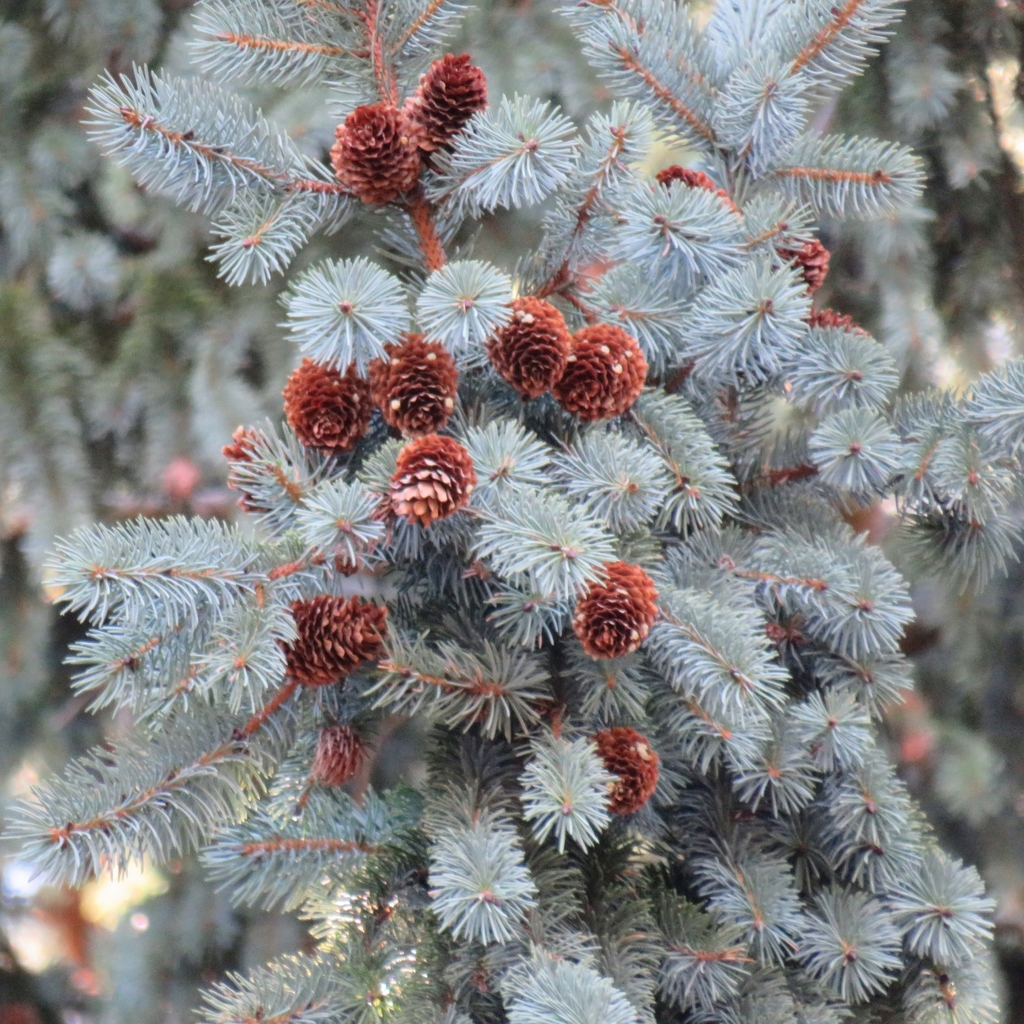
(c) Alejandro Arguelles, some rights reserved (CC BY-SA) · licence
Family: Pinaceae · Type: Tree · Native
Conservation status: CNPS 2B.2
Picea engelmannii (Engelmann spruce) is a native California tree in the Pinaceae family, recognized by four-angled needles and sharp tips diagnostic.
Engelmann spruce is a native shrub found in the Klamath Ranges and California Ranges in cool, moist, mixed-conifer, and subalpine forests at elevations of 1,200 to 2,100 meters. While no specific flowering time is noted, this distinctive conifer features a trunk less than 55 meters tall with branches that are not drooping. Growing with young twigs that are slightly hairy, the spruce has rigid needles less than 3 centimeters long that are four-angled with two distinctive white bands on each surface. Its needles have flat, acute tips that are not sharp to the touch, creating a soft-textured appearance. The seed cones are small, less than 7 centimeters long, with ovoid-oblong shapes and papery scales featuring slightly jagged margins.
Identification and appearance
Key characters: 1 sympatric species; four-angled needles and sharp tips diagnostic
Habitat and range
Habitat: Cool, moist, mixed-conifer, subalpine forests
Elevation: 1200-2100 m
California counties: Shasta, Siskiyou
Outside California: to British Columbia, in Rocky Mountains to New Mexico
Conservation status
CNPS 2B.2
How to tell it apart
vs Abies: Spruce twigs have rough, peg-like bumps; fir twigs are smooth with circular scars, and cones stand upright.; vs Pseudotsuga: Spruce twigs feel rough with persistent pegs; Douglas-fir twigs are smooth after needles drop.; vs Cedrus: Spruce needles attach to rough pegs on twigs; cedar needles grow in dense rosettes on short shoots.; vs Pinus: Spruce needles attach individually to bumpy twigs; pine needles come bundled in groups of 2-5.; vs Sequoia: Spruce has individual needles on rough, peggy twigs; redwood has flat sprays of scale-like or awl-shaped leaves.
Frequently asked questions
Is Picea engelmannii native to California?
Yes. Picea engelmannii is native to California (recorded as native).
Where in California does Picea engelmannii grow?
Picea engelmannii occurs in Shasta, Siskiyou, at elevations of 1200-2100 m.
What plant family does Picea engelmannii belong to?
Picea engelmannii is in the Pinaceae family, genus Picea.
Is Picea engelmannii rare or endangered?
Picea engelmannii carries California Rare Plant Rank 2B.2, state rank S2.
What habitat does Picea engelmannii grow in?
Picea engelmannii grows in Cool, moist, mixed-conifer, subalpine forests.
Related species
Other California species in the same genus, family, or bioregion.
Sources: Jepson eFlora · CNPS Rare Plant Inventory · Index of California Plant Names · CalPhotos · CDFW CNDDB
Last updated 2026-10-07
Data from The California Species Project — 14,000+ California species with verified data from CNPS, CDFW, USFWS, Cal-IPC, and more.