Pinus contorta subsp. bolanderi
Bolander's beach pine, Bolander's Beach Pine
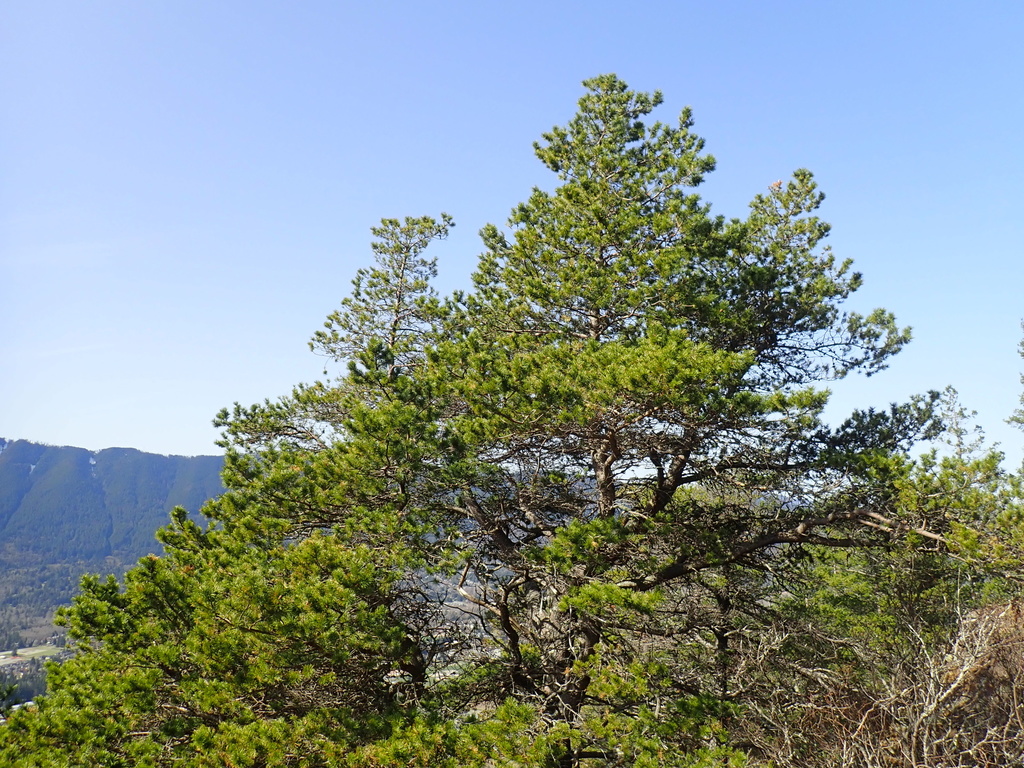
(c) John Brew, some rights reserved (CC BY), uploaded by John Brew · licence
Family: Pinaceae · Type: Tree · Native
Conservation status: CNPS 1B.2
Pinus contorta subsp. bolanderi (Bolander's beach pine) is a native California tree in the Pinaceae family, recognized by Very limited geographic range and distinctive pygmy habitat separate it from other lodgepole pine subspecies.
Bolander's beach pine is a rare (CNPS 1B.2) California native shrub found in the North Coast bioregion of Mendocino County in pygmy forest habitats on coastal terrace soils at elevations below 250 meters. With limited flowering data, its most distinctive feature is its unique growth habit of forming compact, stunted trunks generally less than 2 meters tall. Growing as a low, dense shrub with asymmetric seed cones that persist on the stem for many years, it demonstrates remarkable adaptation to challenging coastal environments. Its form is characterized by a compact structure that allows it to survive in clay and hardpan soils, creating distinctive pygmy forest landscapes. The shrub's seed cones remain closed and attached to the stem, serving as a testament to its resilience in harsh coastal conditions.
Identification and appearance
Key characters: Very limited geographic range and distinctive pygmy habitat separate it from other lodgepole pine subspecies
Habitat and range
Habitat: Pygmy forest on coastal terrace soils with clay- or hardpan
Elevation: < 250 m
California counties: Mendocino, Del Norte, Humboldt, Alameda, Tuolumne
Conservation status
CNPS 1B.2
How to tell it apart
vs Pseudotsuga: Pine needles come bundled in groups with papery sheaths; Douglas-fir needles attach individually to smooth twigs.; vs Abies: Pine needles come bundled in groups of 2-5; fir needles attach individually and directly to twigs.; vs Sequoia: Pine has bundled needles in groups of 2-5; redwood has individual scale-like or awl-shaped leaves on flat sprays.; vs Casuarina: Pine has true needles bundled in groups; Casuarina has jointed branchlets with whorls of tiny scale leaves.; vs Cedrus: Pine needles are bundled in tight clusters of 2-5; cedar needles grow in dense rosette-like clusters on short shoots.
Frequently asked questions
Is Pinus contorta subsp. bolanderi native to California?
Yes. Pinus contorta subsp. bolanderi is native to California (recorded as native).
Where in California does Pinus contorta subsp. bolanderi grow?
Pinus contorta subsp. bolanderi occurs in Mendocino, Del Norte, Humboldt, Alameda, Tuolumne, at elevations of < 250 m.
What plant family does Pinus contorta subsp. bolanderi belong to?
Pinus contorta subsp. bolanderi is in the Pinaceae family, genus Pinus.
Is Pinus contorta subsp. bolanderi rare or endangered?
Pinus contorta subsp. bolanderi carries California Rare Plant Rank 1B.2, state rank S2.
What habitat does Pinus contorta subsp. bolanderi grow in?
Pinus contorta subsp. bolanderi grows in Pygmy forest on coastal terrace soils with clay- or hardpan.
Related species
Other California species in the same genus, family, or bioregion.
Sources: Jepson eFlora · CNPS Rare Plant Inventory · Index of California Plant Names · CalPhotos · CDFW CNDDB
Last updated 2026-10-07
Data from The California Species Project — 14,000+ California species with verified data from CNPS, CDFW, USFWS, Cal-IPC, and more.