Pistacia atlantica
Mt. atlas mastic tree
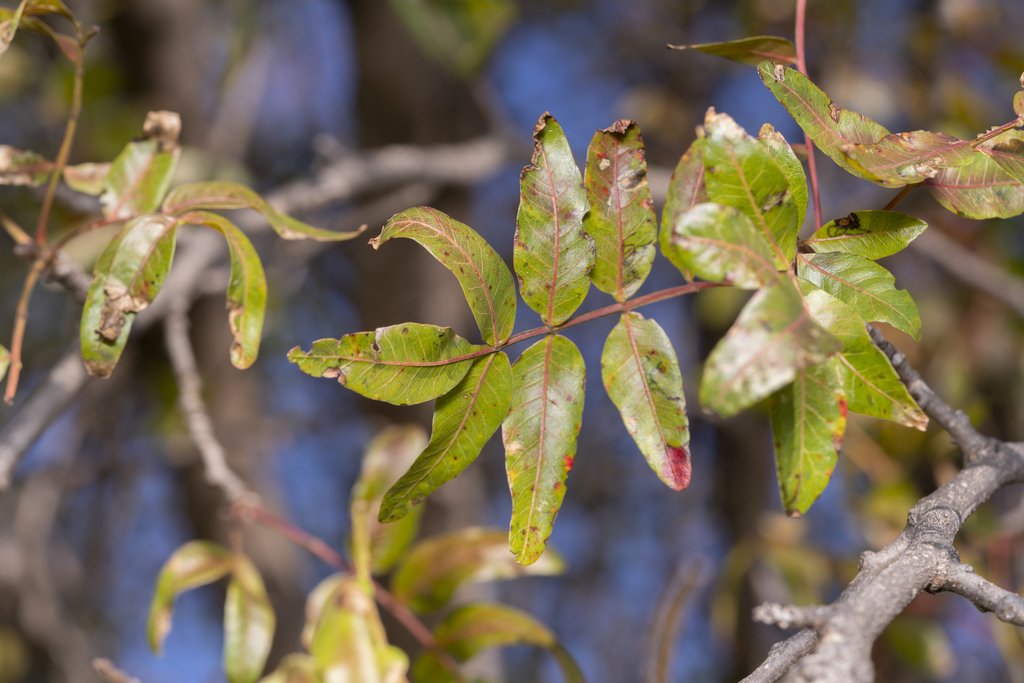
(c) Eleftherios Katsillis, some rights reserved (CC BY) · licence
Family: Anacardiaceae · Type: Tree · Not Native
Pistacia atlantica (Mt. atlas mastic tree) is a non-native California tree in the Anacardiaceae family, recognized by Recent naturalization from Mediterranean cultivation - only pistachio species established in California wild.
Mt. atlas mastic tree is a naturalized tree found in the Sacramento Valley and expected in other regions, growing on flats, roadsides, and drainages at elevations below 100 meters. Flowering from February to April, this tree produces small flowers in understated clusters. Growing 3 to 10 meters tall with spreading to erect branches, it develops a distinctive branching structure. Its leaves feature a winged axis with leaflets having acute to obtuse tips, creating a delicate foliage pattern. The fruit is approximately 6 to 8 millimeters long and roughly obovoid in shape.
Identification and appearance
Key characters: Recent naturalization from Mediterranean cultivation - only pistachio species established in California wild
Habitat and range
Habitat: Flats, roadsides, drainages
Elevation: < 100 m
Outside California: escaped in Utah, Texas, native to Mediterranean, Middle East
Bloom period
Pistacia atlantica blooms Feb-Apr.
How to tell it apart
vs Schinus: Check the leaf stem between leaflets - Pistacia has wing-like flanges, Schinus has a smooth round stem.; vs Ailanthus: Ailanthus leaflets have gland-tipped teeth at the base; Pistacia leaflets have smooth edges.; vs Juglans: Juglans is deciduous with catkins; Pistacia is evergreen with tiny branched flower clusters.; vs Koelreuteria: Koelreuteria has showy yellow flowers and paper lantern pods; Pistacia has tiny brown-green flowers and small red fruits.; vs Rhus: Rhus is shrubby with fuzzy red berry clusters; Pistacia is a tree with small smooth fruits.
Frequently asked questions
Is Pistacia atlantica native to California?
No. Pistacia atlantica is not native to California (recorded as not native).
When does Pistacia atlantica bloom?
Pistacia atlantica blooms Feb-Apr.
What plant family does Pistacia atlantica belong to?
Pistacia atlantica is in the Anacardiaceae family, genus Pistacia.
What habitat does Pistacia atlantica grow in?
Pistacia atlantica grows in Flats, roadsides, drainages.
Related species
Other California species in the same genus, family, or bioregion.
Sources: Jepson eFlora · CalPhotos
Last updated 2026-10-07
Data from The California Species Project — 14,000+ California species with verified data from CNPS, CDFW, USFWS, Cal-IPC, and more.