Plagiobothrys fulvus var. campestris
Field popcornflower, Field Popcornflower
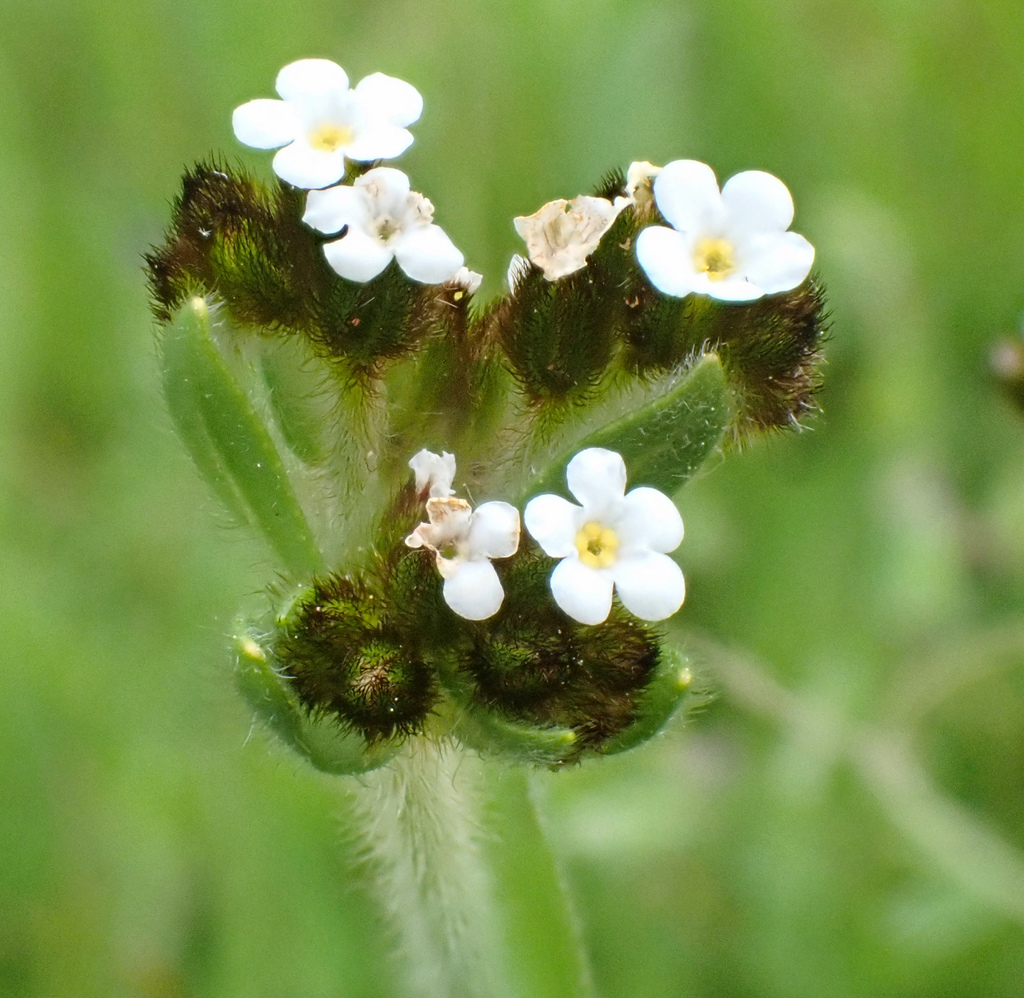
(c) Don Loarie, some rights reserved (CC BY), uploaded by Don Loarie · licence
Family: Boraginaceae · Type: Herb · Native
Plagiobothrys fulvus var. campestris (Field popcornflower) is a native California herb in the Boraginaceae family, recognized by tallest species (3-6 dm), persistent basal rosette, dense brown-hairy sepals.
Field popcornflower is a California native annual found in northern coastal ranges, central western California, Sierra Nevada foothills, San Francisco Bay Area, southern coastal ranges, and southern California coastal areas in grasslands and open woodlands at elevations below 500 meters. Flowering from March to May, this plant produces white flowers with yellow appendages in small clusters about 3 to 4 millimeters in diameter. Growing with erect stems 30 to 60 centimeters tall, it develops a persistent basal rosette with tomentose hairs that are some spreading and rough. Its leaves include basal oblanceolate blades 2 to 10 centimeters long and a few alternate cauline leaves that are elliptic in shape. The fruit consists of 2 to 4 triangular-ovate nutlets that are approximately 2.5 to 3.5 millimeters long and brownish in color.
Identification and appearance
Key characters: 45 sympatric species; tallest species (3-6 dm), persistent basal rosette, dense brown-hairy sepals
Habitat and range
Habitat: Grassland, open woodland, loamy, sandy, or gravelly soil
Elevation: < 500 m
California counties: Mariposa, Riverside, Fresno, Contra Costa, Nevada, Butte, Orange, Merced, Monterey, San Joaquin, San Diego, Santa Clara, Solano, El Dorado, Tulare, Sacramento, Yolo, Napa, Yuba, Tehama, Amador, Shasta, Colusa, San Luis Obispo, Mendocino, Madera, Placer, Kern, San Benito, Calaveras, Sutter
Outside California: southern Oregon
Bloom period
Plagiobothrys fulvus var. campestris blooms Mar-May.
How to tell it apart
vs Cryptantha: Seeds have a raised ridge down the inner face, not a groove like Cryptantha.; vs Pectocarya: Seeds lack the comb-like marginal barbs of Pectocarya; attachment scar is raised.; vs Myosotis: Flowers are smaller and more tubular; Myosotis has wider, flatter blue flowers with yellow centers.; vs Nemophila: Nemophila has much larger, showier blue-white flowers and broader leaves.; vs Leptosiphon: Leptosiphon has needle-like divided leaves; Plagiobothrys has simple narrow leaves.
Frequently asked questions
Is Plagiobothrys fulvus var. campestris native to California?
Yes. Plagiobothrys fulvus var. campestris is native to California (recorded as native).
When does Plagiobothrys fulvus var. campestris bloom?
Plagiobothrys fulvus var. campestris blooms Mar-May.
Where in California does Plagiobothrys fulvus var. campestris grow?
Plagiobothrys fulvus var. campestris occurs in Mariposa, Riverside, Fresno, Contra Costa, Nevada, Butte, Orange, Merced and other counties, at elevations of < 500 m.
What plant family does Plagiobothrys fulvus var. campestris belong to?
Plagiobothrys fulvus var. campestris is in the Boraginaceae family, genus Plagiobothrys.
What habitat does Plagiobothrys fulvus var. campestris grow in?
Plagiobothrys fulvus var. campestris grows in Grassland, open woodland, loamy, sandy, or gravelly soil.
Related species
Other California species in the same genus, family, or bioregion.
- Plagiobothrys glaber — Hairless popcornflower
- Plagiobothrys glyptocarpus — Sculptured-nut popcornflower
- Plagiobothrys glyptocarpus var. glyptocarpus — Sculptured allocarya
- Plagiobothrys glyptocarpus var. modestus — Cedar ridge popcornflower
- Plagiobothrys greenei — Greene's spiny-nut popcornflower
- Plagiobothrys hispidulus — Harsh popcornflower
Sources: Jepson eFlora · Index of California Plant Names · CalPhotos
Last updated 2026-10-07
Data from The California Species Project — 14,000+ California species with verified data from CNPS, CDFW, USFWS, Cal-IPC, and more.