Plantago coronopus
Buckhorn plantain
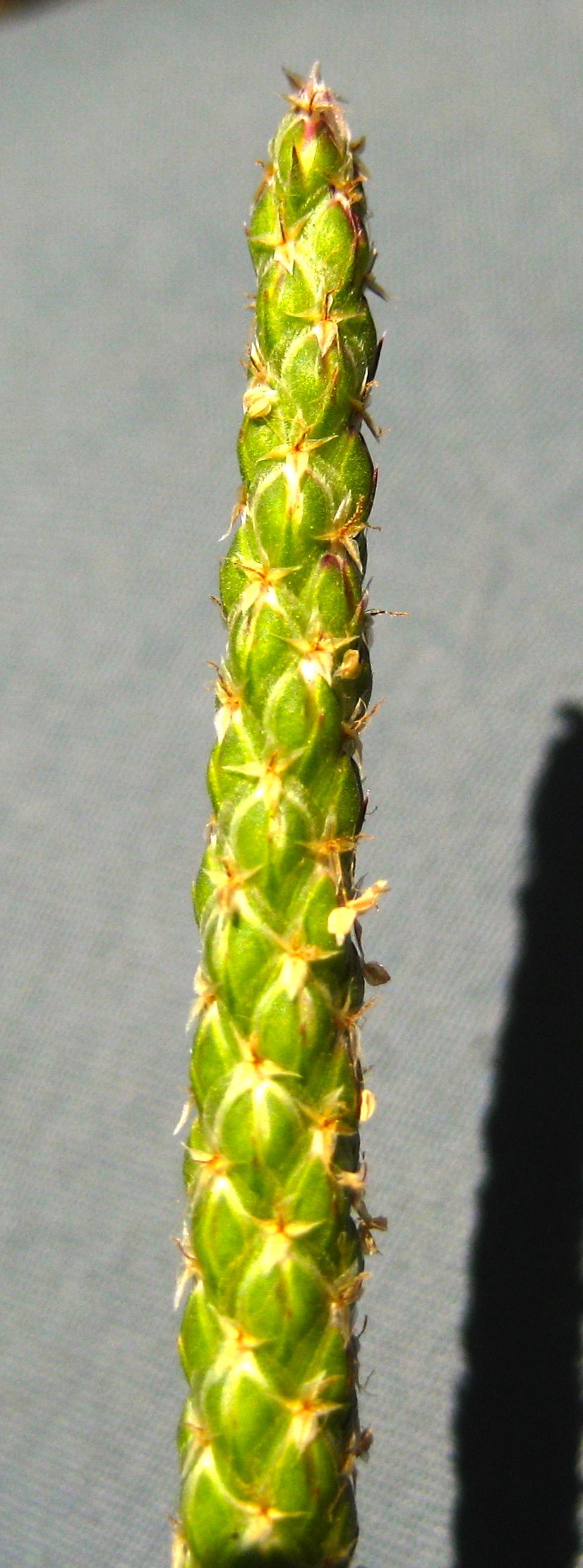
Photo by Chez Brungraber
Family: Plantaginaceae · Type: Herb · Not Native
Plantago coronopus (Buckhorn plantain) is a non-native California herb in the Plantaginaceae family, recognized by unique deeply pinnately lobed leaves.
Buckhorn plantain is a naturalized annual found in coastal California regions including the northern Coast Ranges, Central Valley, San Francisco Bay Area, and southern California islands at elevations below 300 meters. Flowering from April to July, this plant produces small, inconspicuous flowers in narrow, cylindrical spikes that often nod or become wavy when fruiting. Growing with slender stems up to 50 centimeters tall, it develops a taproot and has coarse hairs across its structure. Its distinctive leaves are 4 to 25 centimeters long, narrowly lanceolate with deeply cut pinnate lobes that ascend sharply from the base. In weedy and disturbed habitats like coastal bluffs, salt marshes, and grassy flats, this adaptable plant can quickly colonize trampled or open ground.
Identification and appearance
Key characters: 15 sympatric species; unique deeply pinnately lobed leaves
Habitat and range
Habitat: Coastal bluffs, salt marshes, weedy trampled places, chaparral, grassy flats
Elevation: < 300 m
California counties: Humboldt, Placer, Los Angeles, Ventura, Solano, Santa Cruz, San Luis Obispo, Santa Barbara, Yuba, Sonoma, Monterey, San Francisco, Shasta, Contra Costa, Butte, Mendocino, Orange, Yolo, San Diego, Riverside, Amador, San Mateo, Alameda, Marin, Sacramento, Merced, Tehama, Nevada, Sutter, Glenn, Colusa, Napa, Del Norte, Stanislaus, San Benito, Santa Clara
Outside California: native to Europe
Bloom period
Plantago coronopus blooms Apr-Jul.
How to tell it apart
vs Carex: Plantago has broad ribbed leaves in rosettes; Carex has narrow grass-like leaves in 3 ranks.; vs Rumex: Plantago leaves have parallel veins; Rumex leaves have a prominent central midvein with branching veins.; vs Dudleya: Plantago has thin ribbed leaves; Dudleya has thick succulent leaves.; vs Micropus: Plantago has dense cylindrical spikes; Micropus has woolly flower heads in leaf axils.; vs Amsinckia: Plantago has parallel-veined leaves in rosettes; Amsinckia has bristly alternate leaves on upright stems.
Frequently asked questions
Is Plantago coronopus native to California?
No. Plantago coronopus is not native to California (recorded as not native).
When does Plantago coronopus bloom?
Plantago coronopus blooms Apr-Jul.
Where in California does Plantago coronopus grow?
Plantago coronopus occurs in Humboldt, Placer, Los Angeles, Ventura, Solano, Santa Cruz, San Luis Obispo, Santa Barbara and other counties, at elevations of < 300 m.
What plant family does Plantago coronopus belong to?
Plantago coronopus is in the Plantaginaceae family, genus Plantago.
What habitat does Plantago coronopus grow in?
Plantago coronopus grows in Coastal bluffs, salt marshes, weedy trampled places, chaparral, grassy flats.
Related species
Other California species in the same genus, family, or bioregion.
Sources: Jepson eFlora · Index of California Plant Names · CalPhotos
Last updated 2026-10-07
Data from The California Species Project — 14,000+ California species with verified data from CNPS, CDFW, USFWS, Cal-IPC, and more.