Platanus racemosa
Western sycamore, Western Sycamore
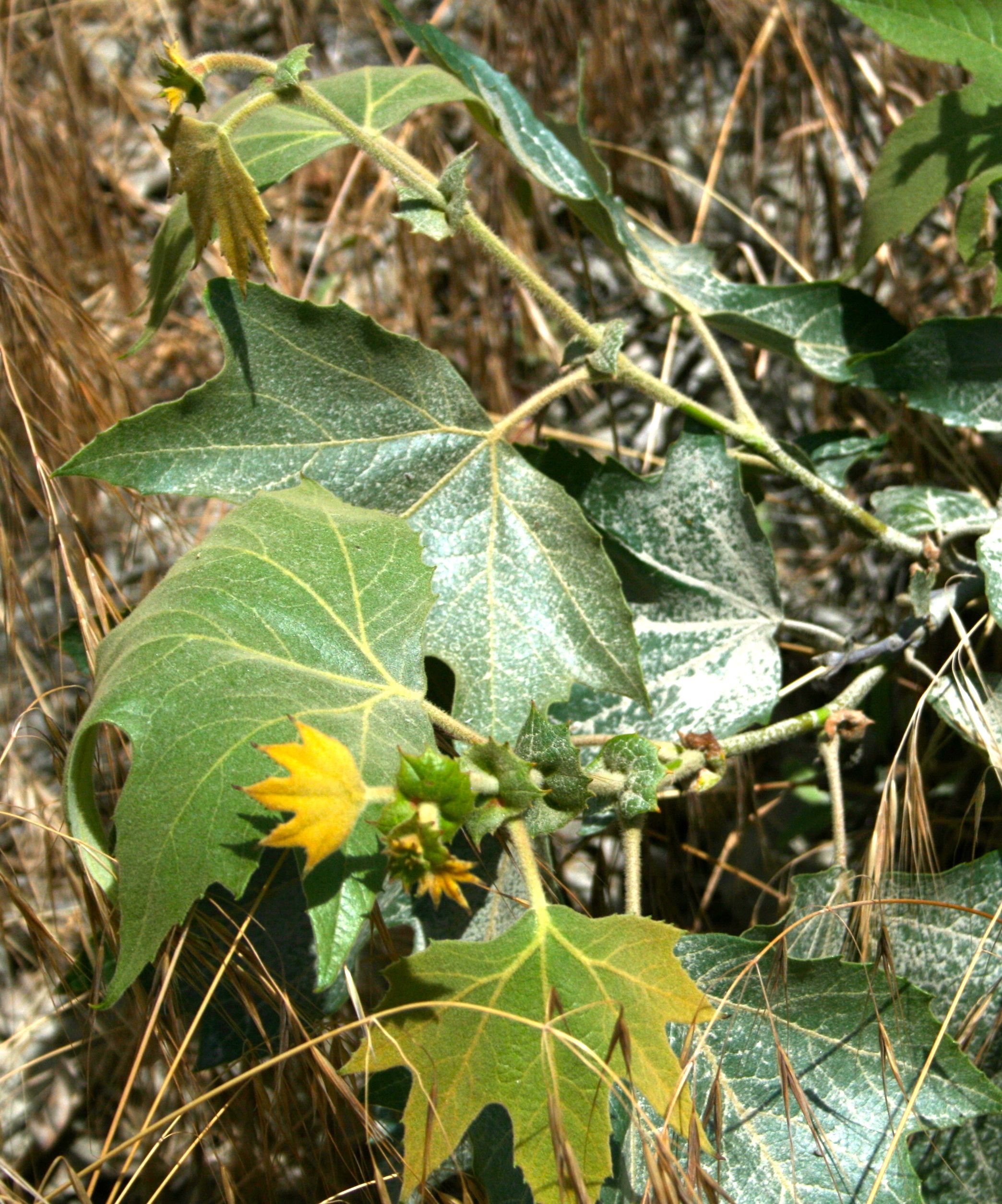
Photo by Chez Brungraber
Family: Platanaceae · Type: Tree · Native
Platanus racemosa (Western sycamore) is a native California tree in the Platanaceae family, recognized by (P. ×hispanica). Clear habitat and morphological differences, plus native status.
Western sycamore is a native tree found in California regions including the Central Valley, Coast Ranges, Sierra Nevada foothills, Tehachapi, southwestern California, and Mojave Desert, particularly along streamsides, canyons, and arroyos at elevations below 2,000 meters. Flowering from February to April, this tree produces small greenish-white flowers in distinctive spherical clusters. Growing to an impressive 10 to 35 meters tall with often leaning trunks and bases up to one meter wide, it features light gray to tan bark that peels away in distinctive patches. Its large leaves are approximately 10 to 25 centimeters wide, nearly round with surfaces that range from glabrous to slightly hairy, and have prominent stipules that persist even after maturity. The tree produces round fruit heads two to three centimeters wide, with individual achenes bearing persistent hairy bases that give the fruit clusters a distinctive, textured appearance.
Identification and appearance
Key characters: 1 sympatric species (P. ×hispanica). Clear habitat and morphological differences, plus native status.
Habitat and range
Habitat: Common. Streamsides, canyons, arroyos
Elevation: < 2000 m
California counties: Los Angeles, Kern, San Diego, Orange, Tulare, Riverside, Ventura, San Luis Obispo, Monterey, Santa Clara, Santa Barbara, San Bernardino, Butte, San Benito, San Francisco, Santa Cruz, Colusa, Fresno, Alameda, San Joaquin, Stanislaus, Mendocino, Sutter, Merced, Sacramento, Tehama, Contra Costa, Madera, Yuba, Yolo
Outside California: Baja California
Bloom period
Platanus racemosa blooms Feb-Apr.
How to tell it apart
vs Acer: Platanus has fuzzy spiky seed balls hanging on strings; Acer has paired winged seeds (helicopters).; vs Quercus: Platanus bark peels in patches showing lighter colors; oak bark stays intact and produces acorns.; vs Liquidambar: Platanus seed balls are fuzzy-spiky; sweetgum balls are hard and spiny like medieval maces.; vs Populus: Platanus leaves are fuzzy when young with peeling bark; Populus leaves are smooth and bark stays intact.; vs Eucalyptus: Platanus has hand-shaped lobed leaves; Eucalyptus has unlobed, often sickle-shaped leaves.
Frequently asked questions
Is Platanus racemosa native to California?
Yes. Platanus racemosa is native to California (recorded as native).
When does Platanus racemosa bloom?
Platanus racemosa blooms Feb-Apr.
Where in California does Platanus racemosa grow?
Platanus racemosa occurs in Los Angeles, Kern, San Diego, Orange, Tulare, Riverside, Ventura, San Luis Obispo and other counties, at elevations of < 2000 m.
What plant family does Platanus racemosa belong to?
Platanus racemosa is in the Platanaceae family, genus Platanus.
What habitat does Platanus racemosa grow in?
Platanus racemosa grows in Common. Streamsides, canyons, arroyos.
Related species
Other California species in the same genus, family, or bioregion.
Sources: Jepson eFlora · Index of California Plant Names · CalPhotos
Last updated 2026-10-07
Data from The California Species Project — 14,000+ California species with verified data from CNPS, CDFW, USFWS, Cal-IPC, and more.