Plectritis congesta subsp. congesta
Sea blush, Sea Blush
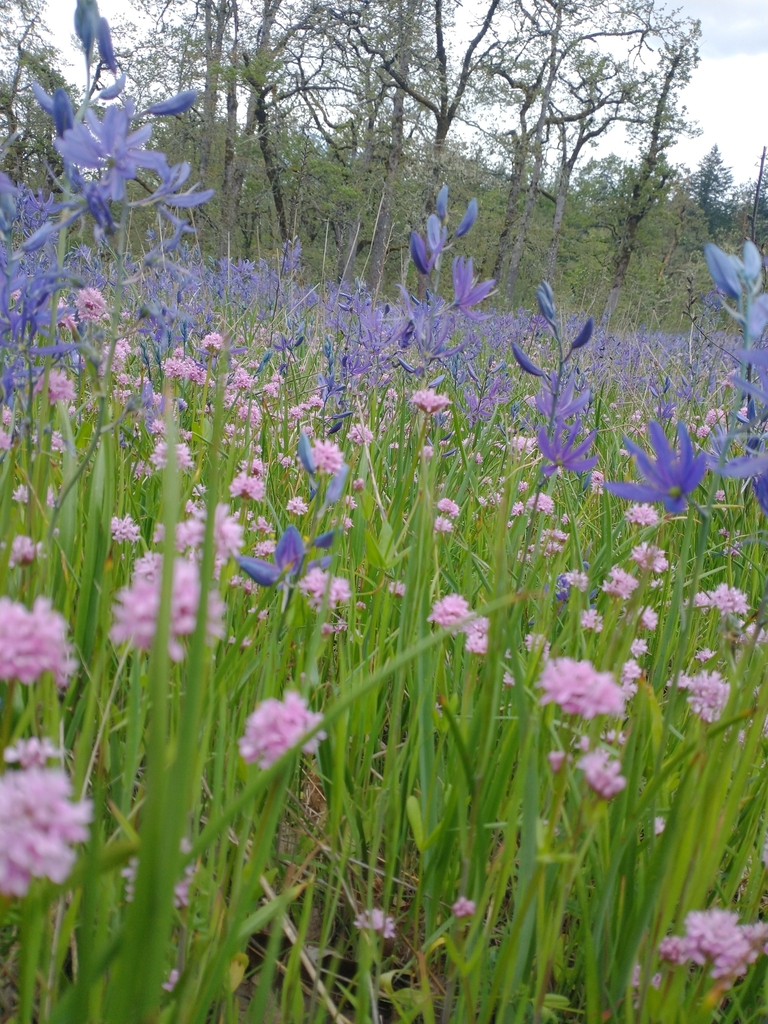
Photo: parent species Plectritis congesta · no rights reserved · CC0
Family: Valerianaceae · Type: Herb · Native
Plectritis congesta subsp. congesta (Sea blush) is a native California herb in the Valerianaceae family, recognized by flower size, spur shape, and anther size.
Sea blush is a California native annual found in northwestern California, Sierra Nevada, Sacramento Valley, and central western California in coastal bluffs and open, partly shaded slopes at elevations below 1,700 meters. Flowering from March to June, this plant produces delicate pale to dark pink flowers with a two-lipped corolla 4 to 9.5 millimeters long and a slender spur with an enlarged tip. Growing as a slender annual with multiple thin stems, it spreads in delicate clusters across coastal landscapes. Its leaves are soft and variable, typically arranged in loose clusters along the stem. The flower's distinctive pink coloration and unique two-lipped shape make it a charming addition to coastal grassland and bluff environments.
Identification and appearance
Key characters: 3 sympatric species; distinguished by flower size, spur shape, and anther size
Habitat and range
Habitat: Coastal bluffs, open, partly shaded slopes
Elevation: < 1700 m
California counties: Trinity, Del Norte, Humboldt, Siskiyou, San Luis Obispo, Santa Barbara
Outside California: to British Columbia
Bloom period
Plectritis congesta subsp. congesta blooms Mar-Jun.
How to tell it apart
vs Valerianella: Plectritis branches simply; Valerianella forks repeatedly in a symmetrical candelabra pattern.; vs Valeriana: Plectritis is annual with simple leaves; Valeriana is perennial with fern-like compound leaves.; vs Whipplea: Plectritis has tiny spurred flowers in dense clusters; Whipplea has 5-petaled white flowers with opposite leaves.; vs Centranthus: Plectritis is a delicate annual; Centranthus is a robust perennial with bright purple-red flowers.; vs Trifolium: Plectritis has tiny tubular flowers; Trifolium has pea-family flowers with three-part clover leaves.
Frequently asked questions
Is Plectritis congesta subsp. congesta native to California?
Yes. Plectritis congesta subsp. congesta is native to California (recorded as native).
When does Plectritis congesta subsp. congesta bloom?
Plectritis congesta subsp. congesta blooms Mar-Jun.
Where in California does Plectritis congesta subsp. congesta grow?
Plectritis congesta subsp. congesta occurs in Trinity, Del Norte, Humboldt, Siskiyou, San Luis Obispo, Santa Barbara, at elevations of < 1700 m.
What plant family does Plectritis congesta subsp. congesta belong to?
Plectritis congesta subsp. congesta is in the Valerianaceae family, genus Plectritis.
What habitat does Plectritis congesta subsp. congesta grow in?
Plectritis congesta subsp. congesta grows in Coastal bluffs, open, partly shaded slopes.
Related species
Other California species in the same genus, family, or bioregion.
Sources: Jepson eFlora · Index of California Plant Names · CalPhotos
Last updated 2026-10-07
Data from The California Species Project — 14,000+ California species with verified data from CNPS, CDFW, USFWS, Cal-IPC, and more.