Pleuropogon californicus var. californicus
Annual semaphoregrass
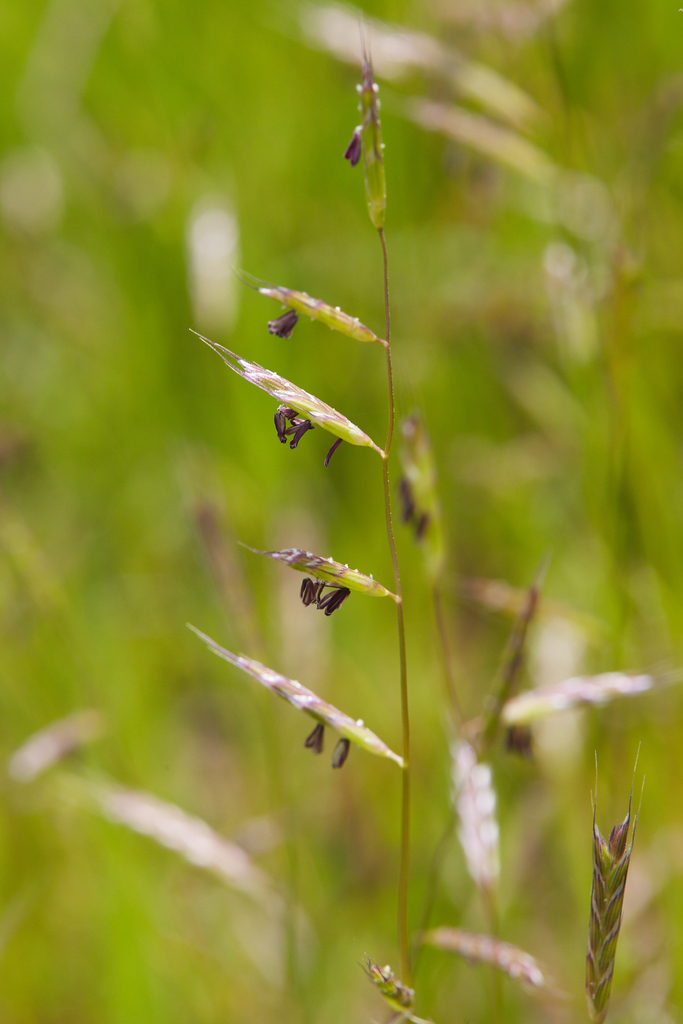
Photo: parent species Pleuropogon californicus · (c) Ken-ichi Ueda, some rights reserved (CC BY) · licence
Family: Poaceae · Type: Grass · Native
Pleuropogon californicus var. californicus (Annual semaphoregrass) is a native California grass in the Poaceae family, recognized by annual habit and long lemma awns.
Annual semaphoregrass is a California native annual found in northwestern California, the northern Sierra Nevada foothills, central western California, and the Great Valley in wet places, vernal pools, and wet grasslands at elevations below 650 meters. Flowering from March to June, this grass produces delicate spikes with spikelets 10 to 30 millimeters long, featuring distinctive lemma awns that extend 5 to 11 millimeters. Growing in slender, delicate clusters with fine, flexible stems, it spreads in loose, open formations across wet meadow environments. Its narrow leaves are typically pale green, emerging from the base in thin, graceful strands. The grass produces small spikelets with subtle palea appendages measuring 0.5 to 2.5 millimeters long, adding to its delicate botanical character.
Identification and appearance
Key characters: 3 sympatric species; key features are annual habit and long lemma awns
Habitat and range
Habitat: Wet places, vernal pools, wet grassland
Elevation: < 650 m
California counties: Sonoma, Sacramento, Marin, Solano, Napa, Lake, San Mateo, Alameda, Stanislaus, Contra Costa, San Luis Obispo, Mendocino, Amador, Yolo, San Joaquin
Bloom period
Pleuropogon californicus var. californicus blooms Mar-Jun.
How to tell it apart
vs Glyceria: Pleuropogon has winged seed husks; Glyceria seed husks lack wings.; vs Avena: Pleuropogon grows in wet places with nodding clusters; Avena grows in dry disturbed sites with upright clusters.; vs Hordeum: Pleuropogon has broad leaves and nodding spikelets; Hordeum has narrow leaves and upright spikes.; vs Hilaria: Pleuropogon prefers wet grasslands; Hilaria grows in dry deserts with 3-spikelet clusters.; vs Desmazeria: Pleuropogon has nodding spikelets and winged husks; Desmazeria has stiff upright spikelets.
Frequently asked questions
Is Pleuropogon californicus var. californicus native to California?
Yes. Pleuropogon californicus var. californicus is native to California (recorded as native).
When does Pleuropogon californicus var. californicus bloom?
Pleuropogon californicus var. californicus blooms Mar-Jun.
Where in California does Pleuropogon californicus var. californicus grow?
Pleuropogon californicus var. californicus occurs in Sonoma, Sacramento, Marin, Solano, Napa, Lake, San Mateo, Alameda and other counties, at elevations of < 650 m.
What plant family does Pleuropogon californicus var. californicus belong to?
Pleuropogon californicus var. californicus is in the Poaceae family, genus Pleuropogon.
What habitat does Pleuropogon californicus var. californicus grow in?
Pleuropogon californicus var. californicus grows in Wet places, vernal pools, wet grassland.
Related species
Other California species in the same genus, family, or bioregion.
Sources: Jepson eFlora · Index of California Plant Names · CalPhotos
Last updated 2026-10-07
Data from The California Species Project — 14,000+ California species with verified data from CNPS, CDFW, USFWS, Cal-IPC, and more.