Pleuropogon californicus var. davyi
Davy's semaphore grass
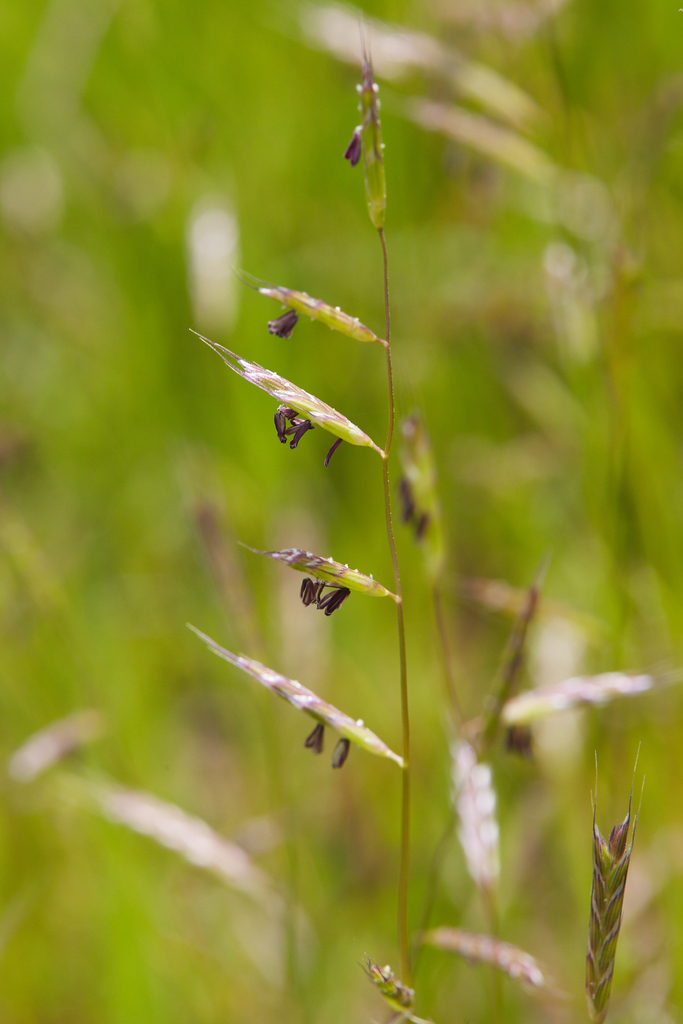
Photo: parent species Pleuropogon californicus · (c) Ken-ichi Ueda, some rights reserved (CC BY) · licence
Family: Poaceae · Type: Grass · Native
Conservation status: CNPS 4.3
Pleuropogon californicus var. davyi (Davy's semaphore grass) is a native California grass in the Poaceae family, recognized by perennial habit, long spikelets, and lack of prominent awns.
Davy's semaphore grass is a California native perennial found in northern coastal ranges and inner north Coast Ranges in vernal pools, sloughs, and marshy grasslands at elevations below 650 meters. Flowering from March to June, this grass produces delicate, pale green to greenish-white flower clusters in elongated spikes 15 to 65 millimeters long. Growing in dense, clustered tufts with slender stems 20 to 50 centimeters tall, it forms compact, attractive bunches in wet habitats. Its leaves are narrow and grass-like, emerging from the base in a characteristic dense, tufted arrangement with fine, flexible blades. The flower spikelets occasionally have short awns less than 1.5 millimeters long, adding subtle texture to its graceful inflorescence.
Identification and appearance
Key characters: 3 sympatric species; distinguished by perennial habit, long spikelets, and lack of prominent awns
Habitat and range
Habitat: Vernal pools, sloughs, marshy grassland
Elevation: < 650 m
Bloom period
Pleuropogon californicus var. davyi blooms Mar-Jun.
Conservation status
CNPS 4.3
How to tell it apart
vs Glyceria: Pleuropogon has winged seed husks; Glyceria seed husks lack wings.; vs Avena: Pleuropogon grows in wet places with nodding clusters; Avena grows in dry disturbed sites with upright clusters.; vs Hordeum: Pleuropogon has broad leaves and nodding spikelets; Hordeum has narrow leaves and upright spikes.; vs Hilaria: Pleuropogon prefers wet grasslands; Hilaria grows in dry deserts with 3-spikelet clusters.; vs Desmazeria: Pleuropogon has nodding spikelets and winged husks; Desmazeria has stiff upright spikelets.
Frequently asked questions
Is Pleuropogon californicus var. davyi native to California?
Yes. Pleuropogon californicus var. davyi is native to California (recorded as native).
When does Pleuropogon californicus var. davyi bloom?
Pleuropogon californicus var. davyi blooms Mar-Jun.
What plant family does Pleuropogon californicus var. davyi belong to?
Pleuropogon californicus var. davyi is in the Poaceae family, genus Pleuropogon.
Is Pleuropogon californicus var. davyi rare or endangered?
Pleuropogon californicus var. davyi carries California Rare Plant Rank 4.3, state rank S3.
What habitat does Pleuropogon californicus var. davyi grow in?
Pleuropogon californicus var. davyi grows in Vernal pools, sloughs, marshy grassland.
Related species
Other California species in the same genus, family, or bioregion.
Sources: Jepson eFlora · CalPhotos · CDFW CNDDB
Last updated 2026-10-07
Data from The California Species Project — 14,000+ California species with verified data from CNPS, CDFW, USFWS, Cal-IPC, and more.