Pleuropogon hooverianus
North coast semaphore grass
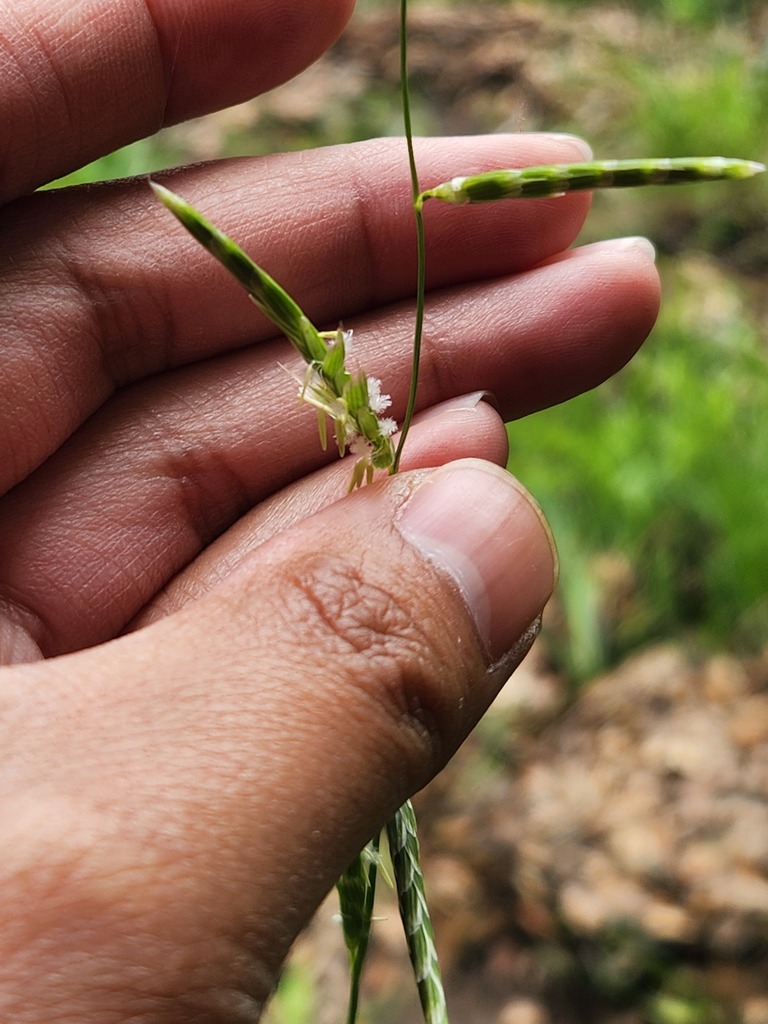
no rights reserved · CC0
Family: Poaceae · Type: Grass · Native
Conservation status: CNPS 1B.1
Pleuropogon hooverianus (North coast semaphore grass) is a native California grass in the Poaceae family, recognized by tall stature, rhizomatous habit, and erect spikelets.
North coast semaphore grass is a rare (CNPS 1B.1) California native perennial found in southern North Coast, northern Coast Ranges, and northern San Francisco Bay bioregions in wet grassy areas at elevations below 1,300 meters. Flowering from March to June, this plant produces green-tinged flowers in delicate, erect spikelets 2 to 4.5 centimeters long. Growing with upright stems 80 to 160 centimeters tall emerging from underground rhizomes, it forms dense clumps in moist grassland environments. Its leaves are distinctively narrow, with blades 3 to 10 millimeters wide and ligules 3 to 7 millimeters long. The grass produces intricate spikelets with lemmas 7 to 12 millimeters long, occasionally bearing short awns up to 4 millimeters.
Identification and appearance
Key characters: 3 sympatric species; distinguished by tall stature, rhizomatous habit, and erect spikelets
Habitat and range
Habitat: Wet grassy areas
Elevation: < 1300 m
California counties: Mendocino, Marin, Sonoma
Bloom period
Pleuropogon hooverianus blooms Mar-Jun.
Conservation status
CNPS 1B.1
How to tell it apart
vs Glyceria: Pleuropogon has winged seed husks; Glyceria seed husks lack wings.; vs Avena: Pleuropogon grows in wet places with nodding clusters; Avena grows in dry disturbed sites with upright clusters.; vs Hordeum: Pleuropogon has broad leaves and nodding spikelets; Hordeum has narrow leaves and upright spikes.; vs Hilaria: Pleuropogon prefers wet grasslands; Hilaria grows in dry deserts with 3-spikelet clusters.; vs Desmazeria: Pleuropogon has nodding spikelets and winged husks; Desmazeria has stiff upright spikelets.
Frequently asked questions
Is Pleuropogon hooverianus native to California?
Yes. Pleuropogon hooverianus is native to California (recorded as native).
When does Pleuropogon hooverianus bloom?
Pleuropogon hooverianus blooms Mar-Jun.
Where in California does Pleuropogon hooverianus grow?
Pleuropogon hooverianus occurs in Mendocino, Marin, Sonoma, at elevations of < 1300 m.
What plant family does Pleuropogon hooverianus belong to?
Pleuropogon hooverianus is in the Poaceae family, genus Pleuropogon.
Is Pleuropogon hooverianus rare or endangered?
Pleuropogon hooverianus carries California Rare Plant Rank 1B.1, state rank S2.
Related species
Other California species in the same genus, family, or bioregion.
- Pleuropogon refractus — Nodding semaphore grass
- Pleuropogon sp. — Semaphore grass
- Pleuropogon californicus — Annual semaphoregrass
- Pleuropogon californicus var. californicus — Annual semaphoregrass
- Pleuropogon californicus var. davyi — Davy's semaphore grass
- Poa abbreviata — Dwarf blue grass
- Poa abbreviata subsp. marshii — Marsh's blue grass
Sources: Jepson eFlora · CNPS Rare Plant Inventory · Index of California Plant Names · CalPhotos · CDFW CNDDB
Last updated 2026-10-07
Data from The California Species Project — 14,000+ California species with verified data from CNPS, CDFW, USFWS, Cal-IPC, and more.