Pogogyne serpylloides
Thymeleaf beardstyle
no rights reserved · CC0
Family: Lamiaceae · Type: Herb · Native
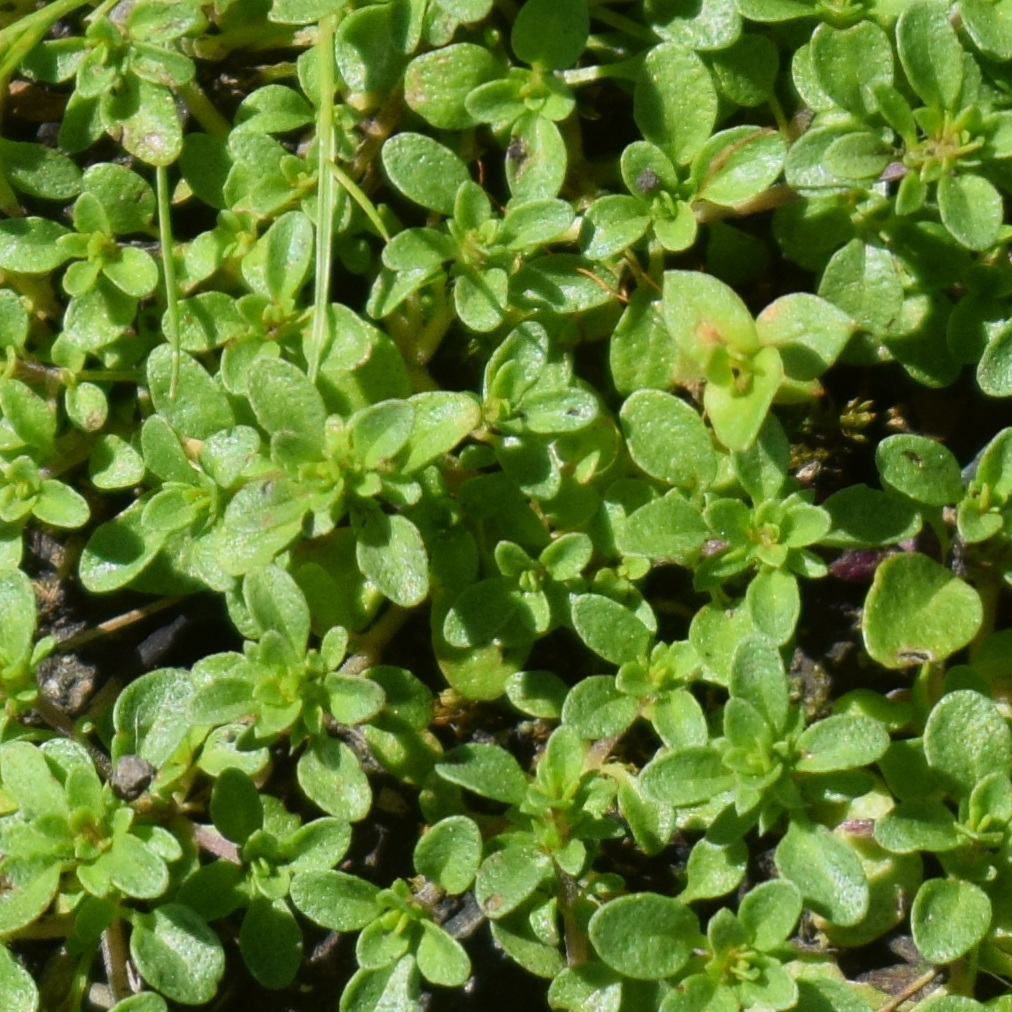
Pogogyne serpylloides (Thymeleaf beardstyle) is a native California herb in the Lamiaceae family, recognized by prostrate habit and tiny flowers in brushy habitat.
Thymeleaf beardstyle is a California native annual found in northern Coast Ranges, northern Sierra Nevada foothills, San Francisco Bay Area, and southern Coast Ranges in grassy and brushy areas at elevations below 1,200 meters. Flowering from March to June, this plant produces lavender flowers small and delicate, clustered in dense terminal and axillary heads. Growing with prostrate to decumbent stems 2.5 to 20 centimeters long, it spreads in slender, generally branched formations. Its stems are extremely thin, approximately 0.5 millimeters in diameter, with small clusters of flowers appearing in axillary and terminal positions. The plant's inconspicuous nature allows it to blend subtly into grassy landscapes, with flowers measuring just 2.5 to 5 millimeters long.
Identification and appearance
Key characters: 3 sympatric species; distinguished by prostrate habit and tiny flowers in brushy habitat
Habitat and range
Habitat: Grassy, brushy areas
Elevation: < 1200 m
California counties: Contra Costa, Lake, Tulare, Monterey, Santa Clara, Tuolumne, Alameda, Calaveras, Santa Cruz, Mendocino, Mariposa, San Mateo, San Luis Obispo, Santa Barbara, Shasta, Napa, Modoc, Sonoma, Placer, San Joaquin, El Dorado, Merced, Amador, San Benito, Marin, Humboldt, Stanislaus, San Francisco
Bloom period
Pogogyne serpylloides blooms Mar-Jun.
How to tell it apart
vs Navarretia: Pogogyne has square stems and opposite leaves; Navarretia has round stems and alternate leaves.; vs Mentha: Pogogyne is annual in vernal pools; Mentha is perennial in permanently moist sites.; vs Verbena: Pogogyne has square mint stems; Verbena has four-sided but not square stems.; vs Prunella: Pogogyne is annual with bristly bracts; Prunella is perennial with smooth cylindrical spike.; vs Origanum: Pogogyne has narrow linear bracts; Origanum has broad pale overlapping bracts.
Frequently asked questions
Is Pogogyne serpylloides native to California?
Yes. Pogogyne serpylloides is native to California (recorded as native).
When does Pogogyne serpylloides bloom?
Pogogyne serpylloides blooms Mar-Jun.
Where in California does Pogogyne serpylloides grow?
Pogogyne serpylloides occurs in Contra Costa, Lake, Tulare, Monterey, Santa Clara, Tuolumne, Alameda, Calaveras and other counties, at elevations of < 1200 m.
What plant family does Pogogyne serpylloides belong to?
Pogogyne serpylloides is in the Lamiaceae family, genus Pogogyne.
What habitat does Pogogyne serpylloides grow in?
Pogogyne serpylloides grows in Grassy, brushy areas.
Related species
Other California species in the same genus, family, or bioregion.
Sources: Jepson eFlora · Index of California Plant Names · CalPhotos
Last updated 2026-10-07
Data from The California Species Project — 14,000+ California species with verified data from CNPS, CDFW, USFWS, Cal-IPC, and more.