Polemonium micranthum
Annual polemonium
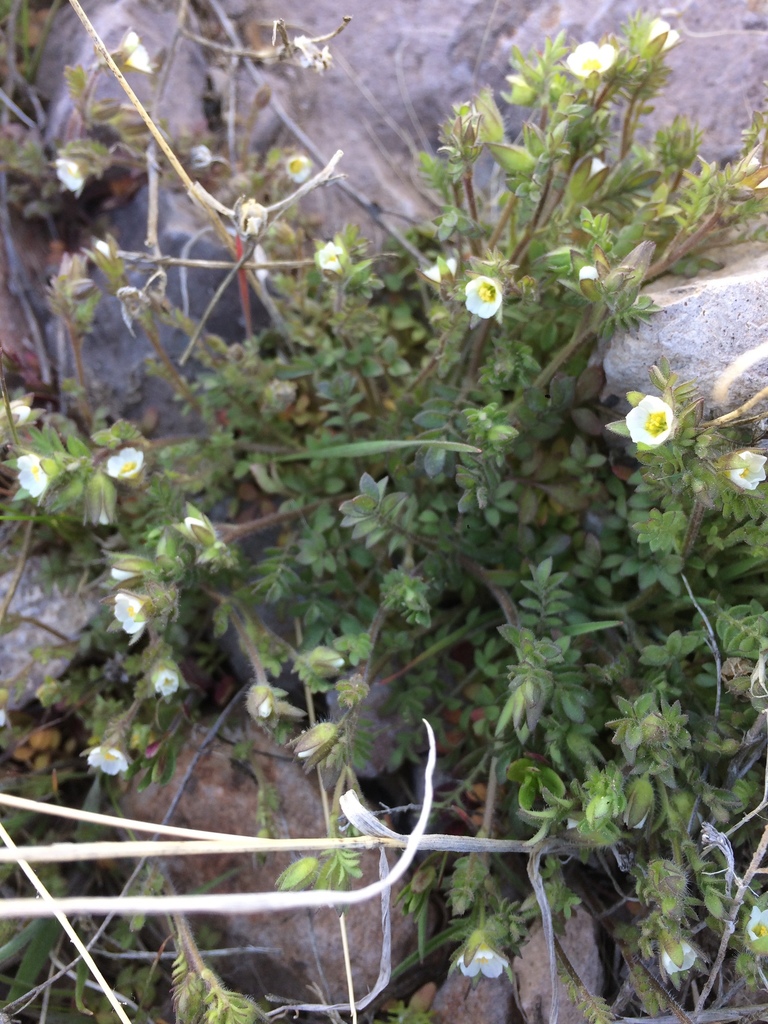
(c) B. Phalan, some rights reserved (CC BY), uploaded by B. Phalan · licence
Family: Polemoniaceae · Type: Herb · Native
Polemonium micranthum (Annual polemonium) is a native California herb in the Polemoniaceae family, recognized by annual habit and tiny flowers.
Annual polemonium is a native annual herb found in the Klamath Ranges, northern California High Sierra, northern San Joaquin Valley, southeastern South Coast Ranges, northern Transverse Ranges, and Modoc Plateau in open, seasonally wet areas among shrubs at elevations of 600 to 1,800 meters. Flowering from April to June, this delicate plant produces light blue to white flowers in small clusters with bell-shaped corollas about 3 to 5 millimeters in diameter. Growing with soft-glandular hairy stems 5 to 25 centimeters tall, it ranges from decumbent to fully erect in growth habit. Its leaves are compound with 5 to 15 small lanceolate leaflets, each 2 to 7 millimeters long, arranged along stems that remain consistently sized from base to tip. The fruit is a small capsule 3 to 4 millimeters long containing up to 6 dark brown seeds.
Identification and appearance
Key characters: 7 sympatric species; annual habit and tiny flowers are diagnostic
Habitat and range
Habitat: Open, seasonally wet areas, generally among shrubs
Elevation: 600-1800 m
California counties: Lassen, Modoc, Kern, Santa Barbara, Siskiyou, Plumas, Placer, Shasta, Alpine, Sierra, Ventura, Trinity
Outside California: to British Columbia, Montana, South America
Bloom period
Polemonium micranthum blooms Apr-Jun.
How to tell it apart
vs Phlox: Polemonium (Jacob's ladder) has pinnately compound leaves with many discrete leaflets arranged ladder-like along the rachis; Phlox has simple, entire, usually opposite leaves.; vs Gilia: Polemonium bears true separate leaflets; Gilia leaves are pinnately dissected into narrow lobes rather than divided into distinct leaflets.; vs Ipomopsis: Polemonium leaflets are broad and entire; Ipomopsis leaves are finely cut into thread-like segments.; vs Collomia: Polemonium has compound leaves and open branched cymes; Collomia has entire to lobed leaves and flowers clustered among leafy bracts.; vs Vicia: Polemonium leaves lack tendrils and its flowers are radially symmetric bells or funnels; vetch leaves end in tendrils and bear bilateral pea flowers.
Frequently asked questions
Is Polemonium micranthum native to California?
Yes. Polemonium micranthum is native to California (recorded as native).
When does Polemonium micranthum bloom?
Polemonium micranthum blooms Apr-Jun.
Where in California does Polemonium micranthum grow?
Polemonium micranthum occurs in Lassen, Modoc, Kern, Santa Barbara, Siskiyou, Plumas, Placer, Shasta and other counties, at elevations of 600-1800 m.
What plant family does Polemonium micranthum belong to?
Polemonium micranthum is in the Polemoniaceae family, genus Polemonium.
What habitat does Polemonium micranthum grow in?
Polemonium micranthum grows in Open, seasonally wet areas, generally among shrubs.
Related species
Other California species in the same genus, family, or bioregion.
Sources: Jepson eFlora · Index of California Plant Names · CalPhotos
Last updated 2026-10-07
Data from The California Species Project — 14,000+ California species with verified data from CNPS, CDFW, USFWS, Cal-IPC, and more.