Polemonium occidentale
Great polemonium
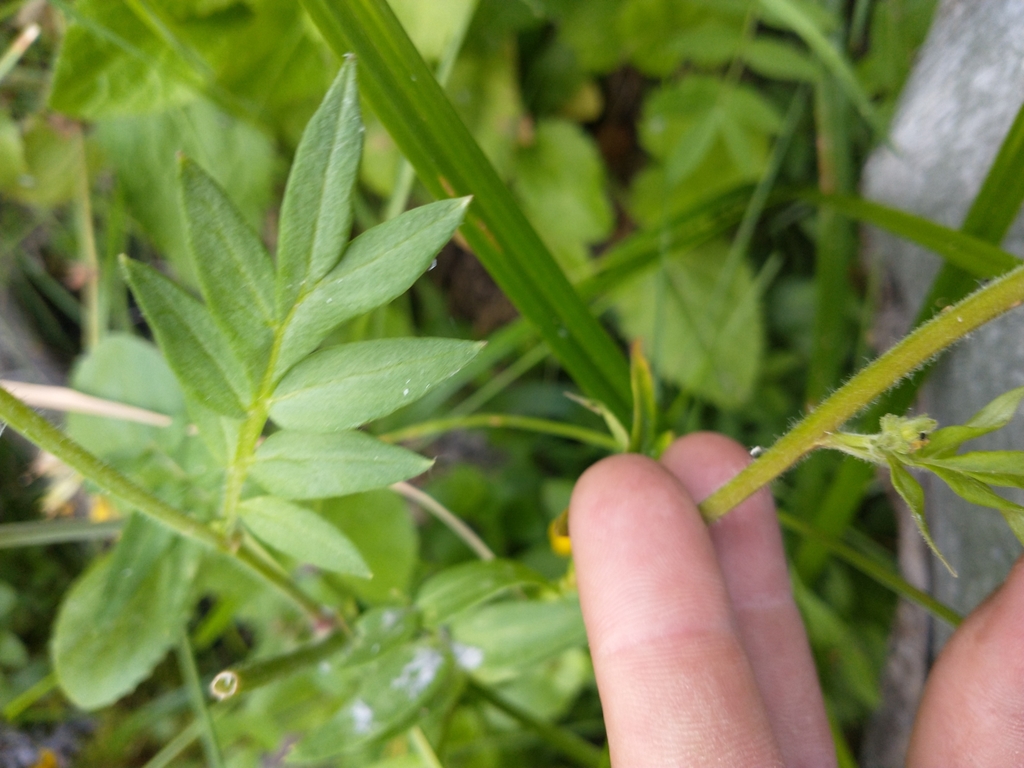
no rights reserved, uploaded by Drew Meyer · CC0
Family: Polemoniaceae · Type: Herb · Native
Polemonium occidentale (Great polemonium) is a native California herb in the Polemoniaceae family, recognized by large size and moist habitat preference.
Great polemonium is a California native perennial found in the Klamath Ranges, high Cascade Range, Sierra Nevada, southern Sierra Nevada, eastern Sierra Nevada, and Warner Mountains in moist meadows and streamside habitats at elevations of 900 to 3,300 meters. Flowering from June to September, this plant produces purple to blue flowers in open clusters, with bell-shaped blossoms 10 to 17 millimeters in diameter. Growing with erect stems 40 to 100 centimeters tall, it features glandular-hairy upper stems and a short, thin rhizome. Its compound leaves have 15 to 23 lanceolate leaflets, each 8 to 45 millimeters long, arranged along stems that become progressively smaller toward the top of the plant. The fruit is small, measuring 3 to 5 millimeters long with up to 10 dark brown seeds.
Identification and appearance
Key characters: 8 sympatric species; large size and moist habitat preference are diagnostic
Habitat and range
Habitat: Moist areas, meadows, streambanks
Elevation: 900-3300 m
California counties: Mono, San Bernardino, Tulare, Fresno, Nevada, Tehama, Madera, Inyo, Placer, El Dorado, Butte, Kern, Alpine, Sierra, Lassen, Tuolumne, Modoc, Siskiyou, Plumas
Outside California: to British Columbia, Colorado
Bloom period
Polemonium occidentale blooms Jun-Sep.
How to tell it apart
vs Phlox: Polemonium (Jacob's ladder) has pinnately compound leaves with many discrete leaflets arranged ladder-like along the rachis; Phlox has simple, entire, usually opposite leaves.; vs Gilia: Polemonium bears true separate leaflets; Gilia leaves are pinnately dissected into narrow lobes rather than divided into distinct leaflets.; vs Ipomopsis: Polemonium leaflets are broad and entire; Ipomopsis leaves are finely cut into thread-like segments.; vs Collomia: Polemonium has compound leaves and open branched cymes; Collomia has entire to lobed leaves and flowers clustered among leafy bracts.; vs Vicia: Polemonium leaves lack tendrils and its flowers are radially symmetric bells or funnels; vetch leaves end in tendrils and bear bilateral pea flowers.
Frequently asked questions
Is Polemonium occidentale native to California?
Yes. Polemonium occidentale is native to California (recorded as native).
When does Polemonium occidentale bloom?
Polemonium occidentale blooms Jun-Sep.
Where in California does Polemonium occidentale grow?
Polemonium occidentale occurs in Mono, San Bernardino, Tulare, Fresno, Nevada, Tehama, Madera, Inyo and other counties, at elevations of 900-3300 m.
What plant family does Polemonium occidentale belong to?
Polemonium occidentale is in the Polemoniaceae family, genus Polemonium.
What habitat does Polemonium occidentale grow in?
Polemonium occidentale grows in Moist areas, meadows, streambanks.
Related species
Other California species in the same genus, family, or bioregion.
Sources: Jepson eFlora · Index of California Plant Names · CalPhotos
Last updated 2026-10-07
Data from The California Species Project — 14,000+ California species with verified data from CNPS, CDFW, USFWS, Cal-IPC, and more.