Polemonium pulcherrimum var. shastense
Mt. Shasta sky pilot
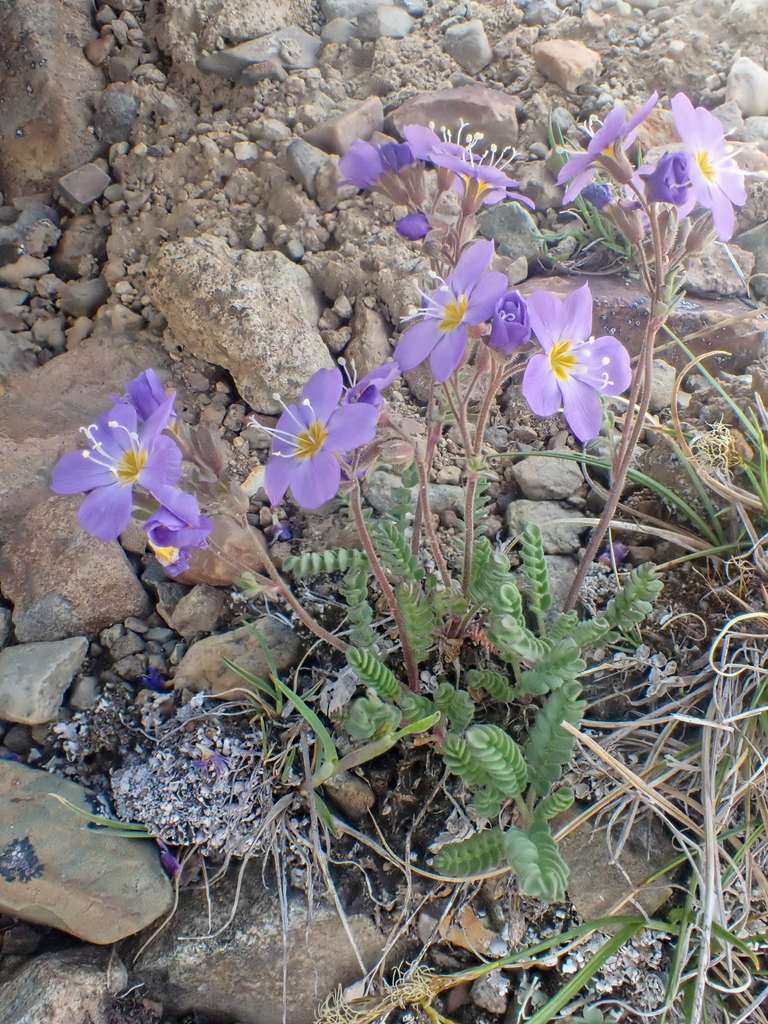
Photo: parent species Polemonium pulcherrimum · (c) Trevor Van Loon, some rights reserved (CC BY) · licence
Family: Polemoniaceae · Type: Herb · Native
Conservation status: CNPS 1B.2
Polemonium pulcherrimum var. shastense (Mt. Shasta sky pilot) is a native California herb in the Polemoniaceae family, recognized by white flowers with pink veins diagnostic vs other pulcherrimum taxa.
Mt. Shasta sky pilot is a rare (CNPS 1B.2) California native perennial found in the Klamath Ranges, Cascade Range Foothills, and Modoc Plateau in volcanic talus at elevations of 2,590 to 3,170 meters. Flowering from July to September, this plant produces delicate white flowers with distinctive pink veins or pink tinges, creating a subtle bicolor effect. Growing as a compact plant 7 to 18 centimeters tall, it features stems and foliage that are densely covered in glandular hairs. Its small leaves are finely divided, typical of sky pilot species, forming intricate clusters close to the ground. This high-elevation mountain species demonstrates remarkable adaptation to harsh alpine environments with its diminutive yet resilient form.
Identification and appearance
Key characters: 7 sympatric species; white flowers with pink veins diagnostic vs other pulcherrimum taxa
Habitat and range
Habitat: Volcanic talus
Elevation: 2590-3170 m
California counties: Shasta, Siskiyou
Bloom period
Polemonium pulcherrimum var. shastense blooms Jul-Sep.
Conservation status
CNPS 1B.2
How to tell it apart
vs Phlox: Polemonium (Jacob's ladder) has pinnately compound leaves with many discrete leaflets arranged ladder-like along the rachis; Phlox has simple, entire, usually opposite leaves.; vs Gilia: Polemonium bears true separate leaflets; Gilia leaves are pinnately dissected into narrow lobes rather than divided into distinct leaflets.; vs Ipomopsis: Polemonium leaflets are broad and entire; Ipomopsis leaves are finely cut into thread-like segments.; vs Collomia: Polemonium has compound leaves and open branched cymes; Collomia has entire to lobed leaves and flowers clustered among leafy bracts.; vs Vicia: Polemonium leaves lack tendrils and its flowers are radially symmetric bells or funnels; vetch leaves end in tendrils and bear bilateral pea flowers.
Frequently asked questions
Is Polemonium pulcherrimum var. shastense native to California?
Yes. Polemonium pulcherrimum var. shastense is native to California (recorded as native).
When does Polemonium pulcherrimum var. shastense bloom?
Polemonium pulcherrimum var. shastense blooms Jul-Sep.
Where in California does Polemonium pulcherrimum var. shastense grow?
Polemonium pulcherrimum var. shastense occurs in Shasta, Siskiyou, at elevations of 2590-3170 m.
What plant family does Polemonium pulcherrimum var. shastense belong to?
Polemonium pulcherrimum var. shastense is in the Polemoniaceae family, genus Polemonium.
Is Polemonium pulcherrimum var. shastense rare or endangered?
Polemonium pulcherrimum var. shastense carries California Rare Plant Rank 1B.2, state rank S2.
Related species
Other California species in the same genus, family, or bioregion.
- Polemonium sp.
- Polemonium californicum — California polemonium
- Polemonium carneum — Oregon polemonium
- Polemonium chartaceum — Mason's sky pilot
- Polemonium eddyense — Mount eddy sky pilot
- Polemonium eximium — Showy sky pilot
- Saltugilia australis — Southern gilia
- Saltugilia caruifolia — Caraway-leaved woodland-gilia
- Saltugilia latimeri — Latimer's woodland-gilia
Sources: Jepson eFlora · CNPS Rare Plant Inventory · Index of California Plant Names · CalPhotos · CDFW CNDDB
Last updated 2026-10-07
Data from The California Species Project — 14,000+ California species with verified data from CNPS, CDFW, USFWS, Cal-IPC, and more.