Polygonum sawatchense subsp. oblivium
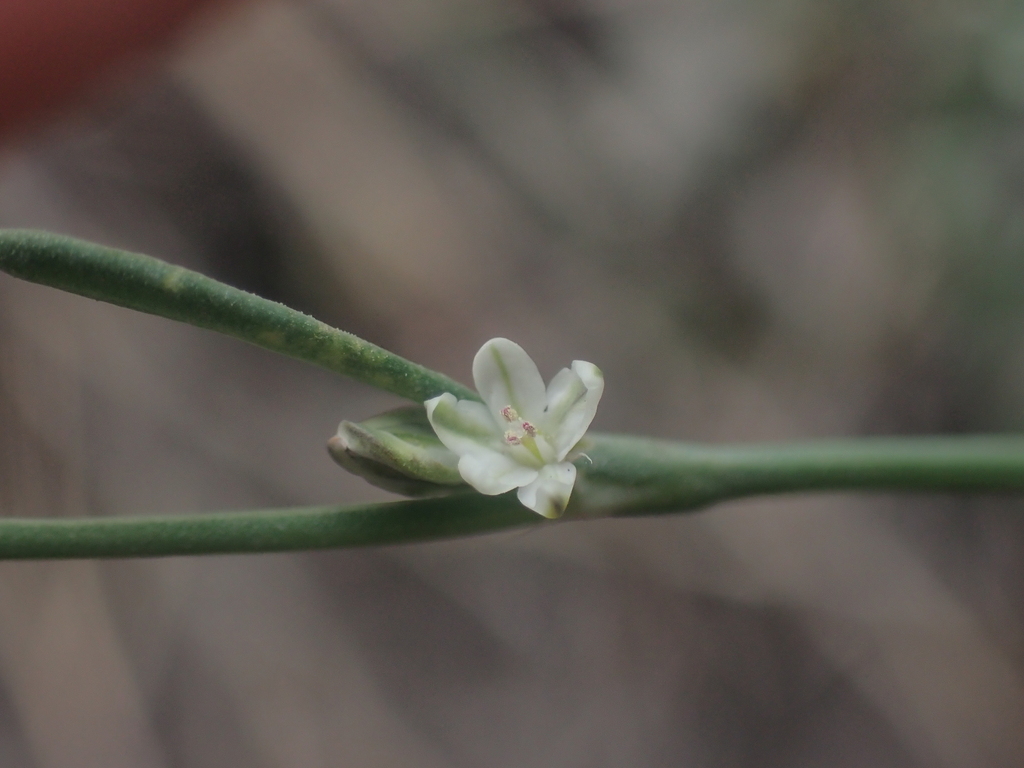
Photo: parent species Polygonum sawatchense · no rights reserved · CC0
Family: Polygonaceae · Type: Annual · Native
Polygonum sawatchense subsp. oblivium is a native California annual in the Polygonaceae family, recognized by small size, flat leaf margins with papillate teeth, and open flowers.
Polygonum sawatchense subsp. oblivium is a California native annual found in northwestern California, high Cascade Range, northern and central Sierra Nevada, and Warner Mountains in dry to moist meadows, pastures, and forests at elevations of 1,000 to 3,100 meters. Flowering from June to August, this plant produces green-white or green-yellow flowers flushed with purple, clustered in small axillary groups with 1 to 3 blossoms. Growing with slender stems 5 to 15 centimeters tall, occasionally reaching 25 centimeters, with a papillate-scabrous green surface. Its leaves are persistent and gradually reduced along the stem, with elliptic to oblong-elliptic blades 8 to 20 millimeters long, featuring flat margins with fine papillate teeth. The fruit is a small elliptic to elliptic-ovate structure measuring 2.6 to 3.3 millimeters long.
Identification and appearance
Key characters: 27 sympatric species; key features are small size, flat leaf margins with papillate teeth, and open flowers
Habitat and range
Habitat: Dry, moist meadows, pastures, forest, sandy, gravelly, rocky substrates
Elevation: 1000-3100 m
California counties: Placer, Plumas, Mono, Siskiyou, Shasta, Modoc, Nevada, Lassen, Mariposa, Butte, Tuolumne, Humboldt, El Dorado, Trinity
Outside California: to British Columbia
Bloom period
Polygonum sawatchense subsp. oblivium blooms Jun-Aug.
How to tell it apart
vs Euphorbia: Polygonum has swollen stem joints with papery sheaths; Euphorbia has milky sap when broken.; vs Persicaria: Hold node sheaths to light—Polygonum's are translucent and split; Persicaria's are opaque and intact.; vs Eriogonum: Polygonum has papery sheaths at nodes; Eriogonum has flowers in cup-like involucres.; vs Acmispon: Polygonum has swollen stem nodes; Acmispon has compound leaves with 3-5 leaflets.; vs Atriplex: Polygonum has papery stem sheaths; Atriplex has mealy or scurfy coating on leaves.
Frequently asked questions
Is Polygonum sawatchense subsp. oblivium native to California?
Yes. Polygonum sawatchense subsp. oblivium is native to California (recorded as native).
When does Polygonum sawatchense subsp. oblivium bloom?
Polygonum sawatchense subsp. oblivium blooms Jun-Aug.
Where in California does Polygonum sawatchense subsp. oblivium grow?
Polygonum sawatchense subsp. oblivium occurs in Placer, Plumas, Mono, Siskiyou, Shasta, Modoc, Nevada, Lassen and other counties, at elevations of 1000-3100 m.
What plant family does Polygonum sawatchense subsp. oblivium belong to?
Polygonum sawatchense subsp. oblivium is in the Polygonaceae family, genus Polygonum.
What habitat does Polygonum sawatchense subsp. oblivium grow in?
Polygonum sawatchense subsp. oblivium grows in Dry, moist meadows, pastures, forest, sandy, gravelly, rocky substrates.
Related species
Other California species in the same genus, family, or bioregion.
Sources: Jepson eFlora · Index of California Plant Names · CalPhotos
Last updated 2026-10-06
Data from The California Species Project — 14,000+ California species with verified data from CNPS, CDFW, USFWS, Cal-IPC, and more.