Polypodium californicum
California polypody
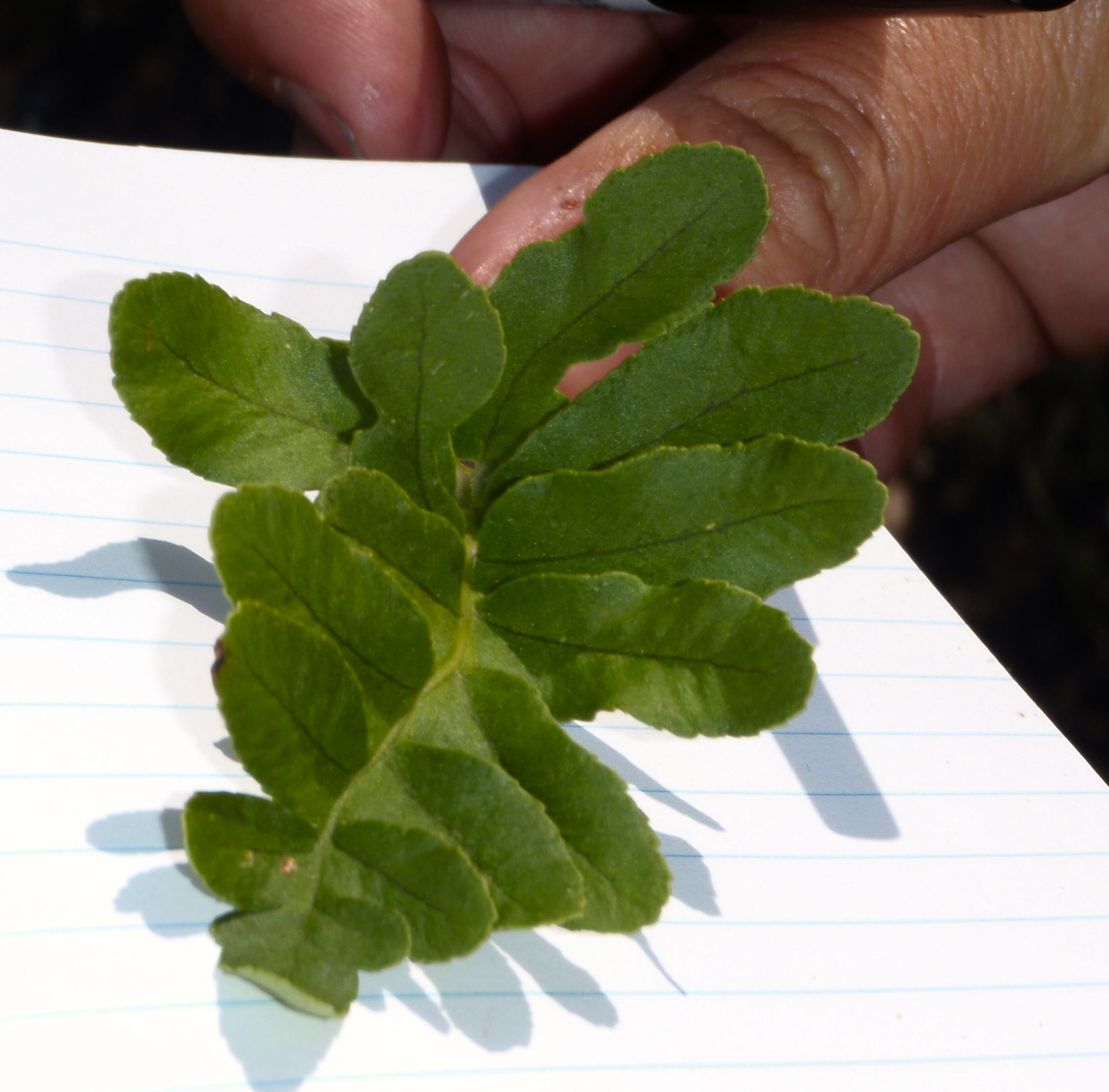
Photo by Chez Brungraber
Family: Polypodiaceae · Type: Herb · Native
Polypodium californicum (California polypody) is a native California herb in the Polypodiaceae family, recognized by southern/coastal distribution, deltate blade shape, and sunken ovate sori.
California polypody is a native fern found in central coastal California, southern coastal ranges, and southwestern California in shaded canyons, streambanks, north-facing slopes, roadcuts, cliffs, and coastal bluffs, often on granitic or volcanic rocks at elevations below 1,520 meters. Its summer-deciduous fronds range from 10 to 25 centimeters long, forming broad deltate to ovate blades with serrated segments and obtuse to acute tips. Growing with a rhizome 5 to 10 millimeters in diameter, the fern spreads with membranous to fleshy leaf blades that are often firm to the touch. Its fronds feature distinctive veins that are partially fused, typically connecting 10 to 50 percent of their length, with a midrib that may be hairy or nearly smooth. The fern produces round to ovate sporangia 1.5 to 3.5 millimeters long, sometimes with short, branched glandular hairs.
Identification and appearance
Key characters: 4 sympatric species; distinguished by southern/coastal distribution, deltate blade shape, and sunken ovate sori
Habitat and range
Habitat: Shaded canyons, streambanks, n-facing slopes, roadcuts, cliffs, coastal bluffs, rocks, often granitic or volcanic, humus, not on plants
Elevation: < 1520 m
California counties: Santa Barbara, San Diego, San Bernardino, Riverside, San Luis Obispo, Ventura, Placer, Tulare, San Francisco, Tuolumne, Sonoma, San Mateo, Los Angeles, Orange, Amador, Butte, Contra Costa, Fresno, Humboldt, Lake, Marin, Mendocino, Monterey, Napa, Santa Clara, Santa Cruz, Sierra, Kern, San Benito, Mariposa, Sutter, Plumas, Nevada, Siskiyou, Alameda, San Joaquin, El Dorado, Calaveras, Del Norte, Trinity
Outside California: to Baja California, southern Mexico
How to tell it apart
vs Polystichum: Polypodium sori are completely naked; Polystichum sori have umbrella-like covers attached at the center.; vs Dryopteris: Polypodium sori lack any covering; Dryopteris sori have kidney-shaped covers attached at the side.; vs Pentagramma: Polypodium sori are on the upper leaf surface; Pentagramma has powder on the lower leaf surface.; vs Pteridium: Polypodium sori are round and exposed; Pteridium sori are hidden under rolled-back leaf margins.; vs Woodwardia: Polypodium has round sori; Woodwardia has elongated chain-like sori in parallel rows.
Frequently asked questions
Is Polypodium californicum native to California?
Yes. Polypodium californicum is native to California (recorded as native).
Where in California does Polypodium californicum grow?
Polypodium californicum occurs in Santa Barbara, San Diego, San Bernardino, Riverside, San Luis Obispo, Ventura, Placer, Tulare and other counties, at elevations of < 1520 m.
What plant family does Polypodium californicum belong to?
Polypodium californicum is in the Polypodiaceae family, genus Polypodium.
What habitat does Polypodium californicum grow in?
Polypodium californicum grows in Shaded canyons, streambanks, n-facing slopes, roadcuts, cliffs, coastal bluffs, rocks, often granitic or volcanic, humus, not on plants.
Related species
Other California species in the same genus, family, or bioregion.
Sources: Jepson eFlora · Index of California Plant Names · CalPhotos
Last updated 2026-10-07
Data from The California Species Project — 14,000+ California species with verified data from CNPS, CDFW, USFWS, Cal-IPC, and more.