Polystichum imbricans subsp. imbricans
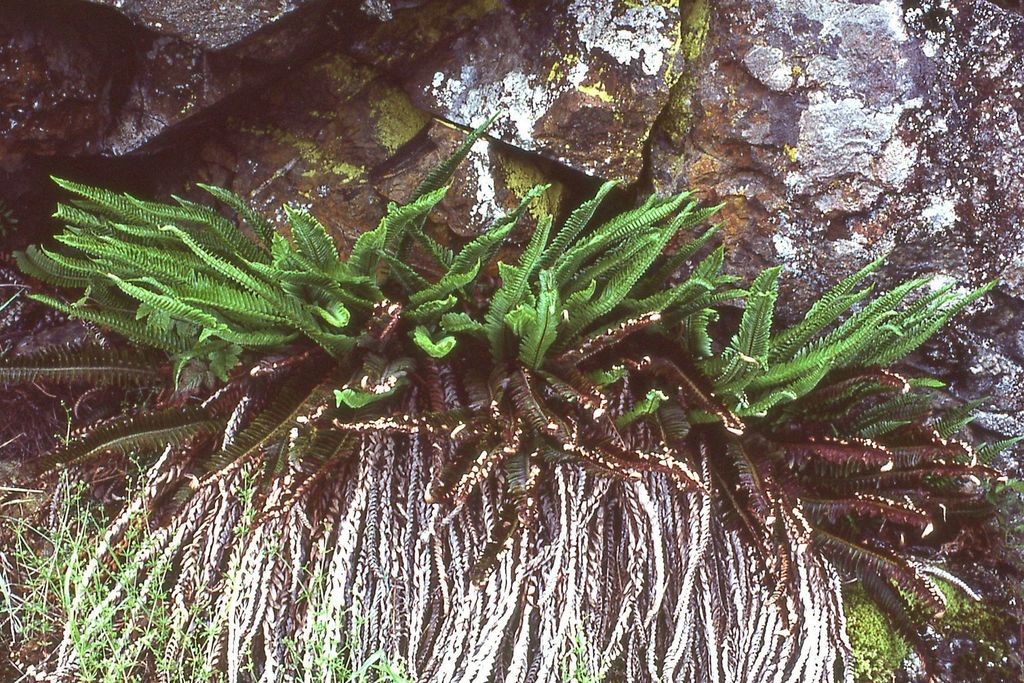
Photo: parent species Polystichum imbricans · (c) Ed Alverson, some rights reserved (CC BY) · licence
Family: Dryopteridaceae · Type: Herb · Native
Polystichum imbricans subsp. imbricans is a native California herb in the Dryopteridaceae family.
Spreading woodfern is a California native fern found in the Klamath Ranges, northern Coast Ranges, Cascade Range, northern Sierra Nevada foothills, Sierra Nevada, San Francisco Bay Area, southern Coast Ranges, Transverse Ranges, and Modoc Plateau in shaded or exposed rocky areas at elevations of 300 to 2,500 meters. The fern develops distinctive dark green fronds 15 to 50 centimeters long with pinnae that are often not arranged in a single plane. Growing with an arching to spreading growth habit, its fronds have pinnae typically 2 to 5 centimeters long. Its leaves feature complex pinnate structure with multiple leaflets arranged along the frond's central axis. Sporangia are located near the midvein, with an indusium that is slightly entire to subtly toothed.
Habitat and range
Habitat: Shaded or exposed outcrops, banks, slopes, rocky areas
Elevation: 300-2500 m
California counties: Trinity, San Bernardino, Tuolumne, Tulare, Plumas, Shasta, Los Angeles, Butte, Del Norte, Fresno, Lake, Mariposa, San Diego, Santa Barbara, Placer, Yuba, Sonoma, Sierra, Humboldt, Glenn, Siskiyou, Monterey, Nevada, Mendocino, Santa Clara, Napa, San Luis Obispo, Tehama, Amador, El Dorado, Madera, Santa Cruz, Colusa, Calaveras, Alameda, Marin, Ventura
Outside California: to British Columbia
How to tell it apart
vs Nephrolepis: Polystichum has bristle-tipped teeth and grows in wild habitats; Boston fern has smooth-edged leaflets and escapes from cultivation.; vs Dryopteris: Polystichum fronds feel prickly with bristle-tipped teeth; Dryopteris fronds feel smooth without bristles.; vs Polypodium: Polystichum has shield-shaped spore covers and bristly edges; polypody has naked round spore dots and smooth margins.; vs Struthiopteris: Polystichum has one frond type with bristly teeth; ostrich fern has separate narrow fertile fronds and smooth sterile ones.; vs Athyrium: Polystichum feels prickly and has shield-shaped spore covers; lady ferns feel soft with curved, elongated spore clusters.
Frequently asked questions
Is Polystichum imbricans subsp. imbricans native to California?
Yes. Polystichum imbricans subsp. imbricans is native to California (recorded as native).
Where in California does Polystichum imbricans subsp. imbricans grow?
Polystichum imbricans subsp. imbricans occurs in Trinity, San Bernardino, Tuolumne, Tulare, Plumas, Shasta, Los Angeles, Butte and other counties, at elevations of 300-2500 m.
What plant family does Polystichum imbricans subsp. imbricans belong to?
Polystichum imbricans subsp. imbricans is in the Dryopteridaceae family, genus Polystichum.
What habitat does Polystichum imbricans subsp. imbricans grow in?
Polystichum imbricans subsp. imbricans grows in Shaded or exposed outcrops, banks, slopes, rocky areas.
Related species
Other California species in the same genus, family, or bioregion.
Sources: Jepson eFlora · Index of California Plant Names · CalPhotos
Last updated 2026-10-07
Data from The California Species Project — 14,000+ California species with verified data from CNPS, CDFW, USFWS, Cal-IPC, and more.