Populus nigra
Black poplar, lombardy poplar, Lombardy Poplar
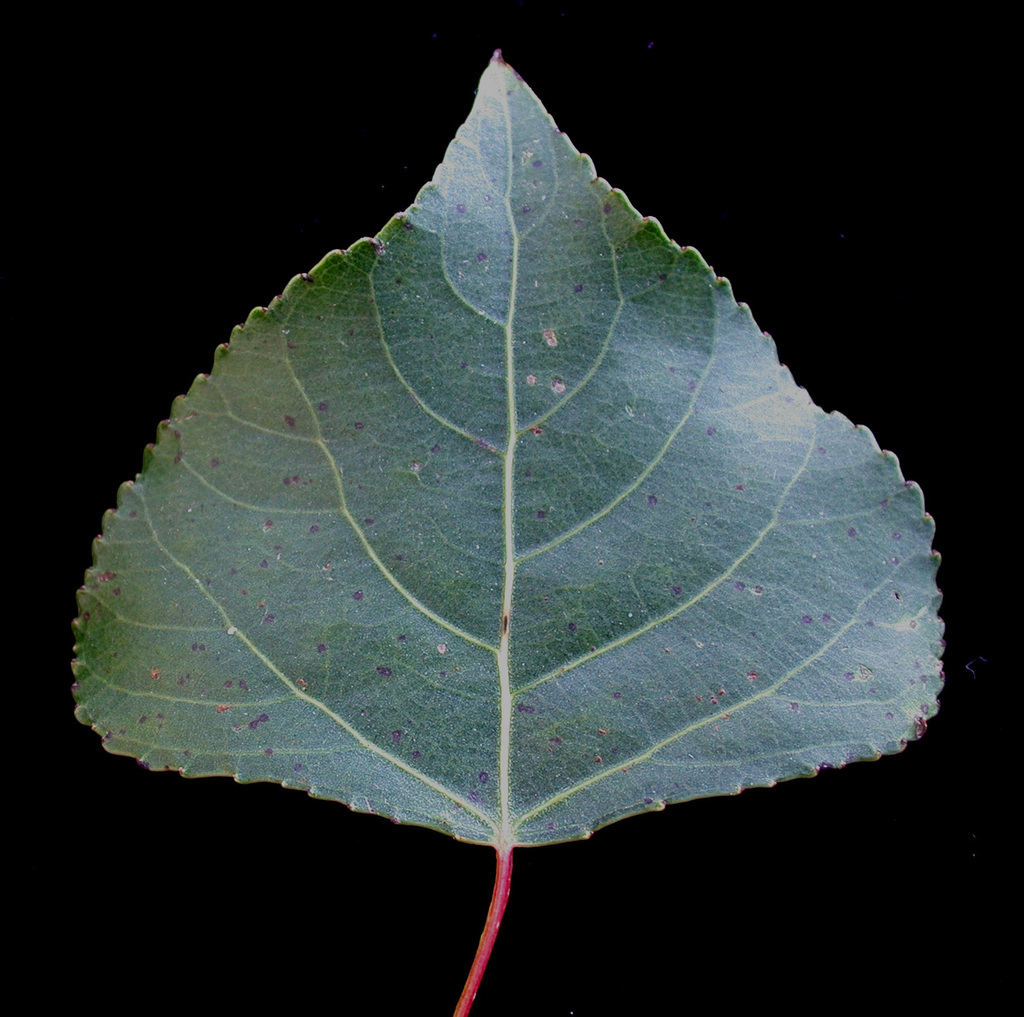
(c) Ayotte, Gilles, 1948-, some rights reserved (CC BY-SA) · licence
Family: Salicaceae · Type: Tree · Not Native
Populus nigra (Black poplar) is a non-native California tree in the Salicaceae family, recognized by small glabrous deltate leaves and red-brown buds.
Black poplar is a naturalized tree found in southern California coastal areas, southern Sierra Nevada, eastern Sierra Nevada, and Mojave Desert regions in disturbed places near settlements at elevations of 600 to 1,800 meters. Flowering from February to May, this tree produces yellow-green flowers with distinctive red-brown winter buds. Growing to 20 meters tall with a wide or slender crown, it has yellow-brown twigs that spread in an open, branching pattern. Its deltate to rhomboid leaves are 3 to 5 centimeters long with crenate to serrate margins, presenting a bright green surface and a base that ranges from nearly truncate to slightly tapered. The tree's distinctive red-brown buds and yellow-brown twigs make it easily recognizable in disturbed urban and settlement landscapes.
Identification and appearance
Key characters: 5 sympatric species; small glabrous deltate leaves and red-brown buds are diagnostic
Habitat and range
Habitat: Disturbed places near settlements
Elevation: 600-1800 m
Outside California: native to Europe
Bloom period
Populus nigra blooms Feb-May.
How to tell it apart
vs Quercus: Poplar leaves flutter conspicuously on flat petioles; oaks have stiff leaves that don't flutter and produce acorns.; vs Salix: Poplar catkins hang downward like tassels; willow catkins stand upright or spread outward.; vs Pyrus: Poplars have catkins and cottony seeds; pears have showy white flowers and round pear-shaped fruits.; vs Platanus: Poplar bark is furrowed; sycamore bark peels in puzzle-piece patches revealing white inner bark.; vs Alnus: Poplar catkins are soft and pendulous; alder has woody cone-like structures that persist through winter.
Frequently asked questions
Is Populus nigra native to California?
No. Populus nigra is not native to California (recorded as not native).
When does Populus nigra bloom?
Populus nigra blooms Feb-May.
What plant family does Populus nigra belong to?
Populus nigra is in the Salicaceae family, genus Populus.
What habitat does Populus nigra grow in?
Populus nigra grows in Disturbed places near settlements.
Related species
Other California species in the same genus, family, or bioregion.
Sources: Jepson eFlora · CalPhotos
Last updated 2026-10-07
Data from The California Species Project — 14,000+ California species with verified data from CNPS, CDFW, USFWS, Cal-IPC, and more.