Potentilla anserina subsp. pacifica
Pacific silverweed, Pacific Silverweed
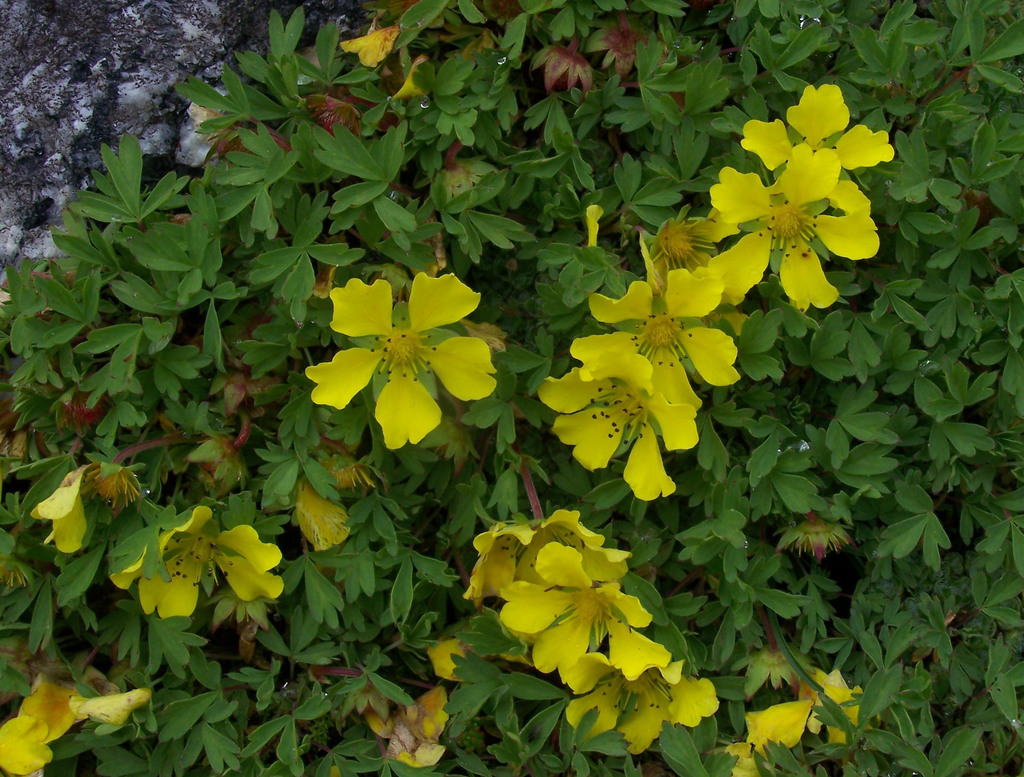
(c) Woudloper, some rights reserved (CC BY-SA) · licence
Family: Rosaceae · Type: Herb · Native
Potentilla anserina subsp. pacifica (Pacific silverweed) is a native California herb in the Rosaceae family, recognized by . Large size and coastal habitat distinguish from other silverweed subspecies.
Pacific silverweed is a California native perennial found in coastal bioregions including northern, central, and southern California Coast Ranges in coastal wetlands, often brackish, at elevations generally below 150 meters. Flowering from March to October, this plant produces yellow flowers approximately 8 to 20 millimeters across with delicate, rounded petals. Growing with spreading stems 10 to 50 centimeters long that sprawl across wet ground, it forms dense ground-covering clusters. Its compound leaves are nearly glabrous, composed of 10 to 50 millimeter leaflets arranged in a pinnate pattern with a soft, silvery-green appearance. The plant produces numerous pistils, typically 20 to 200 per flower, which contribute to its robust reproductive strategy.
Identification and appearance
Key characters: 6 sympatric species. Large size and coastal habitat distinguish from other silverweed subspecies.
Habitat and range
Habitat: Coastal wetlands, often brackish
Elevation: generally < 150 m
California counties: Humboldt, San Luis Obispo, Santa Barbara, Mendocino, Marin, Ventura, Contra Costa, Monterey, Solano, Del Norte, Los Angeles, San Francisco, San Mateo, Santa Cruz, Sonoma, Napa, Orange, Alameda, San Diego
Outside California: coastal North America
Bloom period
Potentilla anserina subsp. pacifica blooms Mar-Oct.
How to tell it apart
vs Drymocallis: Potentilla styles stay thread-thin throughout; Drymocallis styles are swollen in the middle like tiny clubs.; vs Fragaria: Potentilla typically has 5+ leaflets; Fragaria has three leaflets.; vs Argentina: Potentilla leaves are green on both sides; Argentina leaves are silvery-white beneath.; vs Ranunculus: Potentilla has compound leaves with distinct leaflets; Ranunculus typically has lobed or divided leaves.; vs Rubus: Potentilla is herbaceous with dry seed clusters; Rubus is woody-stemmed with compound berry fruits.
Frequently asked questions
Is Potentilla anserina subsp. pacifica native to California?
Yes. Potentilla anserina subsp. pacifica is native to California (recorded as native).
When does Potentilla anserina subsp. pacifica bloom?
Potentilla anserina subsp. pacifica blooms Mar-Oct.
Where in California does Potentilla anserina subsp. pacifica grow?
Potentilla anserina subsp. pacifica occurs in Humboldt, San Luis Obispo, Santa Barbara, Mendocino, Marin, Ventura, Contra Costa, Monterey and other counties, at elevations of generally < 150 m.
What plant family does Potentilla anserina subsp. pacifica belong to?
Potentilla anserina subsp. pacifica is in the Rosaceae family, genus Potentilla.
What habitat does Potentilla anserina subsp. pacifica grow in?
Potentilla anserina subsp. pacifica grows in Coastal wetlands, often brackish.
Related species
Other California species in the same genus, family, or bioregion.
Sources: Jepson eFlora · Index of California Plant Names · CalPhotos
Last updated 2026-10-07
Data from The California Species Project — 14,000+ California species with verified data from CNPS, CDFW, USFWS, Cal-IPC, and more.