Potentilla gracilis var. fastigiata
Slender cinquefoil
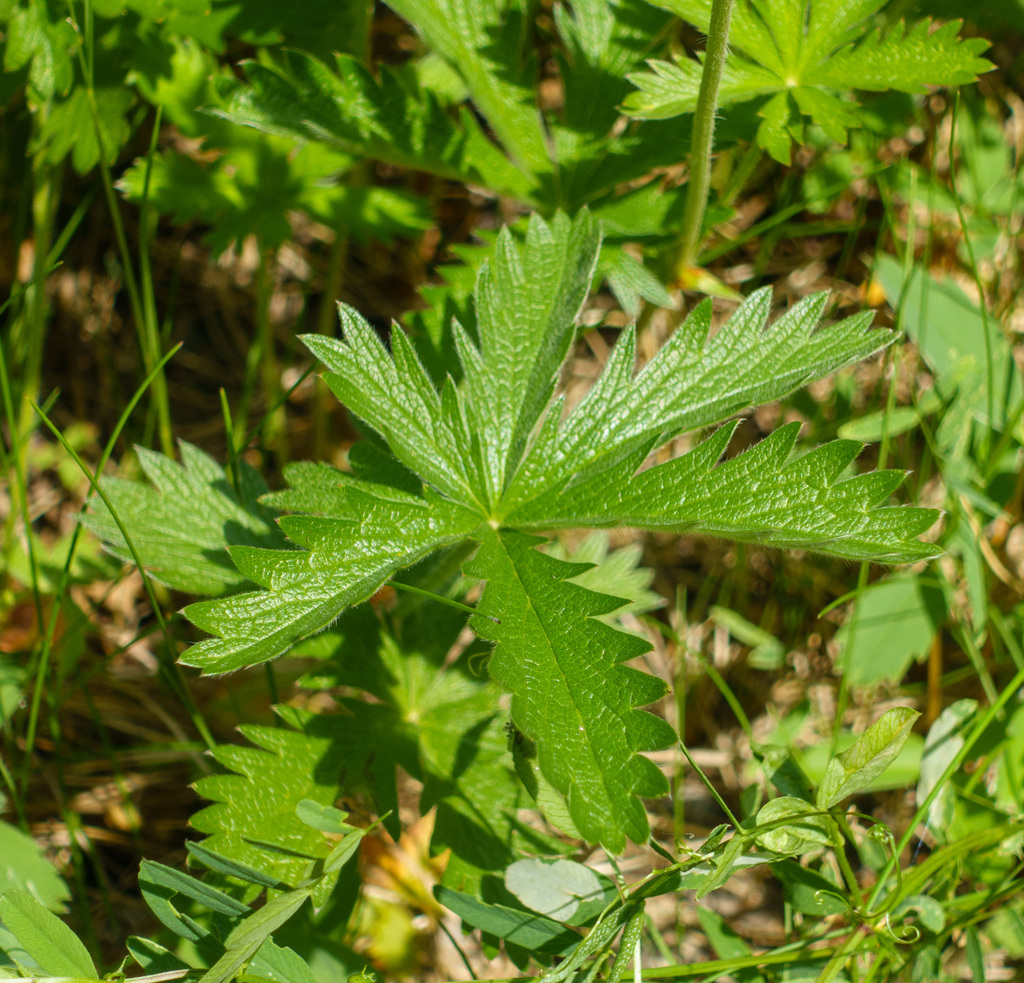
(c) Alan Covington, some rights reserved (CC BY), uploaded by Alan Covington · licence
Family: Rosaceae · Type: Subshrub · Native
Potentilla gracilis var. fastigiata (Slender cinquefoil) is a native California subshrub in the Rosaceae family, recognized by . Most widespread variety; tooth depth and hair pattern are key.
Slender cinquefoil is a California native perennial found in northwestern California, the Cascade Range, Sierra Nevada, Tehachapi Mountains, Transverse Ranges, Peninsular Ranges, and Great Basin in open forests and dry meadows at elevations of 800 to 3,500 meters. Flowering from June to September, this plant produces pale yellow flowers with petals 4 to 7 millimeters long. Growing with stems 20 to 50 centimeters tall and variable hair patterns ranging from spreading to appressed, it forms a clumped perennial habit. Its basal leaves feature a central leaflet 20 to 60 millimeters long, with surfaces equally hairy and edges toothed less than halfway to the midvein, with teeth widest at their base. The plant exhibits significant chromosome variation, with counts ranging from 52 to 109.
Identification and appearance
Key characters: 26 sympatric species. Most widespread variety; tooth depth and hair pattern are key.
Habitat and range
Habitat: Common. Generally open forest, dry meadows
Elevation: 800-3500 m
California counties: Fresno, Lassen, Inyo, Mono, Tuolumne, Alpine, Calaveras, El Dorado, Tulare, Butte, Del Norte, Nevada, Madera, San Bernardino, Plumas, Trinity, Lake, Mariposa, Siskiyou, Los Angeles, San Diego, Placer, Riverside, Kern, Tehama, Sierra, Modoc, Amador, Humboldt, Glenn, Mendocino, Shasta, Yuba, Ventura
Bloom period
Potentilla gracilis var. fastigiata blooms Jun-Sep.
How to tell it apart
vs Drymocallis: Potentilla styles stay thread-thin throughout; Drymocallis styles are swollen in the middle like tiny clubs.; vs Fragaria: Potentilla typically has 5+ leaflets; Fragaria has three leaflets.; vs Argentina: Potentilla leaves are green on both sides; Argentina leaves are silvery-white beneath.; vs Ranunculus: Potentilla has compound leaves with distinct leaflets; Ranunculus typically has lobed or divided leaves.; vs Rubus: Potentilla is herbaceous with dry seed clusters; Rubus is woody-stemmed with compound berry fruits.
Frequently asked questions
Is Potentilla gracilis var. fastigiata native to California?
Yes. Potentilla gracilis var. fastigiata is native to California (recorded as native).
When does Potentilla gracilis var. fastigiata bloom?
Potentilla gracilis var. fastigiata blooms Jun-Sep.
Where in California does Potentilla gracilis var. fastigiata grow?
Potentilla gracilis var. fastigiata occurs in Fresno, Lassen, Inyo, Mono, Tuolumne, Alpine, Calaveras, El Dorado and other counties, at elevations of 800-3500 m.
What plant family does Potentilla gracilis var. fastigiata belong to?
Potentilla gracilis var. fastigiata is in the Rosaceae family, genus Potentilla.
What habitat does Potentilla gracilis var. fastigiata grow in?
Potentilla gracilis var. fastigiata grows in Common. Generally open forest, dry meadows.
Related species
Other California species in the same genus, family, or bioregion.
Sources: Jepson eFlora · Index of California Plant Names · CalPhotos
Last updated 2026-10-07
Data from The California Species Project — 14,000+ California species with verified data from CNPS, CDFW, USFWS, Cal-IPC, and more.