Prunus eremophila
Mojave desert plum, Mojave Desert Plum
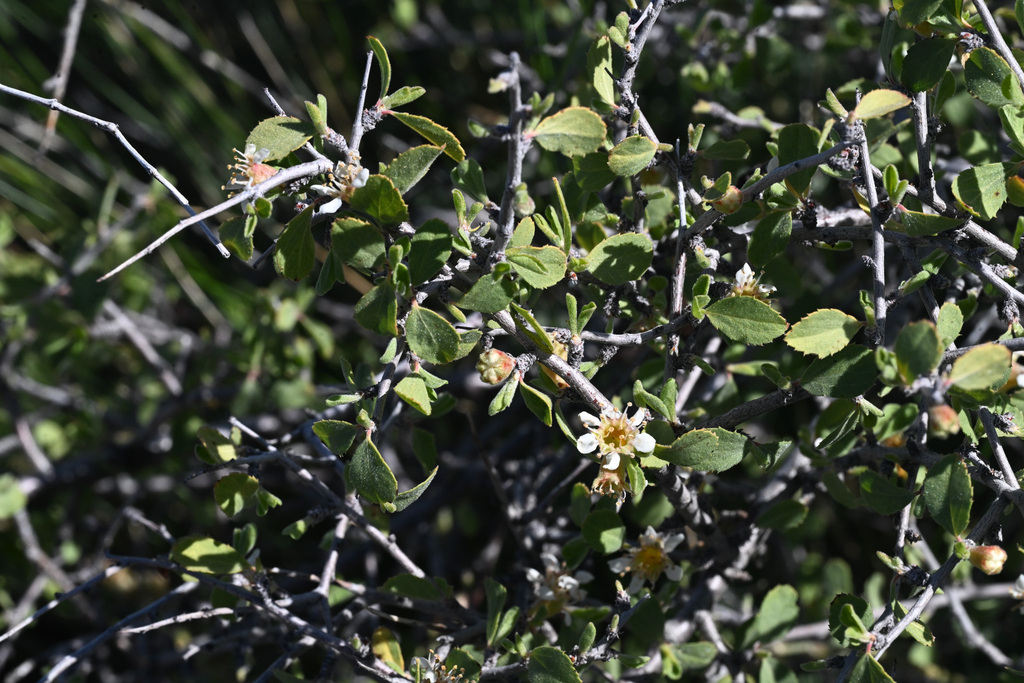
(c) Trevor Van Loon, some rights reserved (CC BY) · licence
Family: Rosaceae · Type: Shrub · Native
Conservation status: CNPS 1B.2
Prunus eremophila (Mojave desert plum) is a native California shrub in the Rosaceae family, recognized by small ovate leaves, subsessile flowers, and velvety yellow-orange fruits with dry pulp.
Mojave desert plum is a rare (CNPS 1B.2) California native shrub found in eastern Mojave Desert in desert washes, rocky slopes, and creosote-blackbush scrub at elevations of 900 to 1,200 meters. Flowering from March to April, this plant produces white flowers in small clusters, each petal 2.5 to 6 millimeters long. Growing as a much-branched shrub less than 2.5 meters tall with weak thorny branches, it develops a distinctive multi-stemmed structure. Its deciduous leaves are small and delicate, typically 5 to 20 millimeters long, with ovate to obovate blades that have serrated edges and a wedge-shaped base. The fruit is a small, velvety yellow-orange drupe approximately 9 to 16 millimeters long with a thin, dry pulp.
Identification and appearance
Key characters: 3 sympatric species; key features are small ovate leaves, subsessile flowers, and velvety yellow-orange fruits with dry pulp
Habitat and range
Habitat: Desert washes, rocky slopes, creosote-blackbush scrub
Elevation: 900-1200 m
California counties: San Bernardino
Bloom period
Prunus eremophila blooms Mar-Apr.
Conservation status
CNPS 1B.2
How to tell it apart
vs Quercus: Prunus has simple leaves with fine teeth; oak leaves are lobed or have coarse rounded teeth.; vs Rhamnus: Prunus has fleshy fruits with single hard pits; buckthorn has berry-like fruits with multiple seeds.; vs Malus: Prunus fruits have a single hard pit; apple fruits have a papery core with multiple seeds.; vs Frangula: Prunus has cup-shaped flower base that falls off; alder buckthorn has persistent berry-like fruit base.; vs Pyrus: Prunus produces single-pitted drupes; pear produces pome fruits with papery seed chambers.
Frequently asked questions
Is Prunus eremophila native to California?
Yes. Prunus eremophila is native to California (recorded as native).
When does Prunus eremophila bloom?
Prunus eremophila blooms Mar-Apr.
Where in California does Prunus eremophila grow?
Prunus eremophila occurs in San Bernardino, at elevations of 900-1200 m.
What plant family does Prunus eremophila belong to?
Prunus eremophila is in the Rosaceae family, genus Prunus.
Is Prunus eremophila rare or endangered?
Prunus eremophila carries California Rare Plant Rank 1B.2, state rank S2.
Related species
Other California species in the same genus, family, or bioregion.
Sources: Jepson eFlora · CNPS Rare Plant Inventory · Index of California Plant Names · CalPhotos · CDFW CNDDB
Last updated 2026-10-07
Data from The California Species Project — 14,000+ California species with verified data from CNPS, CDFW, USFWS, Cal-IPC, and more.