Pseudobahia bahiifolia
Hartweg's golden sunburst
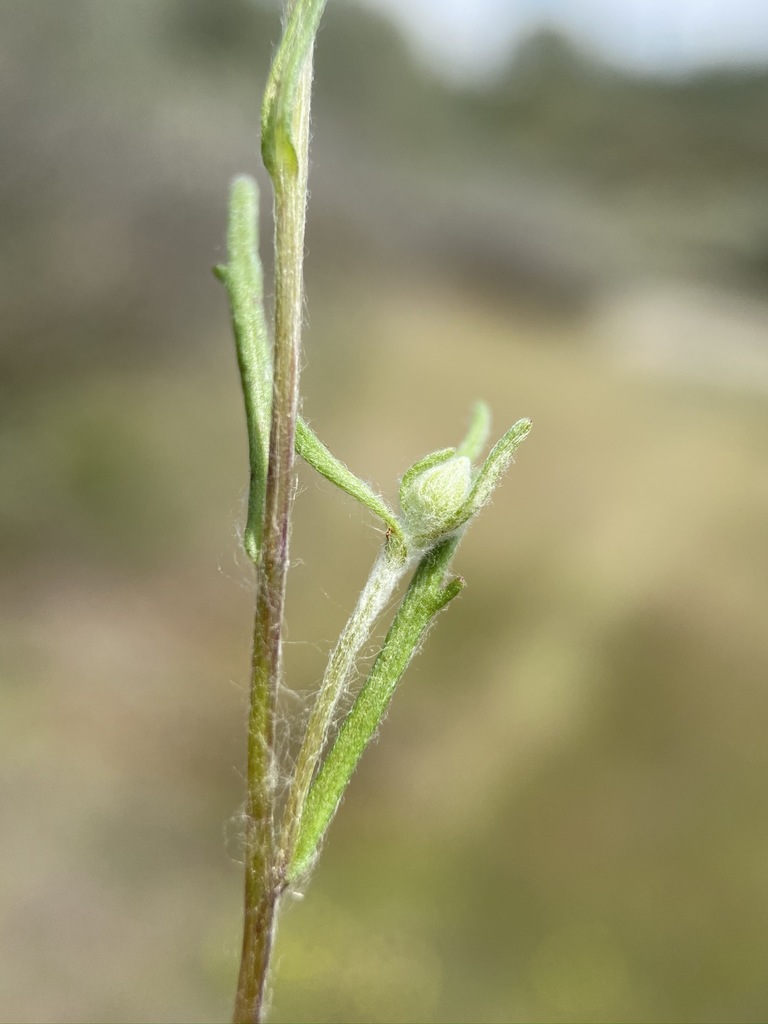
(c) Matt Berger, some rights reserved (CC BY) · licence
Family: Asteraceae · Type: Herb · Native
Conservation status: CNPS 1B.1 · Endangered
Pseudobahia bahiifolia (Hartweg's golden sunburst) is a native California herb in the Asteraceae family, recognized by small size (5-20 cm) and simple linear leaves vs deeply lobed leaves of congeners.
Hartweg's golden sunburst is a rare (CNPS 1B.1) California native annual found in central Sierra Nevada Foothills in Madera County and eastern San Joaquin Valley in grassland and open woodland at elevations of 100 to 200 meters. Flowering from March to May, this plant produces yellow flowers in small heads with distinctive involucres. Growing 5 to 20 centimeters tall with delicate linear-oblanceolate leaves, it forms compact clusters in clay soil habitats. Its leaves are 8 to 25 millimeters long, either entire or occasionally with 3 lobes, creating a fine, sparse foliage structure. The plant's small fruits measure 1.5 to 2.5 millimeters long, contributing to its diminutive yet intricate botanical profile.
Identification and appearance
Key characters: 2 sympatric species; distinguished by small size (5-20 cm) and simple linear leaves vs deeply lobed leaves of congeners
Habitat and range
Habitat: Grassland, open woodland, in clay soil
Elevation: 100-200 m
Bloom period
Pseudobahia bahiifolia blooms Mar-May.
Conservation status
CNPS 1B.1 · Endangered
How to tell it apart
vs Lasthenia: Lasthenia has angled fruits; Pseudobahia fruits are distinctly flattened and compressed side-to-side.; vs Eriophyllum: Eriophyllum includes perennials with angular fruits; Pseudobahia is strictly annual with flattened fruits.; vs Amauriopsis: Amauriopsis is bright green with stalked glands; Pseudobahia is gray-woolly without prominent glands.; vs Baileya: Baileya rays persist and curl backward; Pseudobahia rays wither and drop normally.; vs Monolopia: Monolopia has disk flowers only (no rays); Pseudobahia has both ray and disk flowers.
Frequently asked questions
Is Pseudobahia bahiifolia native to California?
Yes. Pseudobahia bahiifolia is native to California (recorded as native).
When does Pseudobahia bahiifolia bloom?
Pseudobahia bahiifolia blooms Mar-May.
What plant family does Pseudobahia bahiifolia belong to?
Pseudobahia bahiifolia is in the Asteraceae family, genus Pseudobahia.
Is Pseudobahia bahiifolia rare or endangered?
Pseudobahia bahiifolia carries California Rare Plant Rank 1B.1, state rank S1.
What habitat does Pseudobahia bahiifolia grow in?
Pseudobahia bahiifolia grows in Grassland, open woodland, in clay soil.
Related species
Other California species in the same genus, family, or bioregion.
Sources: Jepson eFlora · CNPS Rare Plant Inventory · Index of California Plant Names · CalPhotos · CDFW CNDDB
Last updated 2026-10-07
Data from The California Species Project — 14,000+ California species with verified data from CNPS, CDFW, USFWS, Cal-IPC, and more.