Pseudognaphalium canescens
Wright's cudweed
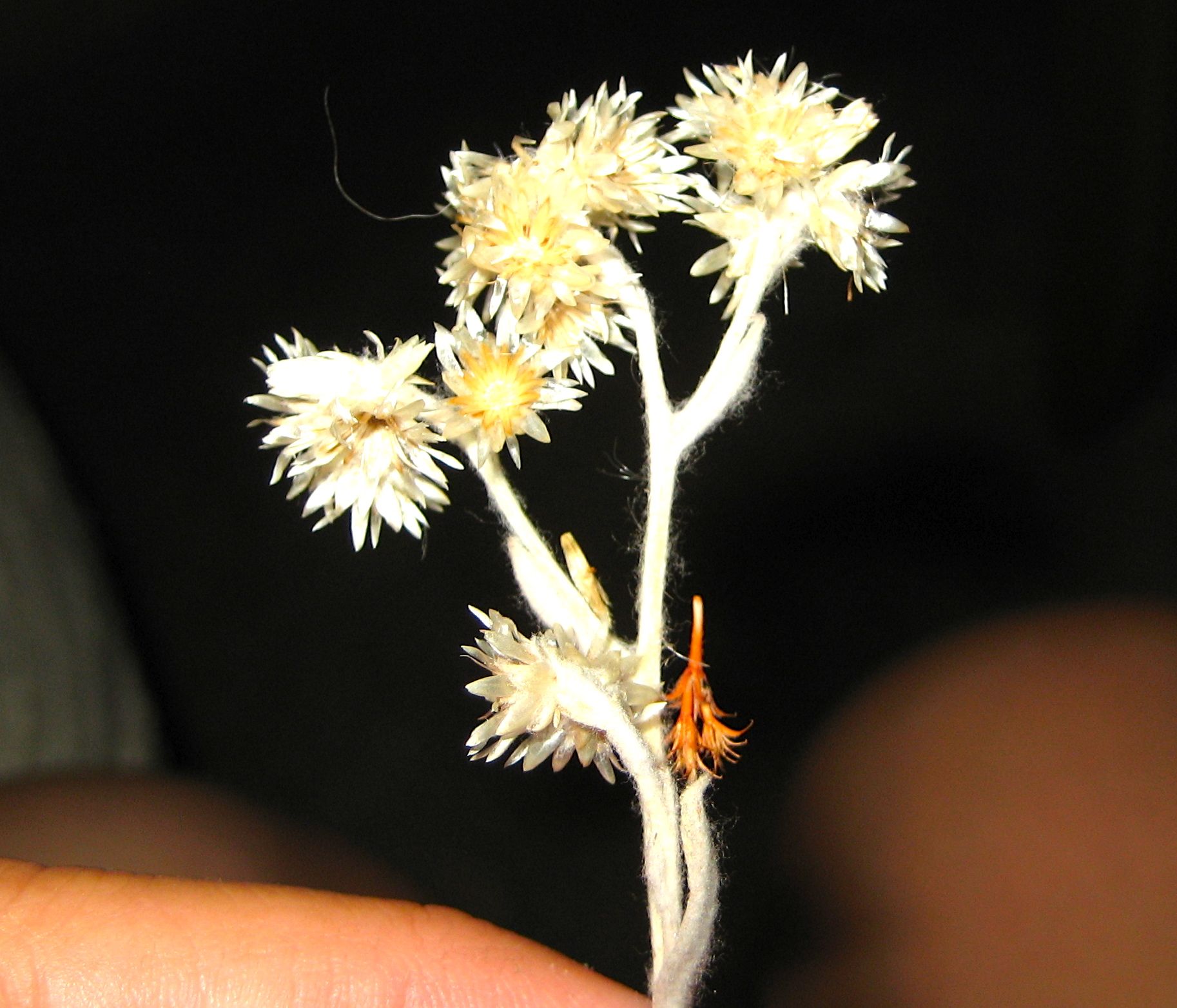
Photo by Chez Brungraber
Family: Asteraceae · Type: Herb · Native
Pseudognaphalium canescens (Wright's cudweed) is a native California herb in the Asteraceae family, recognized by higher elevation habitat and fewer flowers per head.
Wright's cudweed is a California native perennial found in central Sierra Nevada, southern California coast, San Gabriel Mountains, San Bernardino Mountains, Peninsular Ranges, and eastern desert mountains in rocky pine woodland sites at elevations below 2,500 meters. Flowering from August to October, this plant produces white flowers in loose, rounded clusters with involucres 4 to 5 millimeters long. Growing with stems 20 to 100 centimeters tall that are persistently tomentose and not glandular, it develops an herbaceous to somewhat woody habit. Its leaves are oblanceolate, 2 to 4 centimeters long and 2 to 8 millimeters wide, with softly contrasting surfaces densely covered in woolly white hairs. The fruit is distinctively ridged and weakly roughened with small papillae.
Identification and appearance
Key characters: 10 sympatric species; key features are higher elevation habitat and fewer flowers per head
Habitat and range
Habitat: Rocky sites, pine woodland
Elevation: < 2500 m
California counties: San Diego, Calaveras, Los Angeles, San Bernardino, Riverside, El Dorado, Amador, Butte, Fresno, Lake, Marin, Mariposa, Nevada, Plumas, Santa Barbara, Mono, Contra Costa, Inyo, San Luis Obispo, Tuolumne, Kern, Ventura
Outside California: Utah and Arizona to Oklahoma, Texas, Mexico
Bloom period
Pseudognaphalium canescens blooms Aug-Oct.
How to tell it apart
vs Anaphalis: Pseudognaphalium has branched, open flower clusters; Anaphalis has dense, flat-topped clusters and noticeably papery white bracts.; vs Helichrysum: Pseudognaphalium has small, clustered woolly heads; Helichrysum has larger, more colorful papery flower heads often used in dried arrangements.; vs Artemisia: Pseudognaphalium has woolly white leaves and papery flower heads; Artemisia has aromatic gray-green leaves and tiny greenish flowers.; vs Salvia: Pseudognaphalium has papery flower heads in the Asteraceae; Salvia has tubular lipped flowers typical of mints with square stems.; vs Erigeron: Pseudognaphalium has papery heads without obvious petals; Erigeron has clear white or colored ray petals around each flower head.
Frequently asked questions
Is Pseudognaphalium canescens native to California?
Yes. Pseudognaphalium canescens is native to California (recorded as native).
When does Pseudognaphalium canescens bloom?
Pseudognaphalium canescens blooms Aug-Oct.
Where in California does Pseudognaphalium canescens grow?
Pseudognaphalium canescens occurs in San Diego, Calaveras, Los Angeles, San Bernardino, Riverside, El Dorado, Amador, Butte and other counties, at elevations of < 2500 m.
What plant family does Pseudognaphalium canescens belong to?
Pseudognaphalium canescens is in the Asteraceae family, genus Pseudognaphalium.
What habitat does Pseudognaphalium canescens grow in?
Pseudognaphalium canescens grows in Rocky sites, pine woodland.
Related species
Other California species in the same genus, family, or bioregion.
Sources: Jepson eFlora · Index of California Plant Names · CalPhotos
Last updated 2026-10-07
Data from The California Species Project — 14,000+ California species with verified data from CNPS, CDFW, USFWS, Cal-IPC, and more.