Pseudognaphalium stramineum
Cottonbatting plant
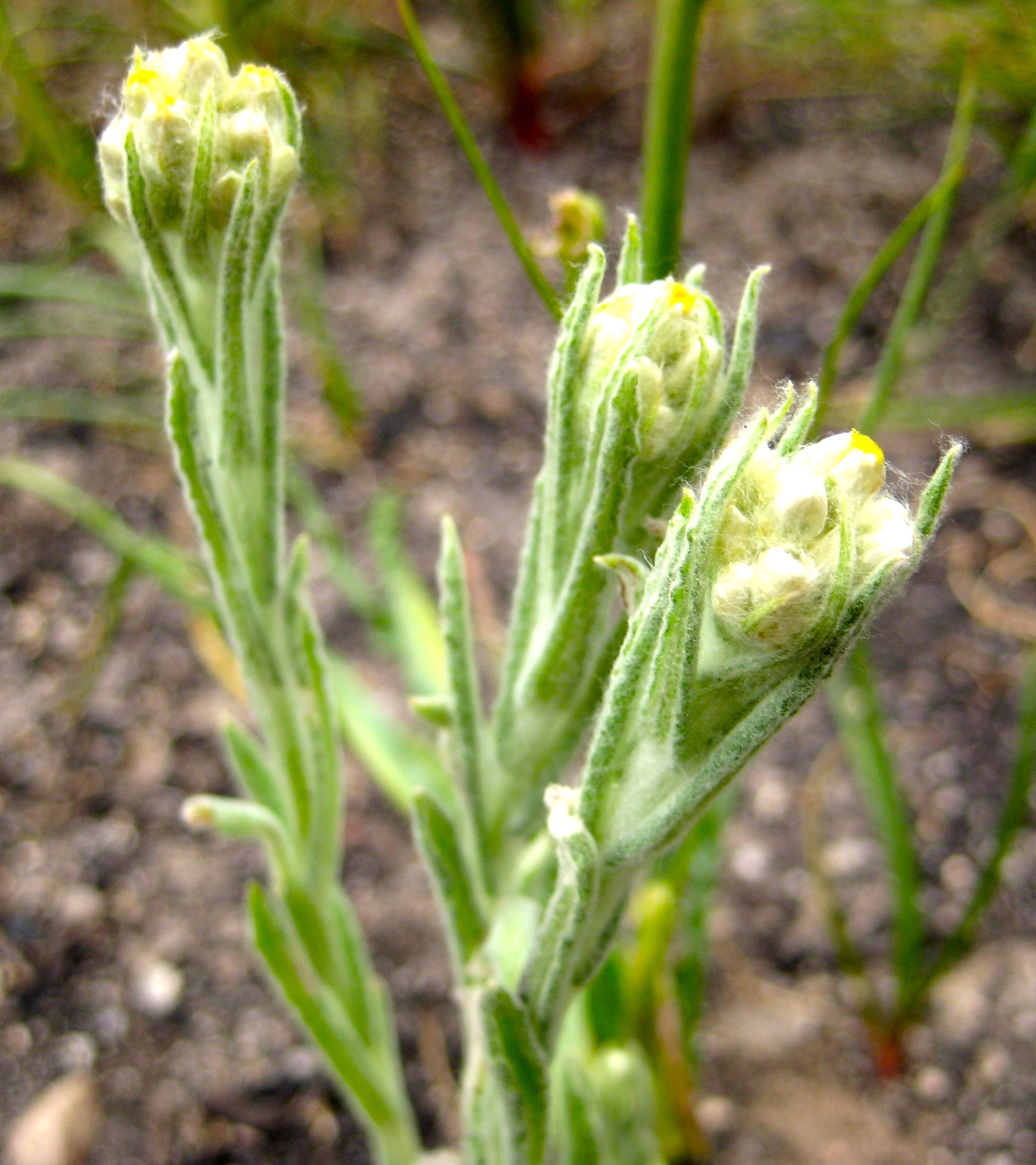
Photo by Chez Brungraber
Family: Asteraceae · Type: Herb · Native
Pseudognaphalium stramineum (Cottonbatting plant) is a native California herb in the Asteraceae family, recognized by extremely high female flower count and dense spherical clusters.
Cottonbatting plant is a California native annual found in coastal and southern California bioregions including Northern Coast, Central Coast, San Francisco Bay Area, Southern Coast Ranges, Southern California, Channel Islands, and San Bernardino Mountains in diverse habitats like dunes, chaparral slopes, and roadsides at elevations below 2,500 meters. Flowering from March to August, this plant produces white to yellow flowers in dense heads 1 to 2 centimeters in diameter with shiny, transparent phyllaries. Growing 20 to 80 centimeters tall with loosely tomentose stems that are not glandular, it spreads in an upright, somewhat branching form. Its leaves are densely arranged, 2 to 8 centimeters long and 2 to 5 millimeters wide, oblong to narrowly oblanceolate with gray-tomentose surfaces and slightly curled margins. The fruit is smooth or lightly textured, with pappus bristles that shed in loose clusters.
Identification and appearance
Key characters: 9 sympatric species; key features are extremely high female flower count and dense spherical clusters
Habitat and range
Habitat: Many habitats, dunes, chaparral slopes, roadsides
Elevation: < 2500 m
California counties: Humboldt, San Diego, Los Angeles, Kern, Alameda, El Dorado, Madera, Marin, Monterey, Orange, Riverside, San Bernardino, San Francisco, San Mateo, Santa Barbara, Santa Cruz, Tulare, Ventura, San Luis Obispo, Butte, Calaveras, Colusa, Del Norte, Fresno, Imperial, Inyo, Lake, Mariposa, Mono, Napa, Nevada, Sacramento, San Joaquin, Shasta, Siskiyou, Stanislaus, Trinity, Yolo, Amador, Contra Costa, Mendocino, Plumas, Santa Clara, Solano, Sonoma, Tuolumne, Tehama, Placer, Merced
Outside California: to British Columbia, Montana, Nebraska, Texas, Mexico, also South America, naturalized in eastern United States
Bloom period
Pseudognaphalium stramineum blooms Mar-Aug.
How to tell it apart
vs Anaphalis: Pseudognaphalium has branched, open flower clusters; Anaphalis has dense, flat-topped clusters and noticeably papery white bracts.; vs Helichrysum: Pseudognaphalium has small, clustered woolly heads; Helichrysum has larger, more colorful papery flower heads often used in dried arrangements.; vs Artemisia: Pseudognaphalium has woolly white leaves and papery flower heads; Artemisia has aromatic gray-green leaves and tiny greenish flowers.; vs Salvia: Pseudognaphalium has papery flower heads in the Asteraceae; Salvia has tubular lipped flowers typical of mints with square stems.; vs Erigeron: Pseudognaphalium has papery heads without obvious petals; Erigeron has clear white or colored ray petals around each flower head.
Frequently asked questions
Is Pseudognaphalium stramineum native to California?
Yes. Pseudognaphalium stramineum is native to California (recorded as native).
When does Pseudognaphalium stramineum bloom?
Pseudognaphalium stramineum blooms Mar-Aug.
Where in California does Pseudognaphalium stramineum grow?
Pseudognaphalium stramineum occurs in Humboldt, San Diego, Los Angeles, Kern, Alameda, El Dorado, Madera, Marin and other counties, at elevations of < 2500 m.
What plant family does Pseudognaphalium stramineum belong to?
Pseudognaphalium stramineum is in the Asteraceae family, genus Pseudognaphalium.
What habitat does Pseudognaphalium stramineum grow in?
Pseudognaphalium stramineum grows in Many habitats, dunes, chaparral slopes, roadsides.
Related species
Other California species in the same genus, family, or bioregion.
- Pseudognaphalium thermale — Small headed cudweed
- Pseudognaphalium beneolens — Cudweed
- Pseudognaphalium biolettii — Two-color rabbit-tobacco
- Pseudognaphalium californicum — Ladies' tobacco
- Pseudognaphalium canescens — Wright's cudweed
- Pseudognaphalium leucocephalum — White rabbit-tobacco
- Psilocarphus brevissimus — Short woollyheads
- Psilocarphus brevissimus var. brevissimus — Dwarf woollyheads
- Psilocarphus brevissimus var. multiflorus — Delta woolly-marbles
Sources: Jepson eFlora · Index of California Plant Names · CalPhotos
Last updated 2026-10-07
Data from The California Species Project — 14,000+ California species with verified data from CNPS, CDFW, USFWS, Cal-IPC, and more.