Pteridium aquilinum var. pubescens
Hairy brackenfern
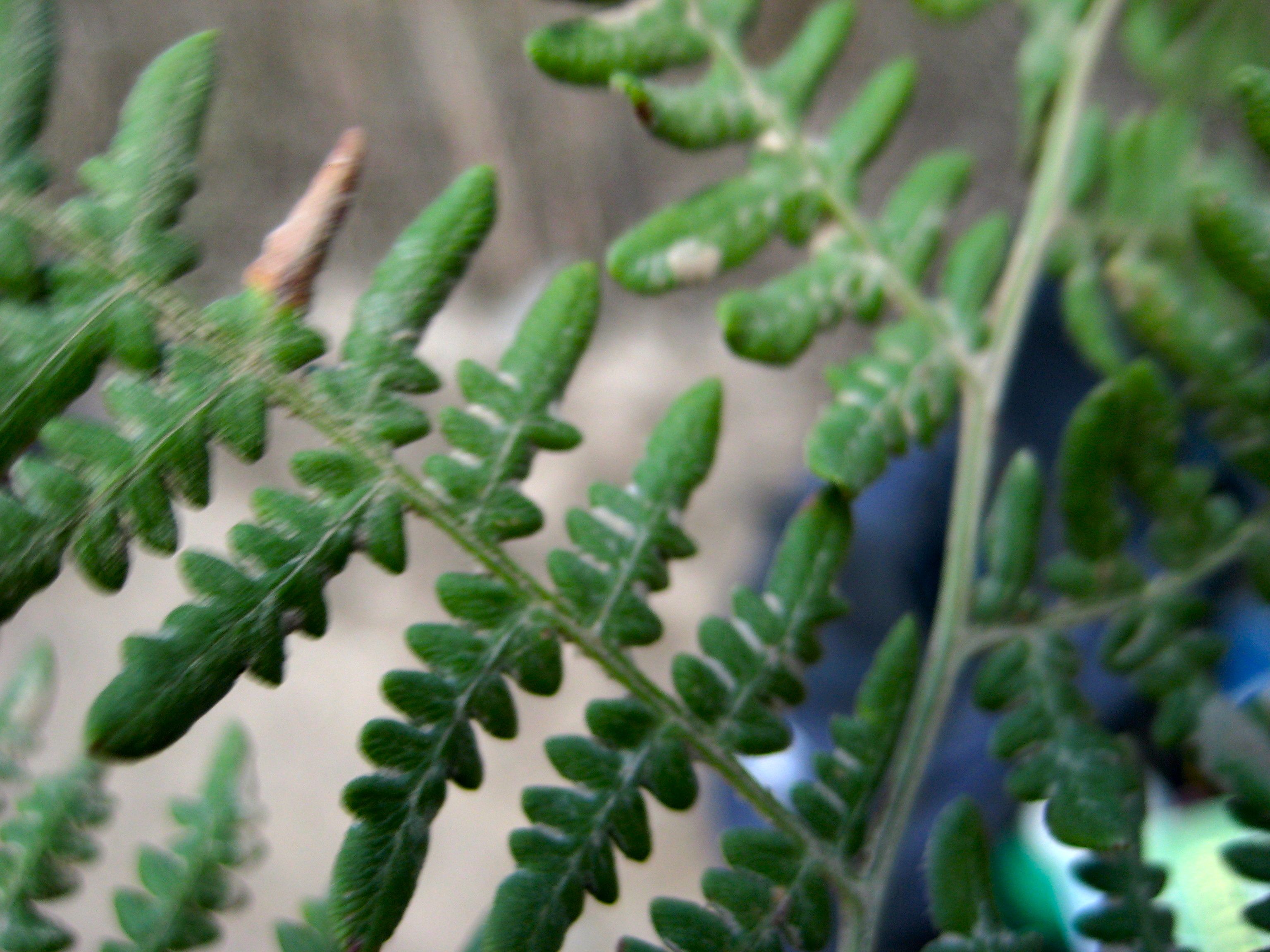
Photo by Chez Brungraber
Family: Dennstaedtiaceae · Type: Herb · Native
Pteridium aquilinum var. pubescens (Hairy brackenfern) is a native California herb in the Dennstaedtiaceae family, recognized by Only Pteridium species in CA, cosmopolitan genus with this single highly variable species represented by the pubescent variety.
Hairy brackenfern is a California native perennial found in the California Floristic Province (excluding the Great Valley) and Warner Mountains in pastures, woodlands, meadows, and hillsides at elevations up to 3,200 meters. A large, distinctive fern with deeply arched fronds that can grow 15 to 150 centimeters wide, forming wide triangular leaf blades. Growing with tall stems 10 to 100 centimeters long, this fern develops complex, leathery leaves that are three-times pinnate with lower pinnae typically the longest. Its leaf segments are oblong, about 0.5 to 2 centimeters long, with rounded tips and covered in dense, straight or slightly kinked clear hairs on the underside of the fronds. The plant thrives in partial to full sun conditions, creating dramatic, sweeping foliage in open woodland and meadow environments.
Identification and appearance
Key characters: Only Pteridium species in CA, cosmopolitan genus with this single highly variable species represented by the pubescent variety
Habitat and range
Habitat: Pastures, woodland, meadows, hillsides, partial to full sun
Elevation: < 3200 m
California counties: Humboldt, Siskiyou, Plumas, Santa Cruz, San Bernardino, Tulare, San Diego, Riverside, Santa Barbara, Los Angeles, Ventura, Shasta, Alameda, Butte, Contra Costa, Del Norte, El Dorado, Fresno, Inyo, Kern, Lake, Marin, Mariposa, Mono, Monterey, Nevada, Orange, Placer, San Francisco, San Luis Obispo, Sonoma, Mendocino, Sierra, Yuba, Amador, Alpine, Modoc, Glenn, Tehama, Trinity, Colusa, Santa Clara, Tuolumne, Napa, Madera, San Mateo, Lassen, Stanislaus
Outside California: to Alaska, South Dakota, northwestern Mexico, also eastern Canada, northeastern United States
How to tell it apart
vs Athyrium: Pteridium (bracken) sends up single large triangular fronds spaced along a deep-running rhizome, forming colonies; lady fern grows in tight clumps with lance-shaped fronds and elongate sori along the veins.; vs Dryopteris: Bracken has a broadly triangular, nearly horizontal 2-3-pinnate blade with a continuous marginal sorus under the rolled leaf edge; wood ferns are clumped with round, indusiate sori on the frond surface.; vs Polystichum: Pteridium fronds are triangular and leathery with sori hidden under the inrolled margin; sword ferns are once-pinnate rosettes with round surface sori and hooked leaflet bases.; vs Woodwardia: Bracken has a 3-pinnate triangular blade and marginal sori; giant chain fern has pinnate-pinnatifid fronds with chain-like rows of sori beside the midribs.; vs Pteris: Pteridium blades are broadly triangular and hairy beneath with a false marginal indusium; brake ferns are less divided with narrower, more strap-like segments.
Frequently asked questions
Is Pteridium aquilinum var. pubescens native to California?
Yes. Pteridium aquilinum var. pubescens is native to California (recorded as native).
Where in California does Pteridium aquilinum var. pubescens grow?
Pteridium aquilinum var. pubescens occurs in Humboldt, Siskiyou, Plumas, Santa Cruz, San Bernardino, Tulare, San Diego, Riverside and other counties, at elevations of < 3200 m.
What plant family does Pteridium aquilinum var. pubescens belong to?
Pteridium aquilinum var. pubescens is in the Dennstaedtiaceae family, genus Pteridium.
What habitat does Pteridium aquilinum var. pubescens grow in?
Pteridium aquilinum var. pubescens grows in Pastures, woodland, meadows, hillsides, partial to full sun.
Related species
Other California species in the same genus, family, or bioregion.
Sources: Jepson eFlora · Index of California Plant Names · CalPhotos
Last updated 2026-10-07
Data from The California Species Project — 14,000+ California species with verified data from CNPS, CDFW, USFWS, Cal-IPC, and more.