Pulicaria paludosa
Spanish false fleabane
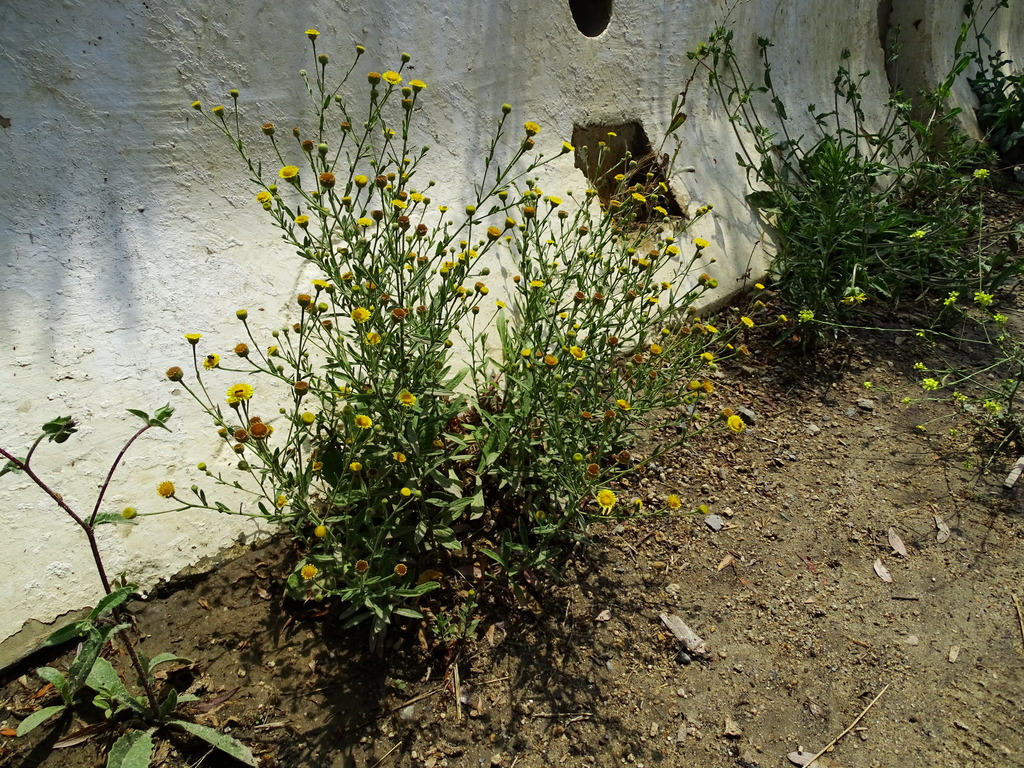
(c) Jesse Rorabaugh, some rights reserved (CC BY), uploaded by Jesse Rorabaugh · licence
Family: Asteraceae · Type: Herb · Not Native
Conservation status: Cal-IPC Yes
Pulicaria paludosa (Spanish false fleabane) is a non-native California herb in the Asteraceae family, recognized by Only Pulicaria species in CA, European introduction distinguished by distinctive pappus structure and stiff habit.
Spanish false fleabane is a naturalized perennial found in western San Joaquin Valley, southwestern California, western Desert Mountains, and Desert Colorado regions in disturbed ground, watercourses, and moist soils at elevations below 950 meters. Flowering from July to October, this plant produces yellow flowers in small heads approximately 10 millimeters in diameter. Growing with stiff stems 60 to 120 centimeters tall emerging from a short rhizome, it has a soft-hairy appearance. Its leaves are narrow and linear to oblong, 1 to 3 centimeters long, often rolled under and slightly clasping the stem. The fruit is tiny, approximately 1 millimeter long with inner pappus bristles 2 to 3 millimeters in length.
Identification and appearance
Key characters: Only Pulicaria species in CA, European introduction distinguished by distinctive pappus structure and stiff habit
Habitat and range
Habitat: Invasive weed in watercourses, moist soils, disturbed ground, especially in SW
Elevation: < 950 m
Outside California: native to Europe
Bloom period
Pulicaria paludosa blooms Jul-Oct.
Conservation status
Cal-IPC Yes
How to tell it apart
vs Erigeron: Pulicaria has double-layered pappus (scales + bristles); Erigeron has only simple bristles.; vs Heterotheca: Pulicaria rays are tiny (1.5-2mm); Heterotheca rays are much longer (3-12mm).; vs Senecio: Pulicaria has double pappus with outer scales; Senecio has only bristles (single layer).; vs Dittrichia: Pulicaria has fused outer pappus crown; Dittrichia outer pappus is separate bristles (check closely).; vs Grindelia: Pulicaria has tiny rays and double pappus; Grindelia has large rays and sticky buds.
Frequently asked questions
Is Pulicaria paludosa native to California?
No. Pulicaria paludosa is not native to California (recorded as not native).
When does Pulicaria paludosa bloom?
Pulicaria paludosa blooms Jul-Oct.
What plant family does Pulicaria paludosa belong to?
Pulicaria paludosa is in the Asteraceae family, genus Pulicaria.
Is Pulicaria paludosa invasive in California?
Pulicaria paludosa is listed by Cal-IPC with an invasiveness rating of Yes.
What habitat does Pulicaria paludosa grow in?
Pulicaria paludosa grows in Invasive weed in watercourses, moist soils, disturbed ground, especially in SW.
Related species
Other California species in the same genus, family, or bioregion.
Sources: Jepson eFlora · Index of California Plant Names · CalPhotos
Last updated 2026-10-07
Data from The California Species Project — 14,000+ California species with verified data from CNPS, CDFW, USFWS, Cal-IPC, and more.