Pyracantha fortuneana
Chinese firethorn
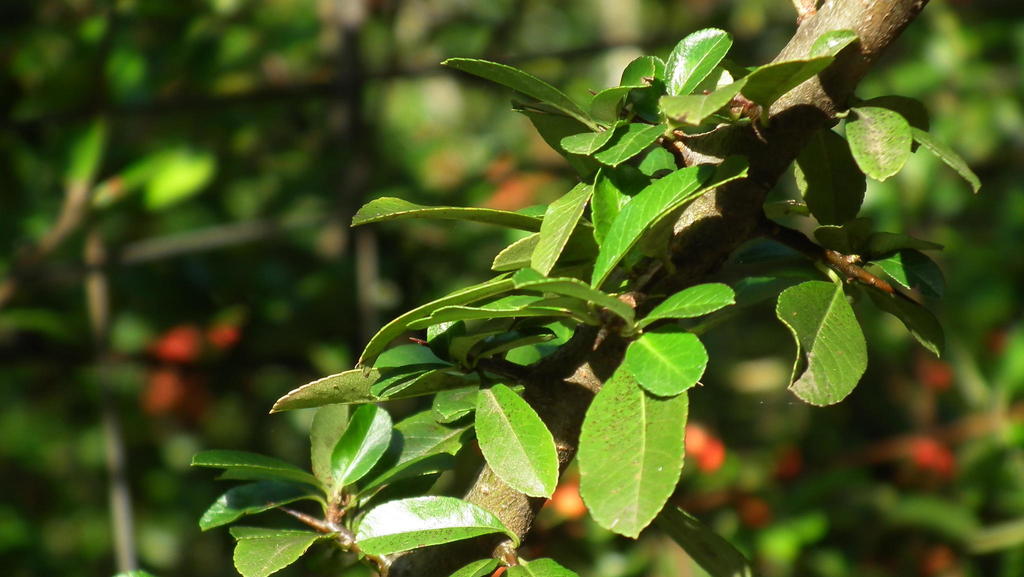
(c) Shaun Swanepoel, some rights reserved (CC BY), uploaded by Shaun Swanepoel · licence
Family: Rosaceae · Type: Shrub · Not Native
Pyracantha fortuneana (Chinese firethorn) is a non-native California shrub in the Rosaceae family, recognized by obovate leaves with obtuse/notched tips and fruit color.
Chinese firethorn is a naturalized shrub found in the Klamath Ranges, northern Coast Ranges, Sacramento Valley, central western California, southern California, San Gabriel Mountains, San Bernardino Mountains, and expected in other regions, growing in disturbed ground, canyons, and riparian areas at elevations below 1,500 meters. Flowering from February to June, this plant produces white flowers in clusters, developing into distinctive orange-red to dark red fruits. Growing erect with rusty-hairy stems up to 4 meters tall, it forms a dense and somewhat irregular shrub. Its leaves are oblong-obovate to obovate, 15 to 60 millimeters long, with short teeth and an obtuse or slightly notched tip, becoming glabrous as they age. The fruits are small, ranging from 3 to 6 millimeters wide, creating bright clusters that stand out against the shrub's foliage.
Identification and appearance
Key characters: 4 sympatric species; key features are obovate leaves with obtuse/notched tips and fruit color
Habitat and range
Habitat: Disturbed ground, canyons, riparian areas
Elevation: < 1500 m
Outside California: to Washington, southeastern United States, native to China
Bloom period
Pyracantha fortuneana blooms Feb-Jun.
How to tell it apart
vs Heteromeles: Pyracantha has thorns and narrow leaves; toyon lacks thorns and has wider serrated leaves.; vs Cotoneaster: Pyracantha has thorns; Cotoneaster is thornless.; vs Nandina: Pyracantha has simple leaves and thorns; nandina has compound leaves and no thorns.; vs Ceanothus: Pyracantha has thorns and orange-red berries; Ceanothus lacks thorns and has dry capsules.; vs Prunus: Pyracantha has clustered small pome fruits; Prunus has single larger stone fruits per flower.
Frequently asked questions
Is Pyracantha fortuneana native to California?
No. Pyracantha fortuneana is not native to California (recorded as not native).
When does Pyracantha fortuneana bloom?
Pyracantha fortuneana blooms Feb-Jun.
What plant family does Pyracantha fortuneana belong to?
Pyracantha fortuneana is in the Rosaceae family, genus Pyracantha.
What habitat does Pyracantha fortuneana grow in?
Pyracantha fortuneana grows in Disturbed ground, canyons, riparian areas.
Related species
Other California species in the same genus, family, or bioregion.
- Pyracantha koidzumii — Taiwan firethorn
- Pyracantha sp.
- Pyracantha angustifolia — Slender or woolly firethorn
- Pyracantha atalantioides — Sichuan firethorn
- Pyracantha coccinea — Firethorn or scarlet firethorn
- Pyracantha crenulata — Himalayan or nepal firethorn
- Pyrus calleryana — Callery pear
- Pyrus communis — Common pear
Sources: Jepson eFlora · CalPhotos
Last updated 2026-10-07
Data from The California Species Project — 14,000+ California species with verified data from CNPS, CDFW, USFWS, Cal-IPC, and more.