Pyrrocoma racemosa
Clustered goldenweed
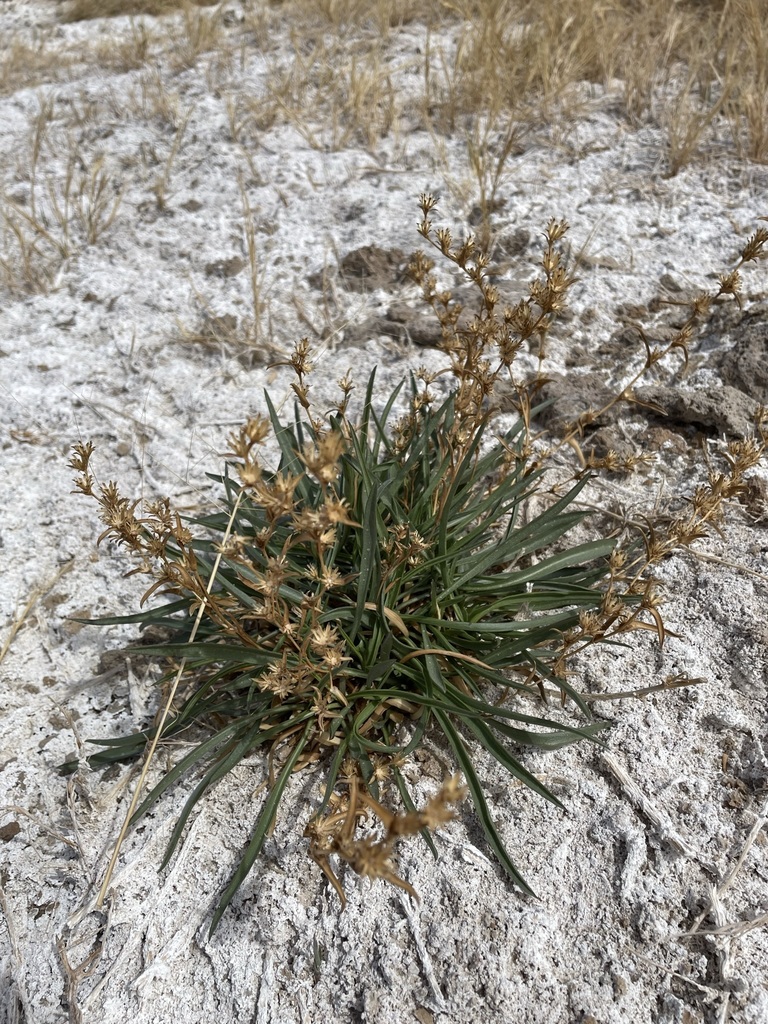
(c) Matt Berger, some rights reserved (CC BY), uploaded by Matt Berger · licence
Family: Asteraceae · Type: Herb · Native
Pyrrocoma racemosa (Clustered goldenweed) is a native California herb in the Asteraceae family.
Clustered goldenweed is a California native perennial found in mountain and foothill regions in open grasslands and rocky areas. Flowering from June to September, this plant produces bright yellow flowers in dense clusters with 7 to 28 ray flowers up to 10 millimeters long. Growing with erect stems 15 to 90 centimeters tall and generally smooth surfaces, it has distinctive basal leaves 5 to 36 centimeters long that range from lance-shaped to widely elliptic. Its leaves feature a tomentose (woolly) petiole and become progressively smaller and clasping along the stem, with edges ranging from entire to serrate. The fruit is 2.5 to 5.5 millimeters long with a tan to brown pappus 6 to 9 millimeters in length.
How to tell it apart
vs Heterotheca: Pyrrocoma has 3-4 angled fruits and prominent basal rosette; Heterotheca has round fruits.; vs Solidago: Pyrrocoma grows from stout taproot with basal rosette in alpine areas; Solidago lacks prominent basal rosette.; vs Xanthisma: Pyrrocoma has 3-4 angled fruits from basal rosette; Xanthisma has round fruits and branched stems.; vs Tonestus: Pyrrocoma has variable hairiness (smooth to woolly); Tonestus is always sticky-glandular.; vs Petradoria: Pyrrocoma grows in alpine areas with angled fruits; Petradoria is desert-only with phyllaries in vertical ranks.
Frequently asked questions
Is Pyrrocoma racemosa native to California?
Yes. Pyrrocoma racemosa is native to California (recorded as native).
What plant family does Pyrrocoma racemosa belong to?
Pyrrocoma racemosa is in the Asteraceae family, genus Pyrrocoma.
Related species
Other California species in the same genus, family, or bioregion.
Sources: Jepson eFlora · Index of California Plant Names · CalPhotos
Last updated 2026-10-07
Data from The California Species Project — 14,000+ California species with verified data from CNPS, CDFW, USFWS, Cal-IPC, and more.