Pyrrocoma racemosa var. paniculata
Clustered goldenweed
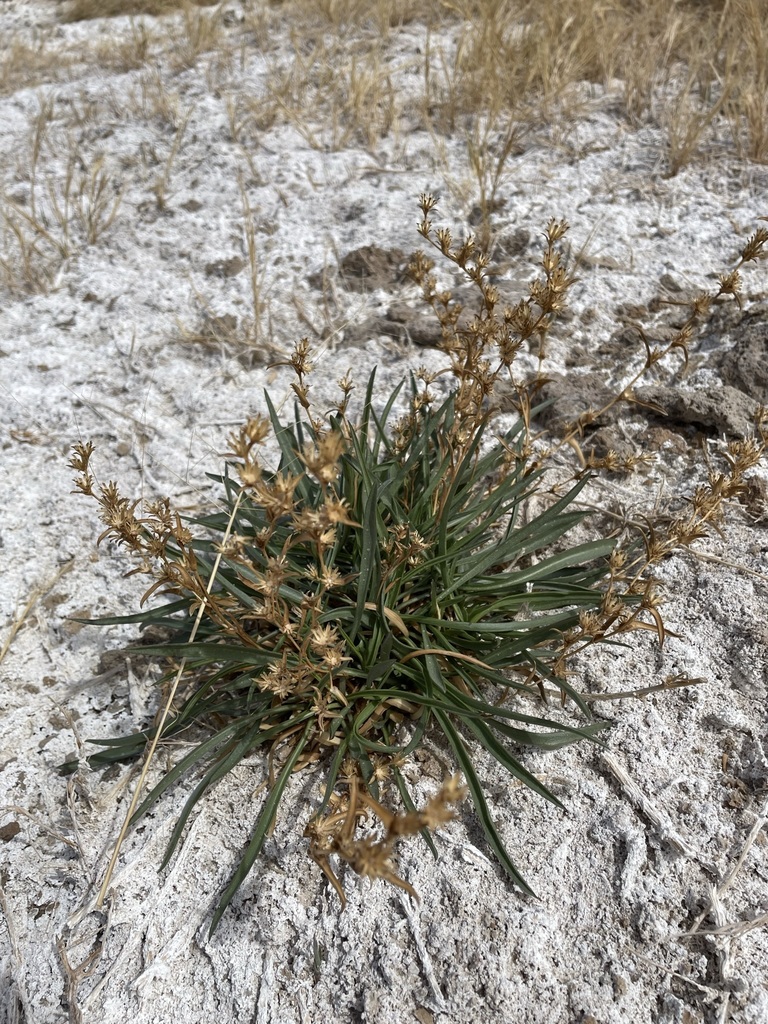
(c) Matt Berger, some rights reserved (CC BY), uploaded by Matt Berger · licence
Family: Asteraceae · Type: Herb · Native
Pyrrocoma racemosa var. paniculata (Clustered goldenweed) is a native California herb in the Asteraceae family, recognized by . Glaucous stems and narrow inflorescence with small heads.
Clustered goldenweed is a California native perennial found in central Sierra Nevada Mountains, Tehachapi, southern coastal ranges, Great Basin, and eastern Mojave Desert regions in alkaline flats and saline meadows at elevations of 150 to 2,500 meters. Flowering from July to October, this plant produces yellow flowers in narrow clusters with involucre heads 8 to 12 millimeters wide. Growing with stems that have a distinctive bluish-gray (glaucous) appearance, reaching moderate heights typical of prairie wildflowers. Its leaves and overall structure contribute to its adaptability in harsh, salty environments with sparse vegetation. The plant's compact, clustered flowering structure allows it to thrive in challenging alkaline landscapes.
Identification and appearance
Key characters: 13 sympatric species. Glaucous stems and narrow inflorescence with small heads.
Habitat and range
Habitat: Alkaline flats, saline meadows
Elevation: 150-2500 m
California counties: Mono, Inyo, Kern, Lassen, Modoc, Plumas, San Benito, Siskiyou, Alpine, Mariposa, Nevada, Sierra, Fresno, Tulare
Outside California: to Oregon, Idaho, Utah
Bloom period
Pyrrocoma racemosa var. paniculata blooms Jul-Oct.
How to tell it apart
vs Heterotheca: Pyrrocoma has 3-4 angled fruits and prominent basal rosette; Heterotheca has round fruits.; vs Solidago: Pyrrocoma grows from stout taproot with basal rosette in alpine areas; Solidago lacks prominent basal rosette.; vs Xanthisma: Pyrrocoma has 3-4 angled fruits from basal rosette; Xanthisma has round fruits and branched stems.; vs Tonestus: Pyrrocoma has variable hairiness (smooth to woolly); Tonestus is always sticky-glandular.; vs Petradoria: Pyrrocoma grows in alpine areas with angled fruits; Petradoria is desert-only with phyllaries in vertical ranks.
Frequently asked questions
Is Pyrrocoma racemosa var. paniculata native to California?
Yes. Pyrrocoma racemosa var. paniculata is native to California (recorded as native).
When does Pyrrocoma racemosa var. paniculata bloom?
Pyrrocoma racemosa var. paniculata blooms Jul-Oct.
Where in California does Pyrrocoma racemosa var. paniculata grow?
Pyrrocoma racemosa var. paniculata occurs in Mono, Inyo, Kern, Lassen, Modoc, Plumas, San Benito, Siskiyou and other counties, at elevations of 150-2500 m.
What plant family does Pyrrocoma racemosa var. paniculata belong to?
Pyrrocoma racemosa var. paniculata is in the Asteraceae family, genus Pyrrocoma.
What habitat does Pyrrocoma racemosa var. paniculata grow in?
Pyrrocoma racemosa var. paniculata grows in Alkaline flats, saline meadows.
Related species
Other California species in the same genus, family, or bioregion.
Sources: Jepson eFlora · Index of California Plant Names · CalPhotos
Last updated 2026-10-07
Data from The California Species Project — 14,000+ California species with verified data from CNPS, CDFW, USFWS, Cal-IPC, and more.