Pyrrocoma racemosa var. sessiliflora
Clustered goldenweed
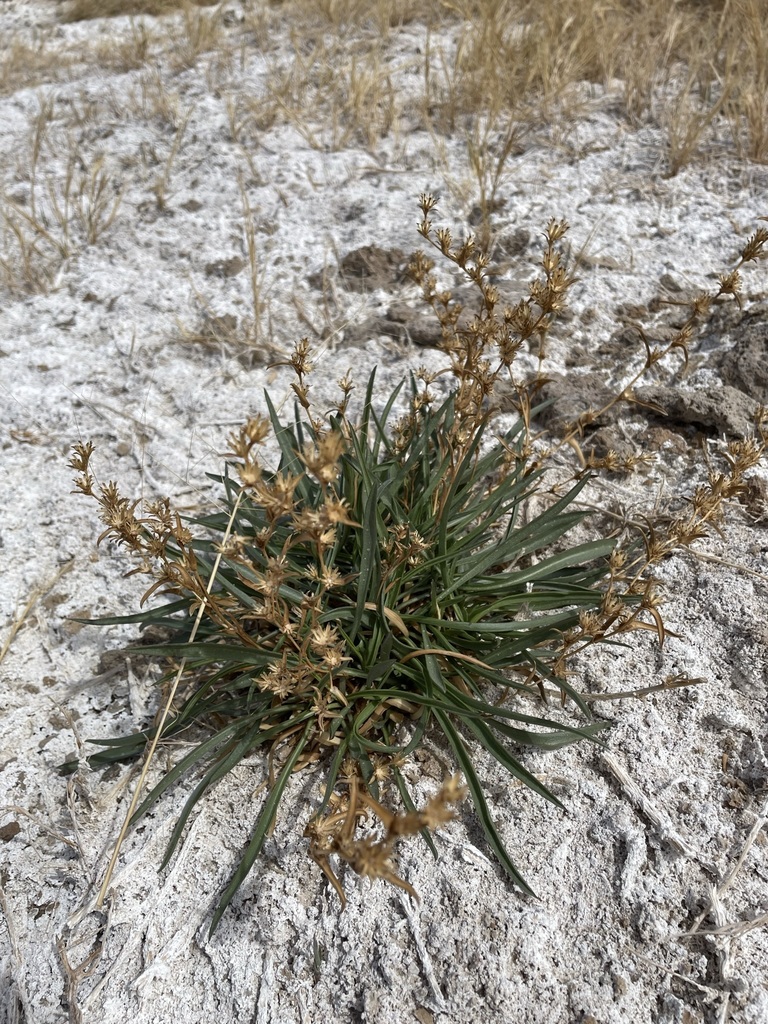
(c) Matt Berger, some rights reserved (CC BY), uploaded by Matt Berger · licence
Family: Asteraceae · Type: Herb · Native
Pyrrocoma racemosa var. sessiliflora (Clustered goldenweed) is a native California herb in the Asteraceae family, recognized by . Very small heads, narrow leaves, recurved phyllary tips.
Clustered goldenweed is a California native perennial found in southeastern Sierra Nevada and Mojave Desert bioregions in dry alkaline flats, saline meadows, and marshes at elevations of 300 to 2,200 meters. Flowering from July to October, this plant produces golden yellow flowers in crowded, spike-like clusters with distinctive pale leathery involucres 5 to 8.5 millimeters wide. Growing with glaucous stems, it forms a distinctive clump with basal leaves that are linear-oblanceolate in shape. Its basal leaves are narrow and elongated, creating a delicate, grass-like appearance against the golden flower heads. The plant's unique involucres feature pale bases with translucent margins and green, recurved tips that add visual complexity to its inflorescence.
Identification and appearance
Key characters: 2 sympatric species. Very small heads, narrow leaves, recurved phyllary tips.
Habitat and range
Habitat: dry alkaline flats, saline meadows, marshes
Elevation: 300-2200 m
California counties: Inyo, Mono, Kern, Ventura, Santa Barbara, Los Angeles
Outside California: to Utah
Bloom period
Pyrrocoma racemosa var. sessiliflora blooms Jul-Oct.
How to tell it apart
vs Heterotheca: Pyrrocoma has 3-4 angled fruits and prominent basal rosette; Heterotheca has round fruits.; vs Solidago: Pyrrocoma grows from stout taproot with basal rosette in alpine areas; Solidago lacks prominent basal rosette.; vs Xanthisma: Pyrrocoma has 3-4 angled fruits from basal rosette; Xanthisma has round fruits and branched stems.; vs Tonestus: Pyrrocoma has variable hairiness (smooth to woolly); Tonestus is always sticky-glandular.; vs Petradoria: Pyrrocoma grows in alpine areas with angled fruits; Petradoria is desert-only with phyllaries in vertical ranks.
Frequently asked questions
Is Pyrrocoma racemosa var. sessiliflora native to California?
Yes. Pyrrocoma racemosa var. sessiliflora is native to California (recorded as native).
When does Pyrrocoma racemosa var. sessiliflora bloom?
Pyrrocoma racemosa var. sessiliflora blooms Jul-Oct.
Where in California does Pyrrocoma racemosa var. sessiliflora grow?
Pyrrocoma racemosa var. sessiliflora occurs in Inyo, Mono, Kern, Ventura, Santa Barbara, Los Angeles, at elevations of 300-2200 m.
What plant family does Pyrrocoma racemosa var. sessiliflora belong to?
Pyrrocoma racemosa var. sessiliflora is in the Asteraceae family, genus Pyrrocoma.
What habitat does Pyrrocoma racemosa var. sessiliflora grow in?
Pyrrocoma racemosa var. sessiliflora grows in dry alkaline flats, saline meadows, marshes.
Related species
Other California species in the same genus, family, or bioregion.
Sources: Jepson eFlora · Index of California Plant Names · CalPhotos
Last updated 2026-10-07
Data from The California Species Project — 14,000+ California species with verified data from CNPS, CDFW, USFWS, Cal-IPC, and more.