Pyrus calleryana
Callery pear
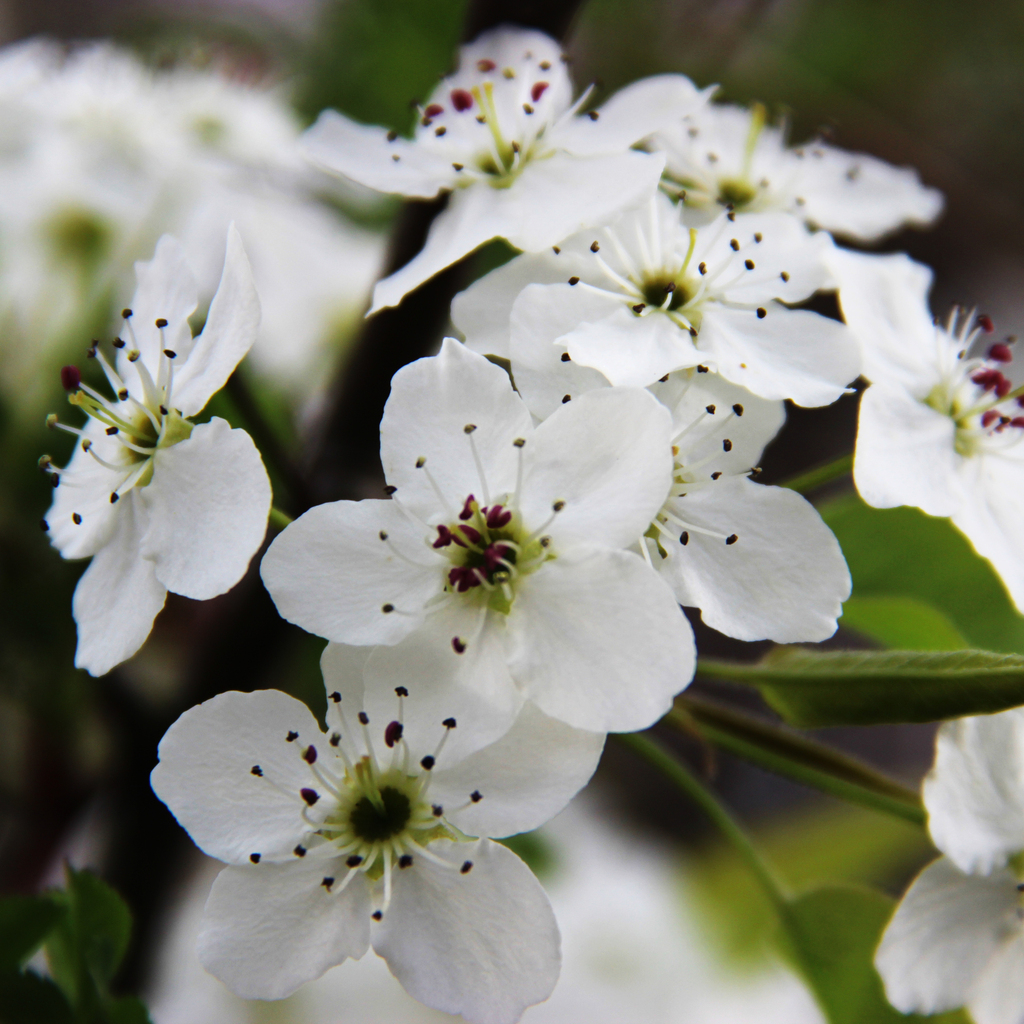
(c) Benjamin Smith, some rights reserved (CC BY) · licence
Family: Rosaceae · Type: Tree
Conservation status: Cal-IPC Yes
Pyrus calleryana (Callery pear) is a California tree in the Rosaceae family.
Callery pear is a naturalized tree found in disturbed urban and agricultural landscapes throughout California's central and northern regions. Flowering from April to May, this tree produces white flowers with five delicate petals clustered in small, rounded umbrella-like groups. Growing to heights of 4 to 15 meters with multiple spreading branches, it forms a dense, rounded canopy with a distinctive branching structure. Its alternate, broadly ovate leaves are glossy dark green, 4 to 8 centimeters long, with finely serrated edges and prominent veining. When mature, the tree produces small, round brownish-green fruits approximately 1 centimeter in diameter.
Identification and appearance
Key characters: Differentiators are not available at this time.
Conservation status
Cal-IPC Yes
How to tell it apart
vs Populus: Populus has triangular leaves with flattened petioles; Pyrus has oval leaves with round petioles.; vs Prunus: Prunus fruits have a single central pit; Pyrus fruits have a papery core with gritty flesh throughout.; vs Quercus: Quercus has lobed leaves and acorns; Pyrus has unlobed leaves and pear-shaped fruits.; vs Acer: Acer has opposite, palmately lobed leaves; Pyrus has alternate, unlobed leaves.; vs Triadica: Triadica has heart-shaped leaves and dry three-parted capsules; Pyrus has oval leaves and fleshy pear fruits.
Frequently asked questions
What plant family does Pyrus calleryana belong to?
Pyrus calleryana is in the Rosaceae family, genus Pyrus.
Is Pyrus calleryana invasive in California?
Pyrus calleryana is listed by Cal-IPC with an invasiveness rating of Yes.
Related species
Other California species in the same genus, family, or bioregion.
Last updated 2026-10-07
Data from The California Species Project — 14,000+ California species with verified data from CNPS, CDFW, USFWS, Cal-IPC, and more.