Quercus douglasii
Blue oak
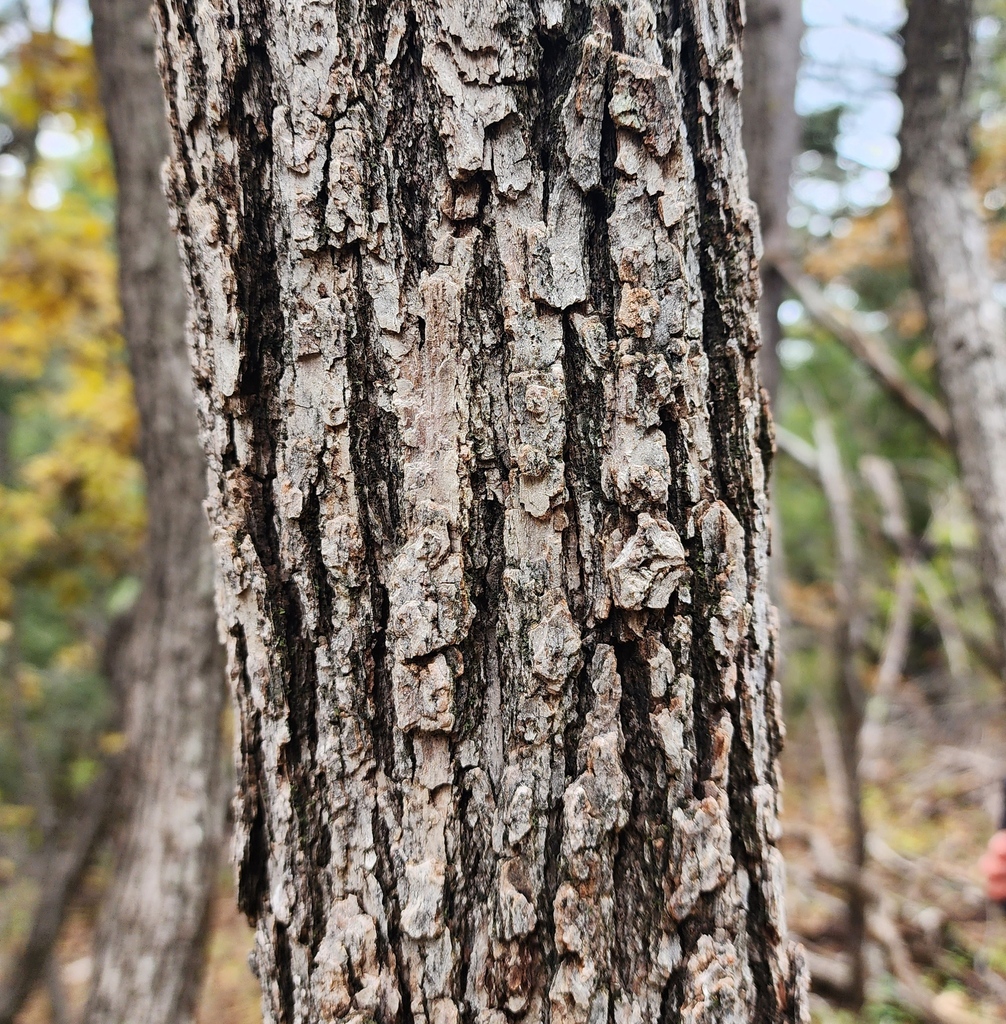
(c) Lyrae, some rights reserved (CC BY), uploaded by Lyrae · licence
Family: Fagaceae · Type: Tree · Native
Quercus douglasii (Blue oak) is a native California tree in the Fagaceae family, recognized by blue-green foliage highly distinctive.
Blue oak is a California native tree found in the Klamath Ranges, northern Coast Ranges, California Robles, Sierra Nevada Foothills, Tehachapi, Sutter Buttes, San Joaquin Valley, San Francisco Bay Area, southern Coast Ranges, southern Channel Islands, and Mojave Desert in dry woodland slopes and interior foothills at elevations below 1,590 meters. Flowering from April to May, this tree produces pale greenish-yellow flowers in small clusters. Growing 6 to 20 meters tall with a distinctive checkered gray bark that breaks into thin scales, it develops a broad, spreading canopy. Its leaves are 3 to 6 centimeters long, oblong to obovate with a blue-green color, featuring a rounded tip and slightly wavy margins. The acorns mature within one year, with cups 12 to 20 millimeters wide and nuts 20 to 35 millimeters long, developing an ovoid shape with a subtly acute tip.
Identification and appearance
Key characters: 30 sympatric species; blue-green foliage highly distinctive
Habitat and range
Habitat: dry slopes, interior foothills, woodland
Elevation: < 1590 m
California counties: San Luis Obispo, Kern, Amador, Napa, Monterey, Madera, Yuba, Shasta, Lake, Sacramento, Santa Barbara, San Benito, Tehama, Contra Costa, Butte, Santa Clara, Sutter, Mariposa, Fresno, Tuolumne, San Mateo, Los Angeles, Tulare, Yolo, San Joaquin, Mendocino, Placer, Calaveras, Nevada, Sonoma, El Dorado, Marin, Sierra, Inyo, Colusa, Glenn, Kings, Alameda, Stanislaus, Solano, Merced, Ventura, Trinity, Riverside, Siskiyou, Del Norte
Bloom period
Quercus douglasii blooms Apr-May.
How to tell it apart
vs Prunus: Quercus has acorns in cups; cherries/plums have fleshy round fruits.; vs Notholithocarpus: Quercus has drooping catkins; tanoak has upright flower spikes.; vs Rhamnus: Quercus has acorns; buckthorns have berry-like fruits.; vs Ceanothus: Quercus has acorns; California lilacs have small capsule fruits.; vs Platanus: Quercus has acorns; sycamores have hanging ball-shaped seed clusters.
Frequently asked questions
Is Quercus douglasii native to California?
Yes. Quercus douglasii is native to California (recorded as native).
When does Quercus douglasii bloom?
Quercus douglasii blooms Apr-May.
Where in California does Quercus douglasii grow?
Quercus douglasii occurs in San Luis Obispo, Kern, Amador, Napa, Monterey, Madera, Yuba, Shasta and other counties, at elevations of < 1590 m.
What plant family does Quercus douglasii belong to?
Quercus douglasii is in the Fagaceae family, genus Quercus.
What habitat does Quercus douglasii grow in?
Quercus douglasii grows in dry slopes, interior foothills, woodland.
Related species
Other California species in the same genus, family, or bioregion.
Sources: Jepson eFlora · Index of California Plant Names · CalPhotos
Last updated 2026-10-07
Data from The California Species Project — 14,000+ California species with verified data from CNPS, CDFW, USFWS, Cal-IPC, and more.