Quercus dumosa
Nuttall's scrub oak, Nuttall's Scrub Oak
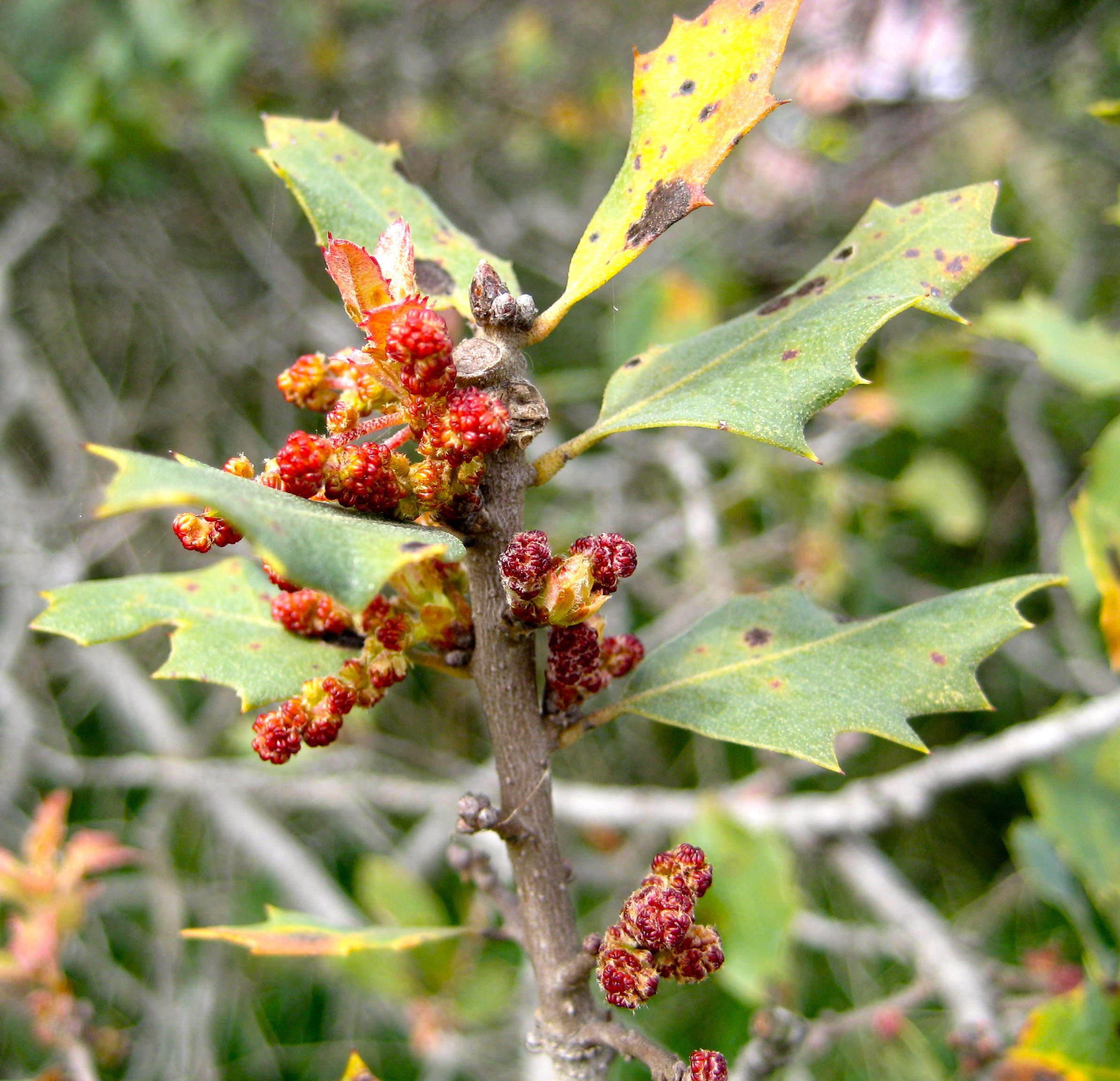
Photo by Chez Brungraber
Family: Fagaceae · Type: Shrub / Tree · Native
Conservation status: CNPS 1B.1
Quercus dumosa (Nuttall's scrub oak) is a native California shrub / tree in the Fagaceae family, recognized by slender twigs and coastal sandy habitat distinctive.
Nuttall's scrub oak is a rare (CNPS 1B.1) California native shrub found in southern coastal and peninsular regions in sandy coastal areas, sandstone landscapes, chaparral, and coastal-sage scrub at elevations below 200 meters. Flowering from March to May, this plant produces small pale green flowers in subtle clusters. Growing 1 to 4 meters tall with slender dark red-brown twigs, it forms an evergreen shrub with dense branching. Its leaves are oblong to elliptical, 1 to 2.5 centimeters long, with wavy margins and spine-toothed edges, appearing shiny green on top and pale green underneath. The acorn cup is bowl-shaped, 8 to 15 millimeters wide, with slightly bumpy scales and containing a slender, generally ovoid nut 10 to 20 millimeters long.
Identification and appearance
Key characters: 14 sympatric species; slender twigs and coastal sandy habitat distinctive
Habitat and range
Habitat: Generally sandy soils near coast, sandstone, chaparral, coastal-sage scrub
Elevation: < 200 m
California counties: Santa Barbara, Orange, Ventura, San Diego, San Luis Obispo, Santa Cruz, Santa Clara, Los Angeles, Riverside, Napa, San Bernardino, Butte, Sonoma, Lake, San Benito, Monterey, Contra Costa, Kern, Mendocino, El Dorado, Tuolumne, Mariposa, Glenn, Fresno, Kings, Sutter, Imperial, Alameda, Nevada, Tehama, San Mateo, Tulare, Solano, Shasta, Colusa, Placer, Yolo, Marin, San Francisco
Outside California: Baja California
Bloom period
Quercus dumosa blooms Mar-May.
Conservation status
CNPS 1B.1
How to tell it apart
vs Prunus: Quercus has acorns in cups; cherries/plums have fleshy round fruits.; vs Notholithocarpus: Quercus has drooping catkins; tanoak has upright flower spikes.; vs Rhamnus: Quercus has acorns; buckthorns have berry-like fruits.; vs Ceanothus: Quercus has acorns; California lilacs have small capsule fruits.; vs Platanus: Quercus has acorns; sycamores have hanging ball-shaped seed clusters.
Frequently asked questions
Is Quercus dumosa native to California?
Yes. Quercus dumosa is native to California (recorded as native).
When does Quercus dumosa bloom?
Quercus dumosa blooms Mar-May.
Where in California does Quercus dumosa grow?
Quercus dumosa occurs in Santa Barbara, Orange, Ventura, San Diego, San Luis Obispo, Santa Cruz, Santa Clara, Los Angeles and other counties, at elevations of < 200 m.
What plant family does Quercus dumosa belong to?
Quercus dumosa is in the Fagaceae family, genus Quercus.
Is Quercus dumosa rare or endangered?
Quercus dumosa carries California Rare Plant Rank 1B.1, state rank S3.
Related species
Other California species in the same genus, family, or bioregion.
Sources: Jepson eFlora · CNPS Rare Plant Inventory · Index of California Plant Names · CalPhotos · CDFW CNDDB
Last updated 2026-10-07
Data from The California Species Project — 14,000+ California species with verified data from CNPS, CDFW, USFWS, Cal-IPC, and more.