Rhus integrifolia
Lemonade berry
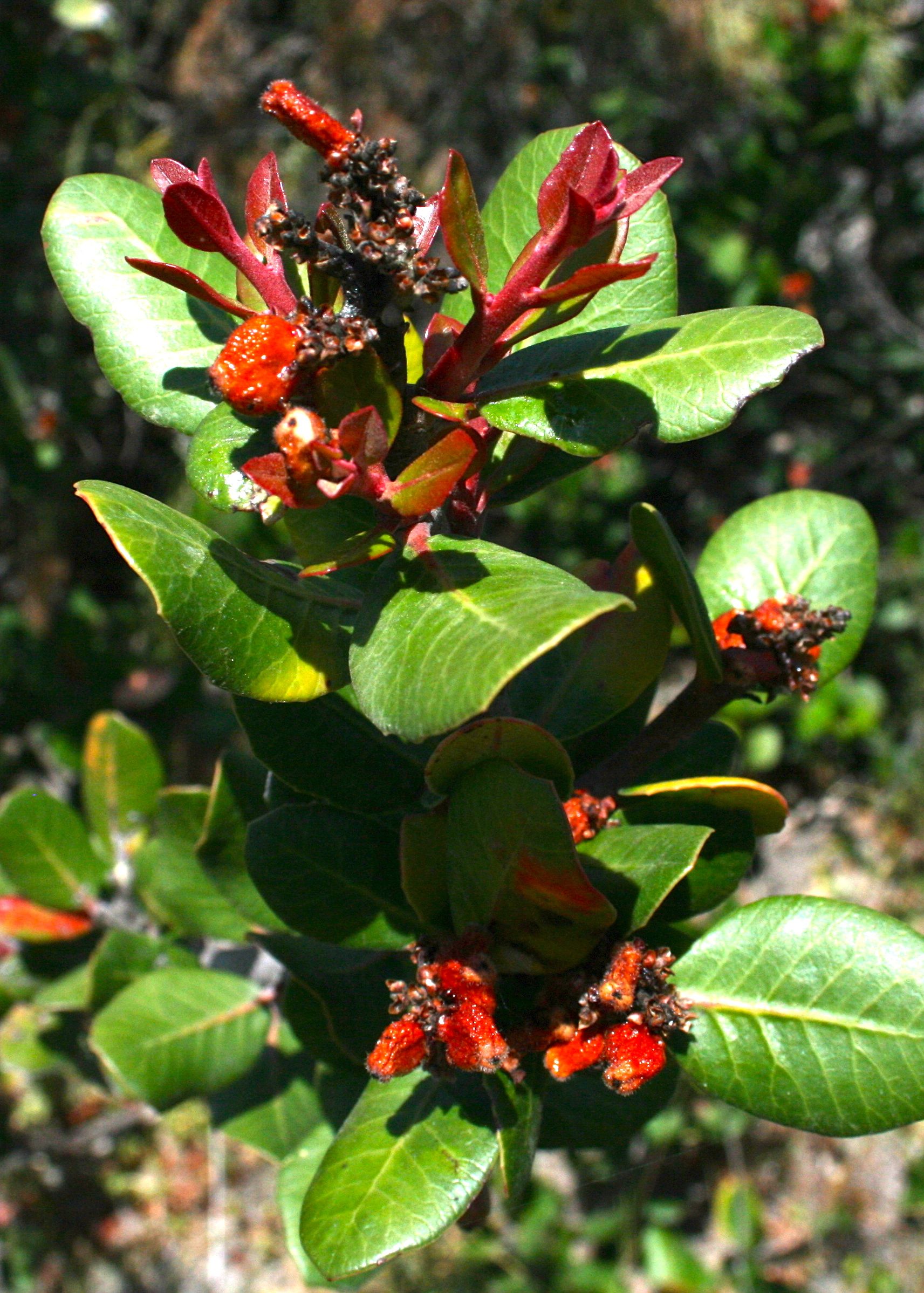
Photo by Chez Brungraber
Family: Anacardiaceae · Type: Shrub / Tree · Native
Rhus integrifolia (Lemonade berry) is a native California shrub / tree in the Anacardiaceae family, recognized by R. ovata by flat vs folded leaves and habitat preference.
Lemonade berry is a California native shrub found in the southwestern part of the state in canyon and chaparral habitats, particularly on northern-facing slopes at elevations below 900 meters. Flowering from February to May, this plant produces white to pale pink flowers in compact clusters with distinctive glandular-hairy branches. Growing 1 to 8 meters tall with a robust, spreading form, it develops thick, sturdy branches that provide a distinctive architectural presence in its native landscape. Its evergreen leaves are wide-elliptic to lance-elliptic, leathery and generally 2.5 to 6 centimeters long, with edges that can be entire or slightly toothed and tips that are somewhat blunt. The fruit develops as a glandular-hairy, reddish drupe approximately 7 to 10 millimeters in diameter, adding visual interest to the plant's overall structure.
Identification and appearance
Key characters: 2 sympatric species; distinguished from R. ovata by flat vs folded leaves and habitat preference
Habitat and range
Habitat: Canyons, generally n-facing slopes, chaparral
Elevation: < 900 m
California counties: Los Angeles, San Diego, Santa Barbara, Orange, Ventura, San Bernardino, Riverside, Santa Cruz, Marin, Sacramento, San Luis Obispo, San Mateo, Santa Clara, Monterey
Outside California: Baja California
Bloom period
Rhus integrifolia blooms Feb-May.
How to tell it apart
vs Malosma: Malosma has simple undivided leaves; Rhus has compound leaves divided into 9+ leaflets.; vs Toxicodendron: Toxicodendron leaflets are shiny-glossy on top; Rhus leaflets are dull and flat-looking.; vs Heteromeles: Heteromeles has simple toothed leaves and smooth red berries; Rhus has compound leaves and fuzzy clustered fruits.; vs Rhamnus: Rhamnus has simple leaves and smooth berries; Rhus has compound leaves and fuzzy red berry clusters.; vs Quercus: Quercus has simple lobed leaves; Rhus has compound leaves divided into multiple leaflets.
Frequently asked questions
Is Rhus integrifolia native to California?
Yes. Rhus integrifolia is native to California (recorded as native).
When does Rhus integrifolia bloom?
Rhus integrifolia blooms Feb-May.
Where in California does Rhus integrifolia grow?
Rhus integrifolia occurs in Los Angeles, San Diego, Santa Barbara, Orange, Ventura, San Bernardino, Riverside, Santa Cruz and other counties, at elevations of < 900 m.
What plant family does Rhus integrifolia belong to?
Rhus integrifolia is in the Anacardiaceae family, genus Rhus.
What habitat does Rhus integrifolia grow in?
Rhus integrifolia grows in Canyons, generally n-facing slopes, chaparral.
Related species
Other California species in the same genus, family, or bioregion.
Sources: Jepson eFlora · Index of California Plant Names · CalPhotos
Last updated 2026-10-07
Data from The California Species Project — 14,000+ California species with verified data from CNPS, CDFW, USFWS, Cal-IPC, and more.