Rotala indica
Indian toothcup
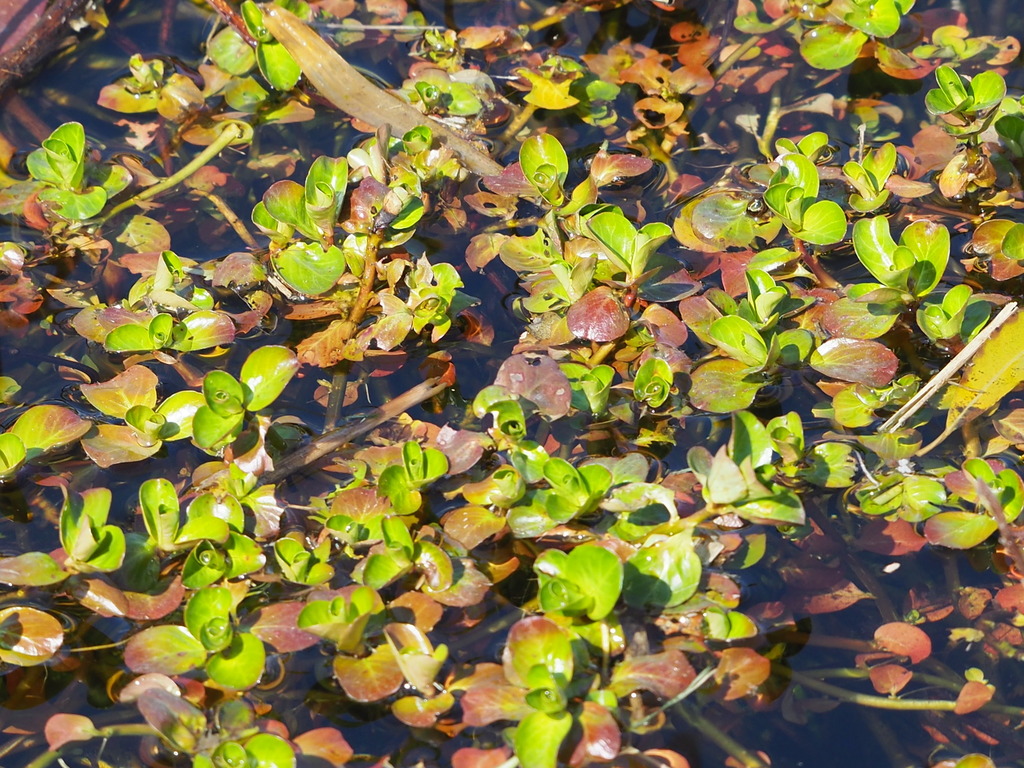
no rights reserved, uploaded by 葉子 · CC0
Family: Lythraceae · Type: Herb · Not Native
Rotala indica (Indian toothcup) is a non-native California herb in the Lythraceae family, recognized by (R. ramosior). Key differences: hypanthium size, bract shape and relative length.
Indian toothcup is a naturalized perennial found in the Sacramento Valley in marshes and ponds at elevations below 100 meters. Flowering from June to September, this plant produces delicate pink flowers in small axillary clusters. Growing with slender stems 10 to 40 centimeters tall, it spreads across wet habitats with multiple branching shoots. Its small leaves are arranged closely along the stems, with tiny lance-linear bractlets accompanying each flower. The fruit develops as a small oblong capsule nestled within the flower's hypanthium.
Identification and appearance
Key characters: 1 sympatric species (R. ramosior). Key differences: hypanthium size, bract shape and relative length
Habitat and range
Habitat: Marshes, ponds
Elevation: < 100 m
Outside California: Louisiana, rice-field weed in Europe, native to southeastern Asia
Bloom period
Rotala indica blooms Jun-Sep.
How to tell it apart
vs Punica: Rotala has tiny bell-shaped flowers on wetland herbs; Punica has massive leathery flowers on woody shrubs.; vs Lythrum: Rotala has bell-shaped flower tubes and solitary axillary flowers; Lythrum has narrow cylindrical tubes in spike-like clusters.; vs Ammannia: Rotala has leaves tapering smoothly to base; Ammannia has distinctive ear-like lobes at leaf base.
Frequently asked questions
Is Rotala indica native to California?
No. Rotala indica is not native to California (recorded as not native).
When does Rotala indica bloom?
Rotala indica blooms Jun-Sep.
What plant family does Rotala indica belong to?
Rotala indica is in the Lythraceae family, genus Rotala.
What habitat does Rotala indica grow in?
Rotala indica grows in Marshes, ponds.
Related species
Other California species in the same genus, family, or bioregion.
Sources: Jepson eFlora · CalPhotos
Last updated 2026-10-07
Data from The California Species Project — 14,000+ California species with verified data from CNPS, CDFW, USFWS, Cal-IPC, and more.