Rubus glaucifolius
Waxleaf raspberry, Waxleaf Raspberry
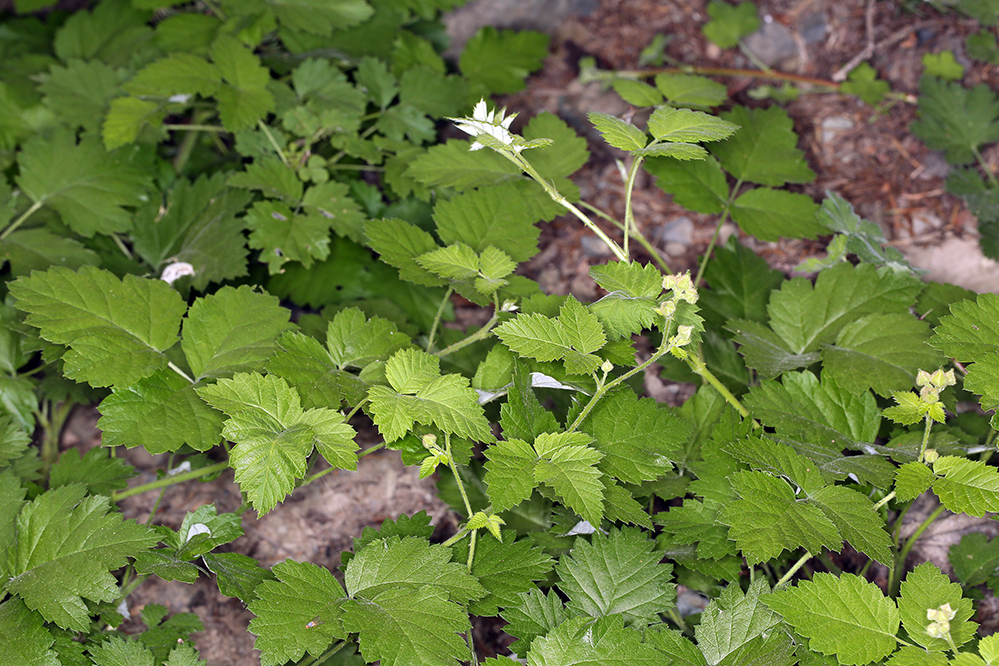
(c) Steve Matson, some rights reserved (CC BY), uploaded by Steve Matson · licence
Family: Rosaceae · Type: Subshrub · Native
Conservation status: CNPS 3.1
Rubus glaucifolius (Waxleaf raspberry) is a native California subshrub in the Rosaceae family, recognized by waxy coating, elevation, and raspberry fruit.
Waxleaf raspberry is a California native shrub found in northwestern California, the Sierra Nevada, and the Peninsular Ranges in forest openings at elevations of 800 to 2,100 meters. Flowering from June to July, this plant produces white flowers 4 to 8 millimeters long in small terminal or axillary clusters. Growing with prostrate to decumbent stems 2 to 3 millimeters in diameter, it has few weak, slender prickles and a glaucous appearance. Its compound leaves have three leaflets, with terminal leaflets ovate to elliptic, coarse-toothed, and densely white-tomentose on the underside. The fruit develops as a red-purple raspberry-type cluster with white-hairy ovaries.
Identification and appearance
Key characters: Co-occurs with 12 species; distinguished by waxy coating, elevation, and raspberry fruit
Habitat and range
Habitat: Openings in forest
Elevation: 800-2100 m
California counties: Mariposa, Siskiyou, Fresno, Kern, Placer, Lake, Mendocino, Tulare, El Dorado, Sierra, Butte, Nevada, Plumas, Trinity, Tuolumne, Glenn, Madera, Calaveras, San Diego
Outside California: Oregon
Bloom period
Rubus glaucifolius blooms Jun-Jul.
Conservation status
CNPS 3.1
How to tell it apart
vs Toxicodendron: Rubus has palmate leaves with 3-5 leaflets spreading from one point; poison oak has 3 leaflets arranged along a stem.; vs Ribes: Rubus stems are thorny or bristly canes; currants/gooseberries are unarmed or have sharp spines at nodes only.; vs Rosa: Rubus leaves are palmate (fingers from palm); rose leaves are pinnate (leaflets along a central stem).; vs Acer: Rubus has compound leaves with separate leaflets; maple leaves are single lobed blades.; vs Fragaria: Rubus grows as tall, arching canes; strawberries form low runners with flower stalks rising from base.
Frequently asked questions
Is Rubus glaucifolius native to California?
Yes. Rubus glaucifolius is native to California (recorded as native).
When does Rubus glaucifolius bloom?
Rubus glaucifolius blooms Jun-Jul.
Where in California does Rubus glaucifolius grow?
Rubus glaucifolius occurs in Mariposa, Siskiyou, Fresno, Kern, Placer, Lake, Mendocino, Tulare and other counties, at elevations of 800-2100 m.
What plant family does Rubus glaucifolius belong to?
Rubus glaucifolius is in the Rosaceae family, genus Rubus.
Is Rubus glaucifolius rare or endangered?
Rubus glaucifolius carries California Rare Plant Rank 3.1, state rank S1.
Related species
Other California species in the same genus, family, or bioregion.
Sources: Jepson eFlora · Index of California Plant Names · CalPhotos · CDFW CNDDB
Last updated 2026-10-07
Data from The California Species Project — 14,000+ California species with verified data from CNPS, CDFW, USFWS, Cal-IPC, and more.