Rumex acetosella
Sheep sorrel, Sheep Sorrel
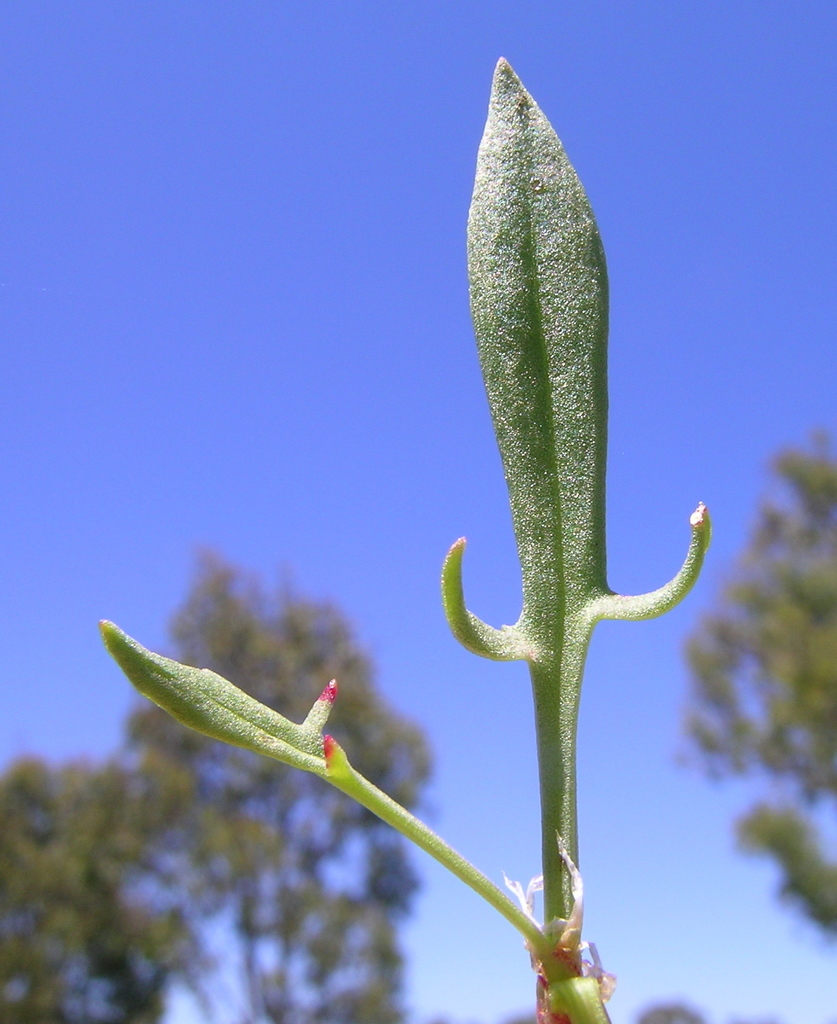
(c) Harry Rose, some rights reserved (CC BY) · licence
Family: Polygonaceae · Type: Herb · Not Native
Conservation status: Cal-IPC Yes
Rumex acetosella (Sheep sorrel) is a non-native California herb in the Polygonaceae family, recognized by . Distinctive hastate/sagittate leaf base.
Sheep sorrel is a naturalized perennial herb found in California Floristic Province and Great Basin regions in disturbed and often acidic places at elevations up to 3,000 meters. Flowering from April to July, this plant produces small green-red flowers in open terminal whorls. Growing with slender ascending stems to 40 centimeters tall, it spreads through creeping rhizomes and develops a vertical taproot. Its leaves are primarily basal, with distinctive arrow-shaped or lance-like blades 2 to 6 centimeters long, featuring widely tapered bases and acute or obtuse tips. The small brown fruits are less than 1.5 millimeters wide, reflecting the plant's delicate structure.
Identification and appearance
Key characters: 21 sympatric species. Distinctive hastate/sagittate leaf base is diagnostic.
Habitat and range
Habitat: +- disturbed, often acidic places
Elevation: < 3000 m
California counties: Humboldt, Placer, Sierra, Fresno, Butte, Plumas, Tuolumne, San Luis Obispo, Santa Barbara, Tulare, Los Angeles, Ventura, Alameda, Siskiyou, Monterey, Calaveras, El Dorado, San Mateo, Lassen, San Diego, Del Norte, Riverside, Madera, San Francisco, Sonoma, San Bernardino, Modoc, Nevada, Lake, Mendocino, Mono, Santa Cruz, Shasta, Orange, Contra Costa, Marin, Kern, Santa Clara, Trinity, Tehama, Yuba, Amador, Alpine, Sacramento, Glenn, Inyo, Mariposa, Solano, Colusa, Stanislaus, Napa, San Benito
Outside California: worldwide, native to Europe, Asia
Bloom period
Rumex acetosella blooms Apr-Jul.
Conservation status
Cal-IPC Yes
How to tell it apart
vs Anemopsis: Rumex has dense flower clusters; Anemopsis has a single white cone-like flower head.; vs Amaranthus: Rumex has papery three-winged fruits; Amaranthus has small round seeds with papery covers.; vs Plantago: Rumex has branching flower clusters; Plantago has flowers in dense cylindrical spikes.; vs Eriogonum: Rumex has large broad leaves; Eriogonum typically has small basal leaf rosettes or mats.; vs Limonium: Rumex has green to reddish flower clusters; Limonium has papery purple or pink flowers.
Frequently asked questions
Is Rumex acetosella native to California?
No. Rumex acetosella is not native to California (recorded as not native).
When does Rumex acetosella bloom?
Rumex acetosella blooms Apr-Jul.
Where in California does Rumex acetosella grow?
Rumex acetosella occurs in Humboldt, Placer, Sierra, Fresno, Butte, Plumas, Tuolumne, San Luis Obispo and other counties, at elevations of < 3000 m.
What plant family does Rumex acetosella belong to?
Rumex acetosella is in the Polygonaceae family, genus Rumex.
Is Rumex acetosella invasive in California?
Rumex acetosella is listed by Cal-IPC with an invasiveness rating of Yes.
Related species
Other California species in the same genus, family, or bioregion.
Sources: Jepson eFlora · Index of California Plant Names · CalPhotos
Last updated 2026-10-07
Data from The California Species Project — 14,000+ California species with verified data from CNPS, CDFW, USFWS, Cal-IPC, and more.