Salvia sonomensis
Creeping sage
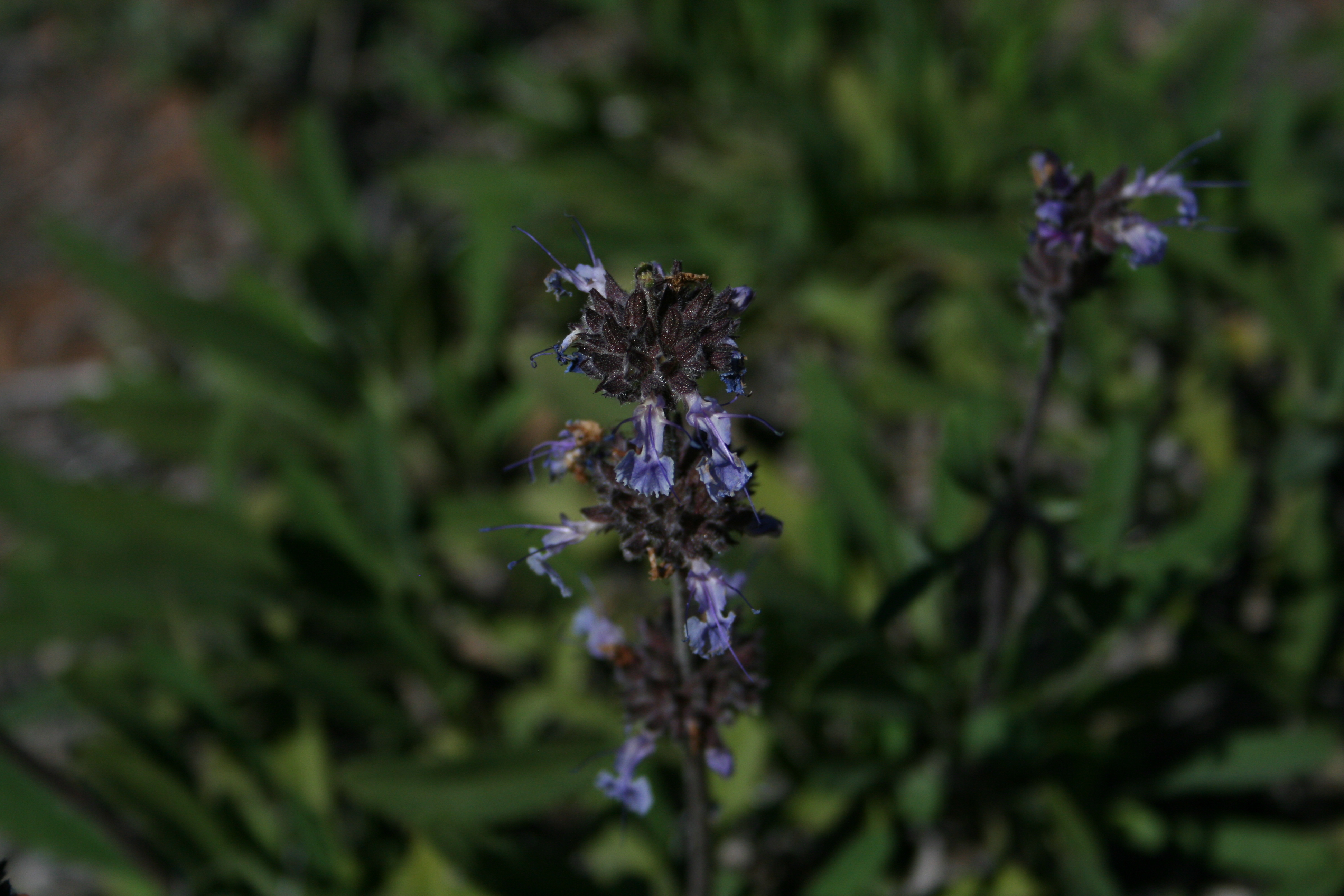
Photo by Chez Brungraber
Family: Lamiaceae · Type: Subshrub · Native
Salvia sonomensis (Creeping sage) is a native California subshrub in the Lamiaceae family, recognized by prostrate mat-forming habit distinctive in northern California.
Creeping sage is a California native shrub found in the Klamath Ranges, northern Coast Ranges, California Ranges, northern and central Sierra Nevada Foothills, southern San Francisco Bay Area, southern Coast Ranges, and southern California coastal areas in chaparral, oak woodland, and yellow-pine forest at elevations below 2,000 meters. Flowering from March to July, this plant produces blue to lilac or purple flowers in compact clusters 1 to 1.5 centimeters wide. Growing as a prostrate, mat-forming subshrub less than 40 centimeters tall with slender stems, it forms dense low-growing patches. Its leaves are lance-elliptic to obovate, 3 to 6 centimeters long and 5 to 15 millimeters wide, with a puckered surface, white undersides densely covered in recurved hairs, and minute rounded teeth. The fruit is a small 2.5-millimeter oblong brown seed.
Identification and appearance
Key characters: 8 sympatric species; prostrate mat-forming habit distinctive in northern California
Habitat and range
Habitat: Locally common. Chaparral, oak woodland, yellow-pine forest, dry slopes
Elevation: < 2000 m
California counties: San Luis Obispo, Monterey, Lake, El Dorado, Siskiyou, San Diego, Butte, Shasta, Fresno, Trinity, Nevada, Calaveras, Sonoma, San Benito, Amador, Santa Barbara, San Mateo, Los Angeles, Tehama, Napa, Alpine, Sacramento, Santa Clara, Mariposa, Yuba, Solano, Placer, Tulare, Orange
Bloom period
Salvia sonomensis blooms Mar-Jul.
How to tell it apart
vs Gambelia: Salvia has opposite leaves and square stems (mint family), while Gambelia has alternate leaves.; vs Encelia: Salvia has tubular two-lipped flowers, while Encelia has yellow daisy-like flower heads.; vs Artemisia: Salvia has showy tubular flowers, while Artemisia has tiny inconspicuous flowers in narrow spikes.; vs Trichostema: Salvia has flowers in interrupted whorls, while Trichostema has long curved stamens protruding from flowers.; vs Stachys: Salvia typically has grayish aromatic leaves, while Stachys has green wrinkled leaves and denser flower spikes.
Frequently asked questions
Is Salvia sonomensis native to California?
Yes. Salvia sonomensis is native to California (recorded as native).
When does Salvia sonomensis bloom?
Salvia sonomensis blooms Mar-Jul.
Where in California does Salvia sonomensis grow?
Salvia sonomensis occurs in San Luis Obispo, Monterey, Lake, El Dorado, Siskiyou, San Diego, Butte, Shasta and other counties, at elevations of < 2000 m.
What plant family does Salvia sonomensis belong to?
Salvia sonomensis is in the Lamiaceae family, genus Salvia.
What habitat does Salvia sonomensis grow in?
Salvia sonomensis grows in Locally common. Chaparral, oak woodland, yellow-pine forest, dry slopes.
Related species
Other California species in the same genus, family, or bioregion.
Sources: Jepson eFlora · Index of California Plant Names · CalPhotos
Last updated 2026-10-07
Data from The California Species Project — 14,000+ California species with verified data from CNPS, CDFW, USFWS, Cal-IPC, and more.