Salvinia oblongifolia
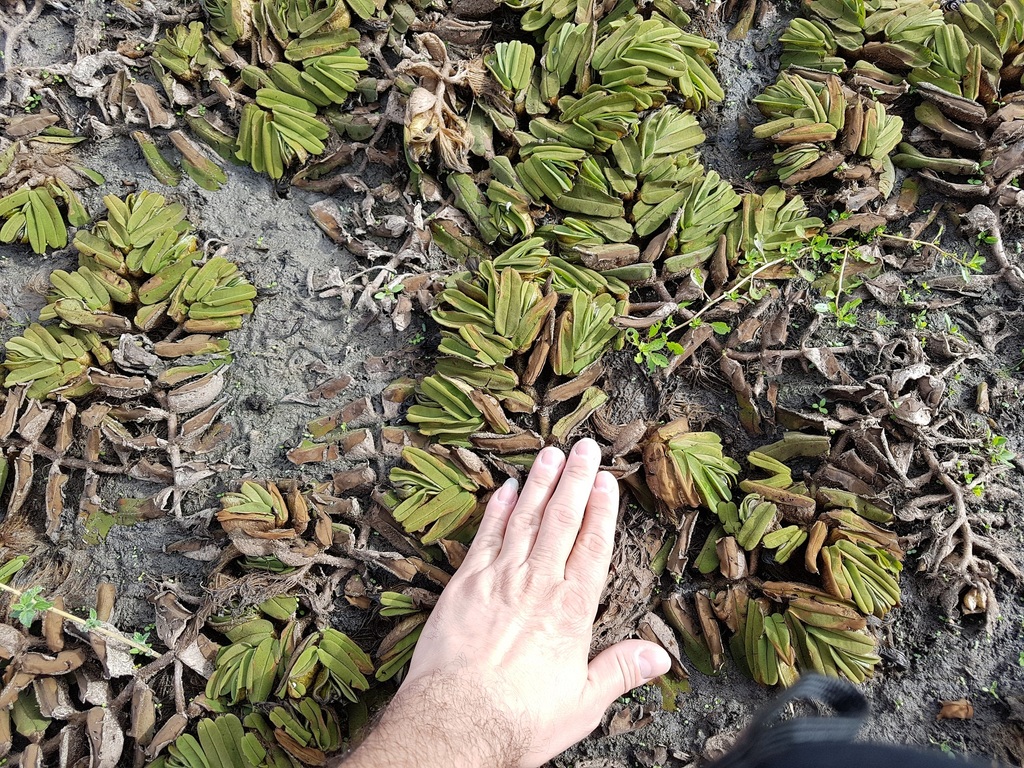
(c) Celso Henrique Varela Rios, some rights reserved (CC BY) · licence
Family: Salviniaceae · Type: Herb · Not Native
Salvinia oblongifolia is a non-native California herb in the Salviniaceae family, recognized by distinctly oblong leaf shape and larger size.
Salvinia oblongifolia is a naturalized aquatic fern found in southern California in the Los Angeles County's Bixby Slough, growing in sluggish water and urban riparian woodland at elevations below 15 meters. This floating fern has distinctive oblong leaves 25 to 45 millimeters long, with tiny papillae covering the upper leaf surface and delicate hair-like structures with free tips. Growing as a small floating plant, it spreads across water surfaces with distinctive leaf blades roughly two to three times longer than they are wide. Its leaves are characterized by minute papillae less than 0.1 millimeters tall, creating a unique textured appearance on the upper leaf surface. As a non-native species, this fern demonstrates remarkable adaptability in urban water environments.
Identification and appearance
Key characters: 2 sympatric species; distinguished by distinctly oblong leaf shape and larger size
Habitat and range
Habitat: Sluggish water, among emergent roots, urban riparian woodland
Elevation: < 15 m
Outside California: native to Brazil
How to tell it apart
vs Azolla: Azolla has pinhead-sized leaves under 2 mm; Salvinia has fingernail-sized leaves 5-25 mm.; vs Eichhornia: Eichhornia has inflated spongy leaf stalks; Salvinia has flat fuzzy leaves.; vs Pistia: Pistia forms circular rosettes with clear veins; Salvinia has paired fuzzy leaves along stems.
Frequently asked questions
Is Salvinia oblongifolia native to California?
No. Salvinia oblongifolia is not native to California (recorded as not native).
What plant family does Salvinia oblongifolia belong to?
Salvinia oblongifolia is in the Salviniaceae family, genus Salvinia.
What habitat does Salvinia oblongifolia grow in?
Salvinia oblongifolia grows in Sluggish water, among emergent roots, urban riparian woodland.
Related species
Other California species in the same genus, family, or bioregion.
Sources: Jepson eFlora · CalPhotos
Last updated 2026-10-07
Data from The California Species Project — 14,000+ California species with verified data from CNPS, CDFW, USFWS, Cal-IPC, and more.