Sanicula bipinnata
Poison sanicle
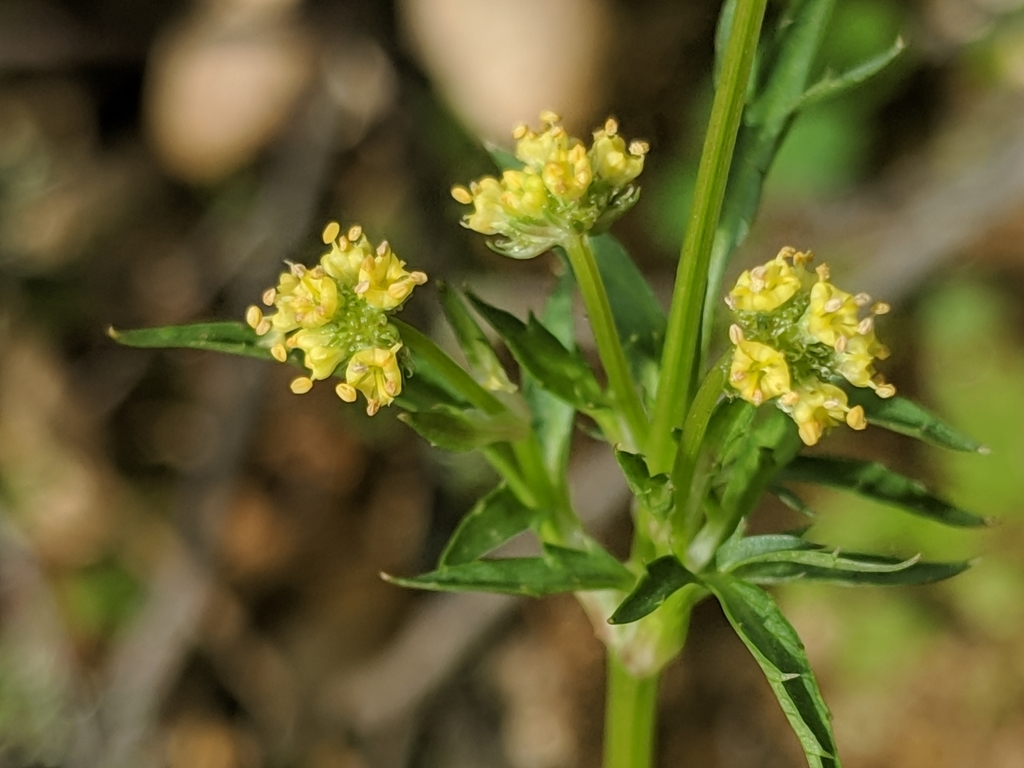
no rights reserved, uploaded by Alex Heyman · CC0
Family: Apiaceae · Type: Herb · Native
Sanicula bipinnata (Poison sanicle) is a native California herb in the Apiaceae family, recognized by compound ternate-pinnate leaves with stalked leaflets diagnostic.
Poison sanicle is a California native perennial found in the northern Coast Ranges, southern Cascade Range, Sierra Nevada Foothills, Sacramento Valley, San Francisco Bay Area, southern Coast Ranges, and northern and central Southwest regions in open grasslands and pine or oak woodlands at elevations of 20 to 1,000 meters. Flowering from April to May, this plant produces small yellow flowers in delicate umbels with 3 to 10 bisexual flowers per cluster. Growing 12 to 60 centimeters tall with a slightly swollen taproot, it develops leafy stems with distinctive compound leaves. Its leaves are ternate and 1 to 2-pinnate, forming an intricate green blade 3 to 10 centimeters long with well-separated leaflets that have entire to lobed margins. The fruit is a small, ovate seed 2 to 3 millimeters wide, covered with short, hooked prickles that give the plant its distinctive texture.
Identification and appearance
Key characters: 8 sympatric species; compound ternate-pinnate leaves with stalked leaflets diagnostic
Habitat and range
Habitat: Open grassland or pine/oak woodland
Elevation: 20-1000 m
California counties: San Luis Obispo, Kern, Lake, Fresno, Alameda, Ventura, Santa Clara, San Benito, Los Angeles, Contra Costa, Santa Barbara, Orange, Merced, Tulare, Mariposa, Monterey, San Mateo, Mendocino, Butte, San Bernardino, San Joaquin, Sacramento, Yolo, Napa, Riverside, Solano, Calaveras, Yuba, Tehama, Stanislaus, Sutter, Shasta, Amador, Colusa, El Dorado, Trinity, Humboldt, Tuolumne, Placer, San Diego
Bloom period
Sanicula bipinnata blooms Apr-May.
How to tell it apart
vs Lomatium: Sanicula has dense round flower heads; Lomatium has flat-topped umbrella-shaped flower clusters.; vs Tauschia: Sanicula flowers are in tight round heads; Tauschia has open umbrella-shaped clusters.; vs Trifolium: Sanicula fruits are covered in hooked bristles; clover has smooth pods and distinctive three-part leaves.; vs Ranunculus: Sanicula has dense ball-like flower heads; buttercup has individual flowers on separate stalks.; vs Delphinium: Sanicula has round green flower heads; Delphinium has tall spikes of blue/purple spurred flowers.
Frequently asked questions
Is Sanicula bipinnata native to California?
Yes. Sanicula bipinnata is native to California (recorded as native).
When does Sanicula bipinnata bloom?
Sanicula bipinnata blooms Apr-May.
Where in California does Sanicula bipinnata grow?
Sanicula bipinnata occurs in San Luis Obispo, Kern, Lake, Fresno, Alameda, Ventura, Santa Clara, San Benito and other counties, at elevations of 20-1000 m.
What plant family does Sanicula bipinnata belong to?
Sanicula bipinnata is in the Apiaceae family, genus Sanicula.
What habitat does Sanicula bipinnata grow in?
Sanicula bipinnata grows in Open grassland or pine/oak woodland.
Related species
Other California species in the same genus, family, or bioregion.
Sources: Jepson eFlora · Index of California Plant Names · CalPhotos
Last updated 2026-10-07
Data from The California Species Project — 14,000+ California species with verified data from CNPS, CDFW, USFWS, Cal-IPC, and more.