Sarcobatus baileyi
Bailey's greasewood
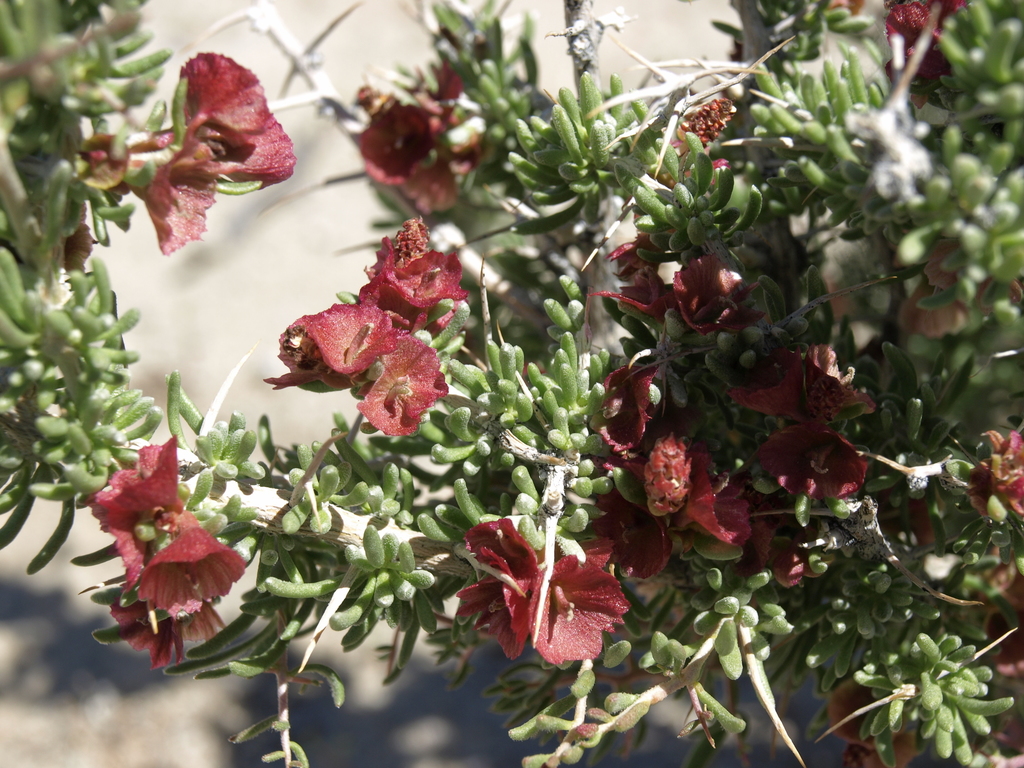
(c) Jim Morefield, some rights reserved (CC BY) · licence
Family: Sarcobataceae · Type: Shrub · Native
Conservation status: CNPS 2B.3
Sarcobatus baileyi (Bailey's greasewood) is a native California shrub in the Sarcobataceae family, recognized by size, habit, and stem color.
Bailey's greasewood is a rare California native shrub ranked 2B.3 by CNPS, found in eastern Sierra Nevada near Fish Lake Valley and in the desert mountains of the Coso Range in alkaline soils, dry lakes, and scrub habitats at elevations generally above 1,200 meters. Flowering from April to July, this plant produces pale flowers on a generally spherical shrub with light gray stems. Growing 50 to 100 centimeters tall with a distinctive rounded form, it develops a compact, almost globe-like structure. Its branches are light gray, creating a distinctive architectural shape in arid landscapes. The shrub thrives in harsh alkaline environments, demonstrating remarkable adaptation to extreme desert conditions.
Identification and appearance
Key characters: 1 sympatric species; distinguished by size, habit, and stem color
Habitat and range
Habitat: Alkaline soils, dry lakes, washes, scrub, roadsides
Elevation: generally > 1200 m
California counties: Mono
Outside California: Nevada
Bloom period
Sarcobatus baileyi blooms Apr-Jul.
Conservation status
CNPS 2B.3
How to tell it apart
vs Grayia: Sarcobatus leaves are fleshy and cylindrical; Grayia leaves are flat and somewhat diamond-shaped.; vs Atriplex: Sarcobatus leaves feel thick and succulent; Atriplex leaves are thin and often mealy or scaly.; vs Adenostoma: Sarcobatus has fleshy cylindrical leaves; Adenostoma has clusters of needle-like rigid leaves.; vs Populus: Sarcobatus has succulent cylindrical leaves; Populus has broad, flat leaves on flattened stalks.; vs Acalypha: Sarcobatus has thick fleshy leaves; Acalypha has thin, nettle-like toothed leaves.
Frequently asked questions
Is Sarcobatus baileyi native to California?
Yes. Sarcobatus baileyi is native to California (recorded as native).
When does Sarcobatus baileyi bloom?
Sarcobatus baileyi blooms Apr-Jul.
Where in California does Sarcobatus baileyi grow?
Sarcobatus baileyi occurs in Mono, at elevations of generally > 1200 m.
What plant family does Sarcobatus baileyi belong to?
Sarcobatus baileyi is in the Sarcobataceae family, genus Sarcobatus.
Is Sarcobatus baileyi rare or endangered?
Sarcobatus baileyi carries California Rare Plant Rank 2B.3, state rank S1.
Related species
Other California species in the same genus, family, or bioregion.
Sources: Jepson eFlora · CNPS Rare Plant Inventory · Index of California Plant Names · CalPhotos · CDFW CNDDB
Last updated 2026-10-07
Data from The California Species Project — 14,000+ California species with verified data from CNPS, CDFW, USFWS, Cal-IPC, and more.