Scabiosa atropurpurea
Mourningbride
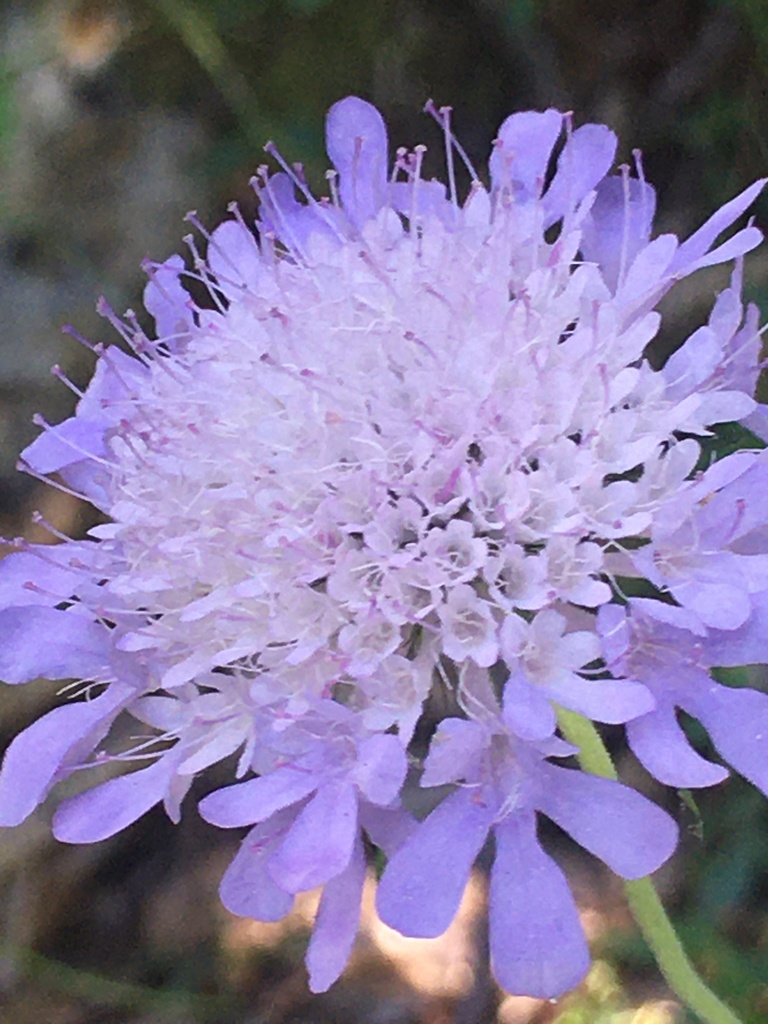
(c) Максим Шумских, some rights reserved (CC BY), uploaded by Максим Шумских · licence
Family: Dipsacaceae · Type: Herb · Not Native
Conservation status: Cal-IPC Yes
Scabiosa atropurpurea (Mourningbride) is a non-native California herb in the Dipsacaceae family, recognized by No sympatric species; distinguished by elongating inflorescence and small involucel limb.
Mourningbride is a naturalized perennial found in northern Coastal Ranges, northern Inner Coast Ranges, Central Coast, San Francisco Bay Area, southern Coastal Ranges, San Bernardino Mountains, and Peninsular Ranges in disturbed areas at elevations below 600 meters. Flowering from March to November, this plant produces deep purple to dark burgundy flowers in compact heads up to 30 millimeters wide. Growing with erect stems up to 60 centimeters tall, it develops branching growth with multiple flowering stalks. Its cauline leaves are pinnately dissected, creating delicate, finely cut foliage that adds textural interest to the plant. The flower heads feature distinctive urn-shaped involucels with very short calyx bristles that extend beyond the involucel rim.
Identification and appearance
Key characters: No sympatric species; distinguished by elongating inflorescence and small involucel limb
Habitat and range
Habitat: Disturbed areas
Elevation: < 600 m
California counties: San Francisco, Santa Cruz, Ventura, Humboldt, Alameda, Santa Clara, Monterey, Santa Barbara, Marin, El Dorado, San Luis Obispo, Solano, San Diego, Plumas, Contra Costa, Butte, Napa, Sonoma, San Mateo
Outside California: native to southern Europe
Bloom period
Scabiosa atropurpurea blooms Mar-Nov.
Conservation status
Cal-IPC Yes
How to tell it apart
vs Sixalix: Scabiosa has rounded pincushion heads; Sixalix has more compact, button-like heads.; vs Gilia: Scabiosa has pincushion heads with unequal outer flowers; Gilia has tube flowers in clusters.; vs Chaenactis: Scabiosa flowers lack ray flowers; Chaenactis has enlarged outer disk flowers mimicking rays.; vs Dipsacus: Scabiosa is completely unarmed; Dipsacus is covered in sharp prickles.
Frequently asked questions
Is Scabiosa atropurpurea native to California?
No. Scabiosa atropurpurea is not native to California (recorded as not native).
When does Scabiosa atropurpurea bloom?
Scabiosa atropurpurea blooms Mar-Nov.
Where in California does Scabiosa atropurpurea grow?
Scabiosa atropurpurea occurs in San Francisco, Santa Cruz, Ventura, Humboldt, Alameda, Santa Clara, Monterey, Santa Barbara and other counties, at elevations of < 600 m.
What plant family does Scabiosa atropurpurea belong to?
Scabiosa atropurpurea is in the Dipsacaceae family, genus Scabiosa.
Is Scabiosa atropurpurea invasive in California?
Scabiosa atropurpurea is listed by Cal-IPC with an invasiveness rating of Yes.
Related species
Other California species in the same genus, family, or bioregion.
Sources: Jepson eFlora · Index of California Plant Names · CalPhotos
Last updated 2026-10-07
Data from The California Species Project — 14,000+ California species with verified data from CNPS, CDFW, USFWS, Cal-IPC, and more.