Scabiosa stellata
Pincushion flower
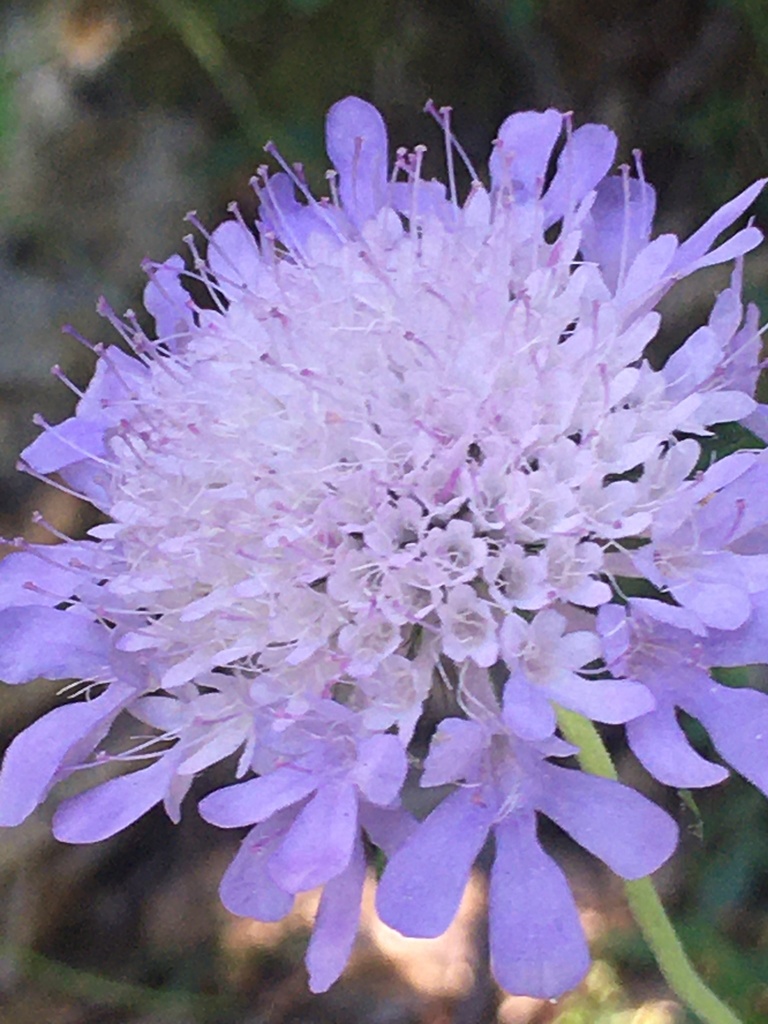
(c) Максим Шумских, some rights reserved (CC BY), uploaded by Максим Шумских · licence
Family: Dipsacaceae · Type: Herb · Not Native
Scabiosa stellata (Pincushion flower) is a non-native California herb in the Dipsacaceae family, recognized by No sympatric species; distinguished by non-elongating inflorescence and large funnel-shaped involucel.
Pincushion flower is a naturalized perennial found in southern coastal California in disturbed urban areas at elevations below 250 meters. Flowering details are not specified, but the plant produces white to blue flowers in wide, compact heads 20 to 50 millimeters across. Growing with stems less than 40 centimeters tall, this plant has a spreading, open growth habit. Its leaves are cauline, with margins that are deeply toothed or pinnately dissected, creating a delicate, lacy appearance. The flower heads feature a distinctive funnel-shaped involucral limb with scarious, fan-like calyx bristles that give the plant its common name.
Identification and appearance
Key characters: No sympatric species; distinguished by non-elongating inflorescence and large funnel-shaped involucel
Habitat and range
Habitat: Disturbed urban areas
Elevation: < 250 m
Outside California: native to southwestern Europe
How to tell it apart
vs Sixalix: Scabiosa has rounded pincushion heads; Sixalix has more compact, button-like heads.; vs Gilia: Scabiosa has pincushion heads with unequal outer flowers; Gilia has tube flowers in clusters.; vs Chaenactis: Scabiosa flowers lack ray flowers; Chaenactis has enlarged outer disk flowers mimicking rays.; vs Dipsacus: Scabiosa is completely unarmed; Dipsacus is covered in sharp prickles.
Frequently asked questions
Is Scabiosa stellata native to California?
No. Scabiosa stellata is not native to California (recorded as not native).
What plant family does Scabiosa stellata belong to?
Scabiosa stellata is in the Dipsacaceae family, genus Scabiosa.
What habitat does Scabiosa stellata grow in?
Scabiosa stellata grows in Disturbed urban areas.
Related species
Other California species in the same genus, family, or bioregion.
Sources: Jepson eFlora · CalPhotos
Last updated 2026-10-07
Data from The California Species Project — 14,000+ California species with verified data from CNPS, CDFW, USFWS, Cal-IPC, and more.