Sclerocactus polyancistrus
Mojave fishhook cactus
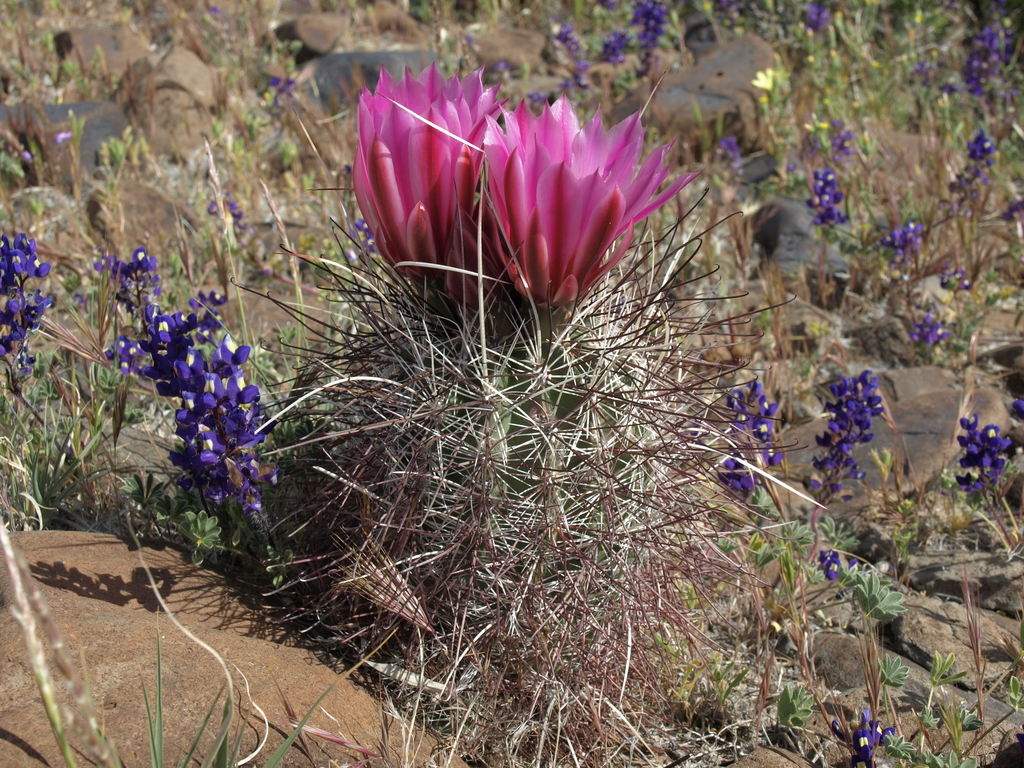
(c) Jim Morefield, some rights reserved (CC BY), uploaded by Jim Morefield · licence
Family: Cactaceae · Type: Shrub · Native
Conservation status: CNPS 4.2
Sclerocactus polyancistrus (Mojave fishhook cactus) is a native California shrub in the Cactaceae family, recognized by hooked spines, larger size, and fruit characteristics.
Mojave fishhook cactus is a native perennial ranked 4.2 by CNPS, found in western and Inyo Mountains and Mojave Desert bioregions in limestone areas, hills, canyons, and alluvial slopes within creosote-bush scrub and Joshua-tree woodland at elevations of 750 to 2,100 meters. Flowering from April to June, this cactus produces rose-purple to magenta flowers with distinctive curved spines. Growing 10 to 45 centimeters tall with 13 to 17 prominent ribs, it features dramatic white, red, and dark red-brown spines that curve dramatically like fishhooks. Its spines are particularly striking, with 10 to 15 radial white spines per areole and central spines up to 10 centimeters long that hook in complex patterns. The fruit is a rounded capsule 20 to 30 millimeters long with narrow, delicately ciliate scales near its tip.
Identification and appearance
Key characters: 1 sympatric species; distinguished by hooked spines, larger size, and fruit characteristics
Habitat and range
Habitat: Limestone areas, hills and canyons, alluvial slopes; creosote-bush scrub, Joshua-tree woodland
Elevation: 750-2100 m
California counties: San Bernardino, Inyo, Kern, Mono
Outside California: Nevada
Bloom period
Sclerocactus polyancistrus blooms Apr-Jun.
Conservation status
CNPS 4.2
How to tell it apart
vs Echinocereus: Sclerocactus flowers at tip and has hard single stem; Echinocereus flowers from sides and forms soft clusters.; vs Ferocactus: Sclerocactus is under 6 inches with spineless flower base; Ferocactus grows larger with scaly flower base.; vs Echinocactus: Sclerocactus has hard stem and spineless flower base; Echinocactus has softer stem and spiny woolly top.; vs Carnegiea: Sclerocactus is small barrel under 6 inches; Carnegiea is tree-sized columnar over 10 feet.; vs Bergerocactus: Sclerocactus is barrel-shaped wider than tall; Bergerocactus is columnar 8+ times taller than wide.
Frequently asked questions
Is Sclerocactus polyancistrus native to California?
Yes. Sclerocactus polyancistrus is native to California (recorded as native).
When does Sclerocactus polyancistrus bloom?
Sclerocactus polyancistrus blooms Apr-Jun.
Where in California does Sclerocactus polyancistrus grow?
Sclerocactus polyancistrus occurs in San Bernardino, Inyo, Kern, Mono, at elevations of 750-2100 m.
What plant family does Sclerocactus polyancistrus belong to?
Sclerocactus polyancistrus is in the Cactaceae family, genus Sclerocactus.
Is Sclerocactus polyancistrus rare or endangered?
Sclerocactus polyancistrus carries California Rare Plant Rank 4.2, state rank S3.
Related species
Other California species in the same genus, family, or bioregion.
Sources: Jepson eFlora · CNPS Rare Plant Inventory · Index of California Plant Names · CalPhotos · CDFW CNDDB
Last updated 2026-10-07
Data from The California Species Project — 14,000+ California species with verified data from CNPS, CDFW, USFWS, Cal-IPC, and more.