Scleropogon brevifolius
Burro grass, Burro Grass
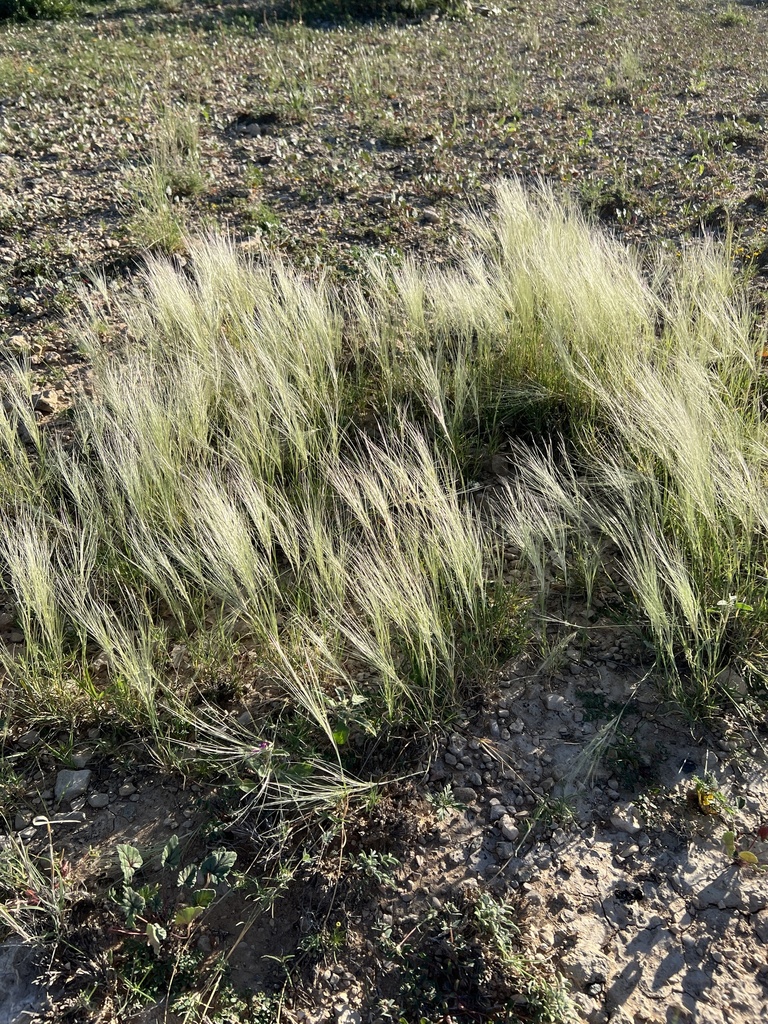
(c) CK2AZ, some rights reserved (CC BY), uploaded by CK2AZ · licence
Family: Poaceae · Type: Grass · Native
Conservation status: CNPS 2B.3
Scleropogon brevifolius (Burro grass) is a native California grass in the Poaceae family, recognized by Scleropogon is a small genus of southwestern North American grasses, with this species representing its only California occurrence.
Burro grass is a native perennial found in the eastern Desert Mountains, specifically the New York Mountains, in open creosote-bush scrub at approximately 1,600 meters elevation. Flowering from September to October, this grass produces inconspicuous spike-like inflorescences with delicate, sharp-pointed blades. Growing in dense, mat-like tufts with erect stems 10 to 20 centimeters tall, it spreads via short stolons to form low-growing patches. Its leaves are densely clustered, primarily basal, with firm blades 2 to 8 centimeters long and only 1 to 3 millimeters wide, terminating in sharp points. The grass produces distinctive pistillate spikelets with long, spreading awns 6 to 12 centimeters in length, giving it a unique and delicate appearance.
Identification and appearance
Key characters: Scleropogon is a small genus of southwestern North American grasses, with this species representing its only California occurrence
Habitat and range
Habitat: Open creosote-bush scrub
Elevation: +- 1600 m.
Outside California: to Colorado, Texas, Mexico, western South America
Bloom period
Scleropogon brevifolius blooms Sep-Oct.
Conservation status
CNPS 2B.3
How to tell it apart
vs Aristida: Aristida (three-awns) is a tufted bunchgrass whose every floret has 3 awns and is bisexual; Scleropogon is a stoloniferous mat-former that is dioecious or monoecious, the long 3-awned florets appearing only in the female spikelets.; vs Bouteloua: Grama grasses bear their spikelets in one-sided comb-like spikes and are bisexual; Scleropogon spreads by stolons into mats, separates male and female flowers, and the females carry long divergent awns.; vs Hilaria: Hilaria has spikelets clustered in threes along a zigzag axis; Scleropogon has separate staminate racemes and long-awned pistillate spikes on stoloniferous mats.; vs Munroa: Munroa is a small stoloniferous annual with short-awned spikelets tucked in leaf clusters; Scleropogon is a perennial with conspicuous long trailing awns.; vs Bromus: Bromus and other bunchgrasses are erect tufts with nodding panicles and are bisexual; Scleropogon is a low creeping mat, dioecious, with 3 long spreading awns on the female florets.
Frequently asked questions
Is Scleropogon brevifolius native to California?
Yes. Scleropogon brevifolius is native to California (recorded as native).
When does Scleropogon brevifolius bloom?
Scleropogon brevifolius blooms Sep-Oct.
What plant family does Scleropogon brevifolius belong to?
Scleropogon brevifolius is in the Poaceae family, genus Scleropogon.
Is Scleropogon brevifolius rare or endangered?
Scleropogon brevifolius carries California Rare Plant Rank 2B.3, state rank S2?.
What habitat does Scleropogon brevifolius grow in?
Scleropogon brevifolius grows in Open creosote-bush scrub.
Related species
Other California species in the same genus, family, or bioregion.
Sources: Jepson eFlora · CalPhotos · CDFW CNDDB
Last updated 2026-10-07
Data from The California Species Project — 14,000+ California species with verified data from CNPS, CDFW, USFWS, Cal-IPC, and more.