Scrophularia californica
California figwort
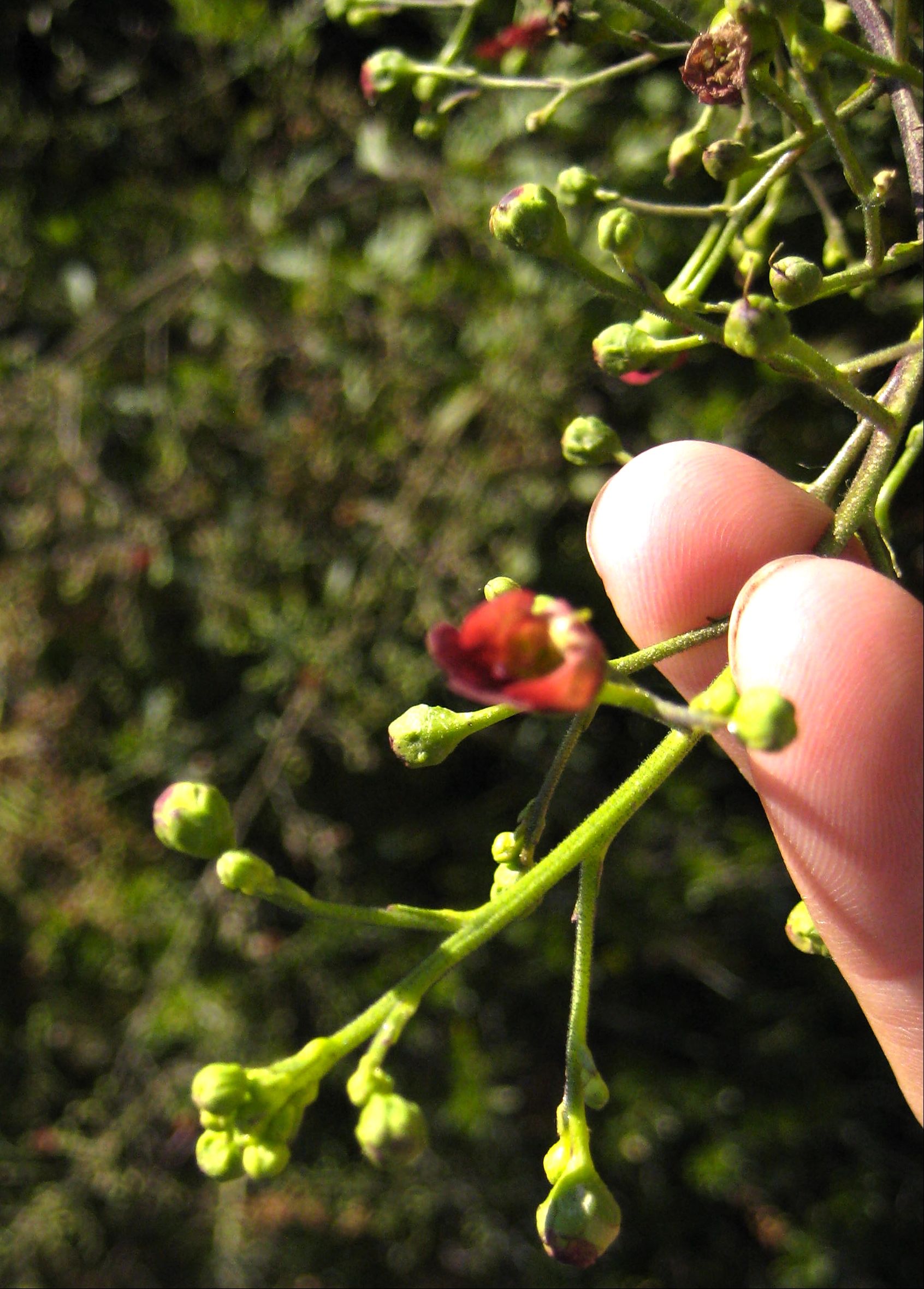
Photo by Chez Brungraber
Family: Scrophulariaceae · Type: Herb · Native
Scrophularia californica (California figwort) is a native California herb in the Scrophulariaceae family, recognized by widespread distribution, large leaves, and bicolored flowers.
California figwort is a California native perennial found in the California Floristic Province in damp places, chaparral, and roadsides at elevations up to 2,500 meters. Flowering from March to July, this plant produces red to maroon upper flower lobes with paler lower lobes, creating a distinctive two-toned appearance. Growing with robust stems 80 to 120 centimeters tall, it develops a substantial presence in its habitat. Its large leaves are dark to light green, with blades 8 to 17 centimeters long, having a heart-shaped or occasionally wedge-shaped base. The flower calyx features triangular-ovate green lobes with delicate scarious margins, adding subtle textural interest to the plant's overall structure.
Identification and appearance
Key characters: 5 sympatric species; distinguished by widespread distribution, large leaves, and bicolored flowers
Habitat and range
Habitat: Common; damp places, chaparral, roadsides
Elevation: < 2500 m
California counties: Humboldt, San Diego, Los Angeles, Kern, Riverside, Orange, Monterey, San Luis Obispo, Napa, San Bernardino, Tulare, Santa Barbara, Sonoma, San Mateo, Mendocino, Marin, Siskiyou, Ventura, Santa Cruz, Alameda, Mono, Santa Clara, Colusa, Del Norte, Alpine, Tehama, Solano, Yolo, Fresno, Mariposa, Sacramento, Tuolumne, Merced, San Francisco, Lassen, Madera, El Dorado, Contra Costa, Calaveras, Modoc, Lake, Inyo, San Benito, Yuba, Butte, Sutter, Placer, Amador, Stanislaus, Shasta
Outside California: to British Columbia, Arizona
Bloom period
Scrophularia californica blooms Mar-Jul.
How to tell it apart
vs Blitum: Scrophularia has bilateral flowers with petals; Blitum has tiny flowers without petals.; vs Urtica: Scrophularia has showy bilateral flowers; Urtica has stinging hairs and tiny greenish flowers.; vs Stachys: Scrophularia has urn-shaped flowers in branched clusters; Stachys has flowers in dense whorled spikes.; vs Hesperocnide: Scrophularia has bilateral tubular flowers; Hesperocnide has tiny greenish flowers without petals.; vs Melissa: Scrophularia has greenish to dark red flowers; Melissa has white to pale pink flowers and lemon scent.
Frequently asked questions
Is Scrophularia californica native to California?
Yes. Scrophularia californica is native to California (recorded as native).
When does Scrophularia californica bloom?
Scrophularia californica blooms Mar-Jul.
Where in California does Scrophularia californica grow?
Scrophularia californica occurs in Humboldt, San Diego, Los Angeles, Kern, Riverside, Orange, Monterey, San Luis Obispo and other counties, at elevations of < 2500 m.
What plant family does Scrophularia californica belong to?
Scrophularia californica is in the Scrophulariaceae family, genus Scrophularia.
What habitat does Scrophularia californica grow in?
Scrophularia californica grows in Common; damp places, chaparral, roadsides.
Related species
Other California species in the same genus, family, or bioregion.
Sources: Jepson eFlora · Index of California Plant Names · CalPhotos
Last updated 2026-10-07
Data from The California Species Project — 14,000+ California species with verified data from CNPS, CDFW, USFWS, Cal-IPC, and more.