Searsia lancea
African sumac
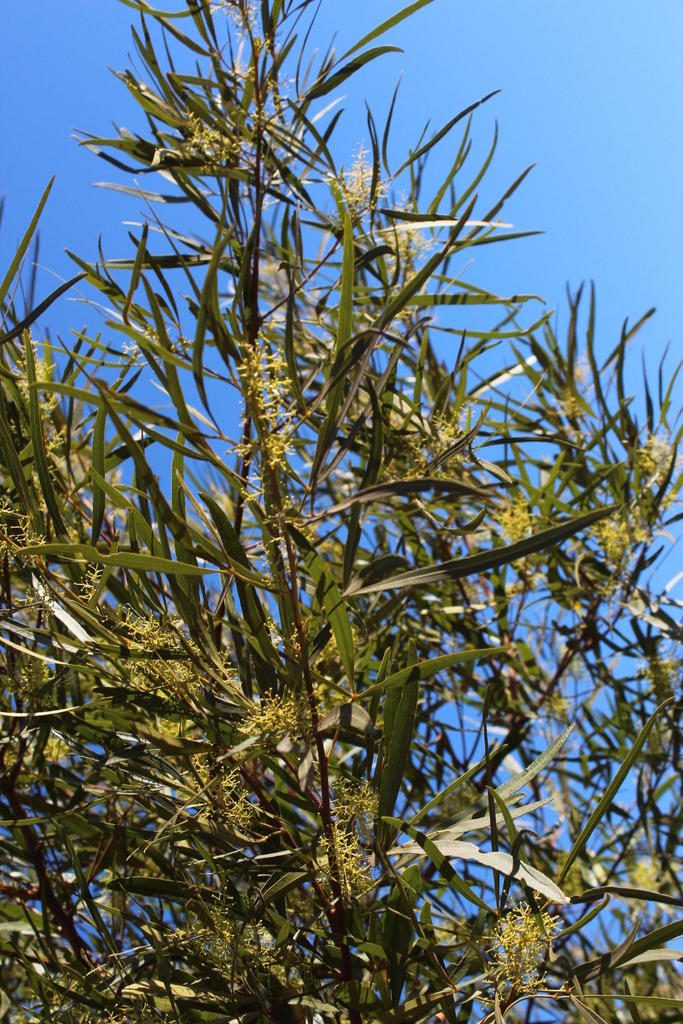
(c) Tony Rebelo, some rights reserved (CC BY-SA), uploaded by Tony Rebelo · licence
Family: Anacardiaceae · Type: Shrub · Not Native
Searsia lancea (African sumac) is a non-native California shrub in the Anacardiaceae family, recognized by Searsia is an African genus recently separated from Rhus, with this species representing landscape plantings that have naturalized.
African sumac is a naturalized shrub found in southern California coastal and desert regions in canyons, alluvial fans, coastal scrub, riparian woodland, and disturbed places at elevations below 500 meters. Flowering from March to June, this plant produces white to pale yellow flowers in pendant clusters. Growing 1 to 8 meters tall with linear to narrowly lanceolate leaflets that are leathery and generally flat, it forms a substantial, somewhat stiff shrub. Its leaves have distinctive leaflets 2.5 to 12 centimeters long and 0.5 to 2 centimeters wide, with acute to slightly obtuse tips. The fruit is smooth, yellow to yellow-brown, and approximately 5 to 8 millimeters in diameter.
Identification and appearance
Key characters: Searsia is an African genus recently separated from Rhus, with this species representing landscape plantings that have naturalized
Habitat and range
Habitat: Canyons, alluvial fans in desert, coastal scrub, riparian woodland, disturbed places
Elevation: < 500 m
Outside California: native to southern Africa
Bloom period
Searsia lancea blooms Mar-Jun.
How to tell it apart
vs Salix: Searsia has compound leaves with multiple narrow leaflets; willows have single, undivided leaves per stem.; vs Acacia: Searsia leaflets have smooth edges and lack the tiny round flower balls characteristic of Acacia.; vs Schinus: Searsia has narrower, more grass-like leaflets than Schinus pepper tree's broader lance-shaped ones.; vs Geijera: Searsia has compound leaves with multiple leaflets; Geijera has simple, single leaves.; vs Rhus: Searsia leaflets are evergreen and grass-narrow; Rhus has broader, often deciduous leaflets.
Frequently asked questions
Is Searsia lancea native to California?
No. Searsia lancea is not native to California (recorded as not native).
When does Searsia lancea bloom?
Searsia lancea blooms Mar-Jun.
What plant family does Searsia lancea belong to?
Searsia lancea is in the Anacardiaceae family, genus Searsia.
What habitat does Searsia lancea grow in?
Searsia lancea grows in Canyons, alluvial fans in desert, coastal scrub, riparian woodland, disturbed places.
Related species
Other California species in the same genus, family, or bioregion.
Sources: Jepson eFlora · CalPhotos
Last updated 2026-10-07
Data from The California Species Project — 14,000+ California species with verified data from CNPS, CDFW, USFWS, Cal-IPC, and more.