Selaginella bigelovii
Bigelow's moss fern
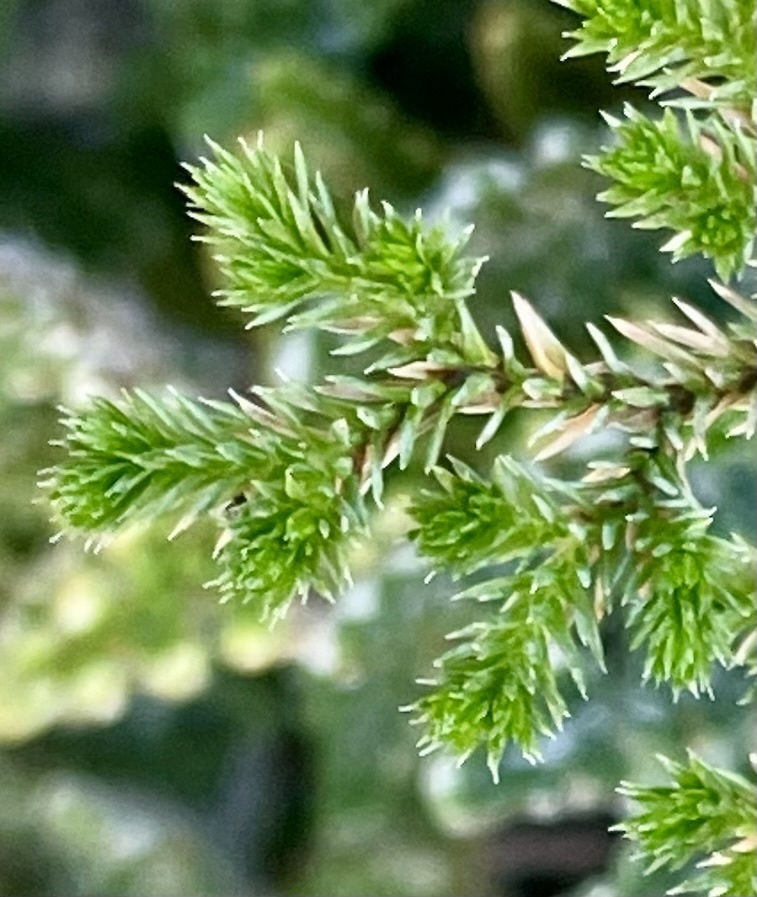
no rights reserved · CC0
Family: Selaginellaceae · Type: Herb · Native
Selaginella bigelovii (Bigelow's moss fern) is a native California herb in the Selaginellaceae family, recognized by erect shoots from rhizome, hairy leaf bases, rigid toothed awns.
Bigelow's moss fern is a California native spikemoss found in southern Northwestern California, southern Sierra Nevada, San Joaquin Valley, central and southwestern California, and the southwestern edge of the Mojave and Sonoran Deserts in open sites and rock outcrops at elevations below 2,000 meters. Its distinctive green shoots age from green to tan and then gray, forming a series of erect, determinate growth structures from a rhizome. Growing with delicate linear to narrowly lanceolate leaves 1.5 to 2.7 millimeters long with hairy bases and rigid awns up to 0.7 millimeters, this spikemoss develops small cone-like structures 0.4 to 1.5 centimeters in length. The plant's leaves have a characteristic appearance with fine, toothed awns and a subtle base hairiness that distinguishes it from other ground-covering species. Its compact growth form and ability to thrive in diverse rocky and open habitats make it a resilient component of California's varied landscapes.
Identification and appearance
Key characters: 9 sympatric species; key features are erect shoots from rhizome, hairy leaf bases, rigid toothed awns
Habitat and range
Habitat: Open sites, mineral soil on rock outcrops, amid shrubs
Elevation: < 2000 m
California counties: Tulare, Ventura, Kern, Los Angeles, Riverside, San Diego, San Bernardino, Monterey, Orange, San Benito, San Luis Obispo, Santa Barbara, Santa Clara, Sonoma, Stanislaus, Merced, Alameda, Marin, Calaveras, Humboldt, Mariposa
Outside California: Baja California
How to tell it apart
vs Cardionema: Selaginella has overlapping scales spiraling up the stem; Cardionema has paired leaves at intervals.; vs Lycopodium: Selaginella stems feel soft and flexible; Lycopodium stems are firmer and the leaves radiate out in all directions.; vs Polytrichum: Selaginella has square-sided cones and scales; moss capsules sit atop hairlike stalks.; vs Galium: Selaginella has tiny overlapping scales; Galium has narrow leaves in distinct whorls around square stems.; vs Brachythecium: Selaginella has square cones and spiraling scales; moss shoots are feathery with capsules on stalks.
Frequently asked questions
Is Selaginella bigelovii native to California?
Yes. Selaginella bigelovii is native to California (recorded as native).
Where in California does Selaginella bigelovii grow?
Selaginella bigelovii occurs in Tulare, Ventura, Kern, Los Angeles, Riverside, San Diego, San Bernardino, Monterey and other counties, at elevations of < 2000 m.
What plant family does Selaginella bigelovii belong to?
Selaginella bigelovii is in the Selaginellaceae family, genus Selaginella.
What habitat does Selaginella bigelovii grow in?
Selaginella bigelovii grows in Open sites, mineral soil on rock outcrops, amid shrubs.
Related species
Other California species in the same genus, family, or bioregion.
Sources: Jepson eFlora · Index of California Plant Names · CalPhotos
Last updated 2026-10-07
Data from The California Species Project — 14,000+ California species with verified data from CNPS, CDFW, USFWS, Cal-IPC, and more.