Senecio flaccidus var. monoensis
Smooth threadleaf ragwort, Smooth Threadleaf Ragwort
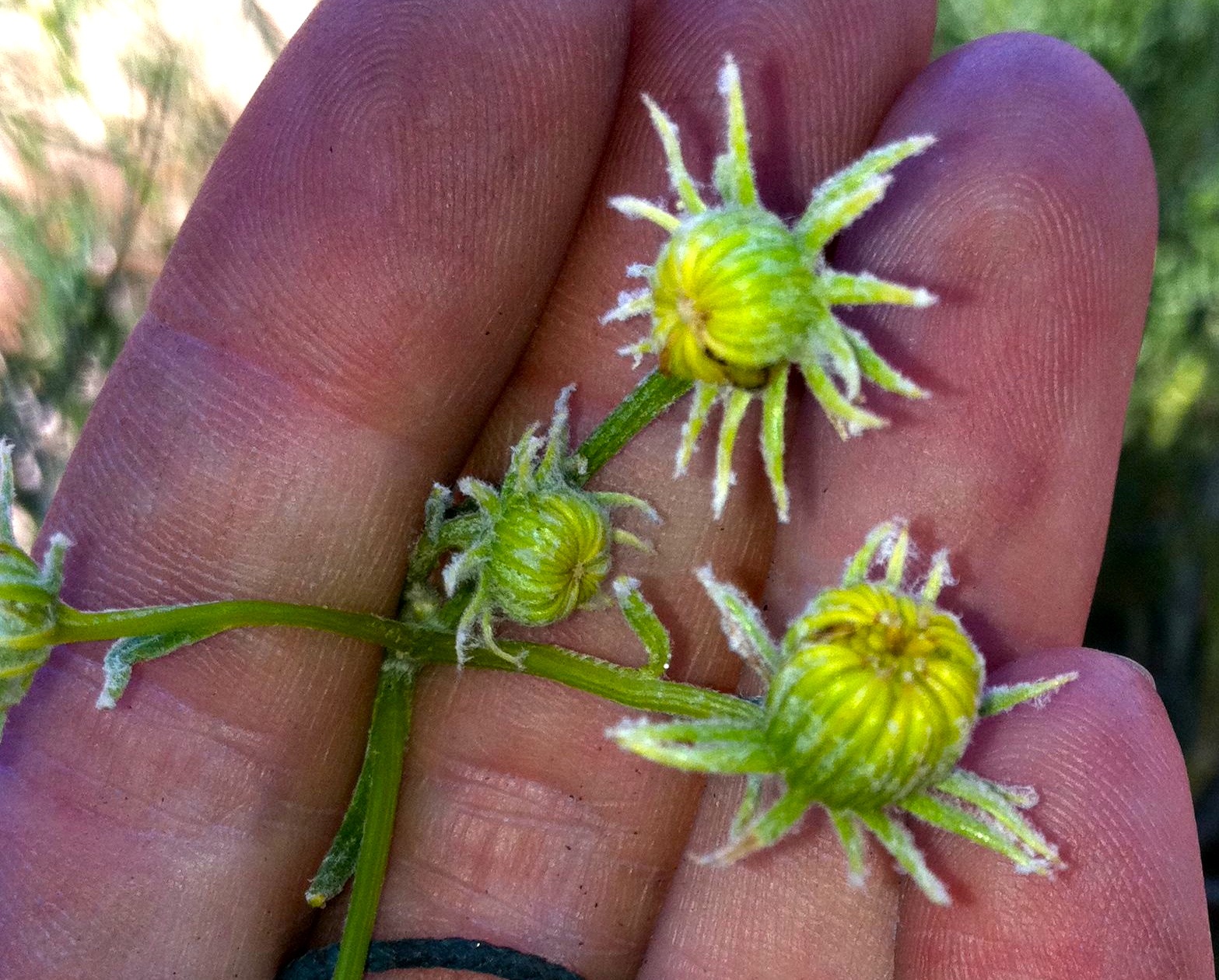
Photo: parent species Senecio flaccidus · Photo by Chez Brungraber
Family: Asteraceae · Type: Subshrub · Native
Senecio flaccidus var. monoensis (Smooth threadleaf ragwort) is a native California subshrub in the Asteraceae family, recognized by shrubby form, thread-like leaves, glabrous condition, and desert habitat.
Smooth threadleaf ragwort is a California native shrub found in the eastern Sierra Nevada and desert regions in desert basins, washes, and rocky or sandy sites at elevations of 600 to 2,000 meters. Flowering from April to June and September to November, this plant produces yellow flowers in heads with 21 to 30 main phyllaries and 45 to 55 disk flowers. Growing with generally glabrous stems that form an upright to spreading habit, it develops a distinctive shrubby structure. Its leaves are thread-like and sparse, contributing to the plant's delicate appearance across desert and rocky landscapes. The fruit is small, measuring 4 to 5 millimeters long, which helps distinguish this variety of ragwort in its arid habitats.
Identification and appearance
Key characters: 14 sympatric species; key features are shrubby form, thread-like leaves, glabrous condition, and desert habitat
Habitat and range
Habitat: Desert basins, washes, rocky or sandy sites
Elevation: 600-2000 m
Outside California: to Utah, Texas, Baja California
Bloom period
Senecio flaccidus var. monoensis blooms Apr-Jun, Sep--Nov.
How to tell it apart
vs Packera: Senecio has larger leaves (over 2.5 inches) and often black-tipped bracts; Packera has tiny leaves (under 1.5 inches) with green or reddish tips.; vs Sonchus: Senecio has yellow daisy flowers with a neat single row of bracts; Sonchus has dandelion-like flowers and milky sap when broken.; vs Dudleya: Senecio is in the sunflower family with daisy flowers; Dudleya is a succulent with thick fleshy leaves and star-shaped flowers.; vs Ericameria: Senecio has one main row of equal bracts around flower heads; Ericameria has 2-4 overlapping rows of unequal bracts.; vs Taraxacum: Senecio has branching stems with multiple flower heads; Taraxacum has leafless hollow stems with single dandelion-like heads.
Frequently asked questions
Is Senecio flaccidus var. monoensis native to California?
Yes. Senecio flaccidus var. monoensis is native to California (recorded as native).
When does Senecio flaccidus var. monoensis bloom?
Senecio flaccidus var. monoensis blooms Apr-Jun, Sep--Nov.
What plant family does Senecio flaccidus var. monoensis belong to?
Senecio flaccidus var. monoensis is in the Asteraceae family, genus Senecio.
What habitat does Senecio flaccidus var. monoensis grow in?
Senecio flaccidus var. monoensis grows in Desert basins, washes, rocky or sandy sites.
Related species
Other California species in the same genus, family, or bioregion.
Sources: Jepson eFlora · Index of California Plant Names · CalPhotos
Last updated 2026-10-07
Data from The California Species Project — 14,000+ California species with verified data from CNPS, CDFW, USFWS, Cal-IPC, and more.