Sequoiadendron giganteum
Giant sequoia
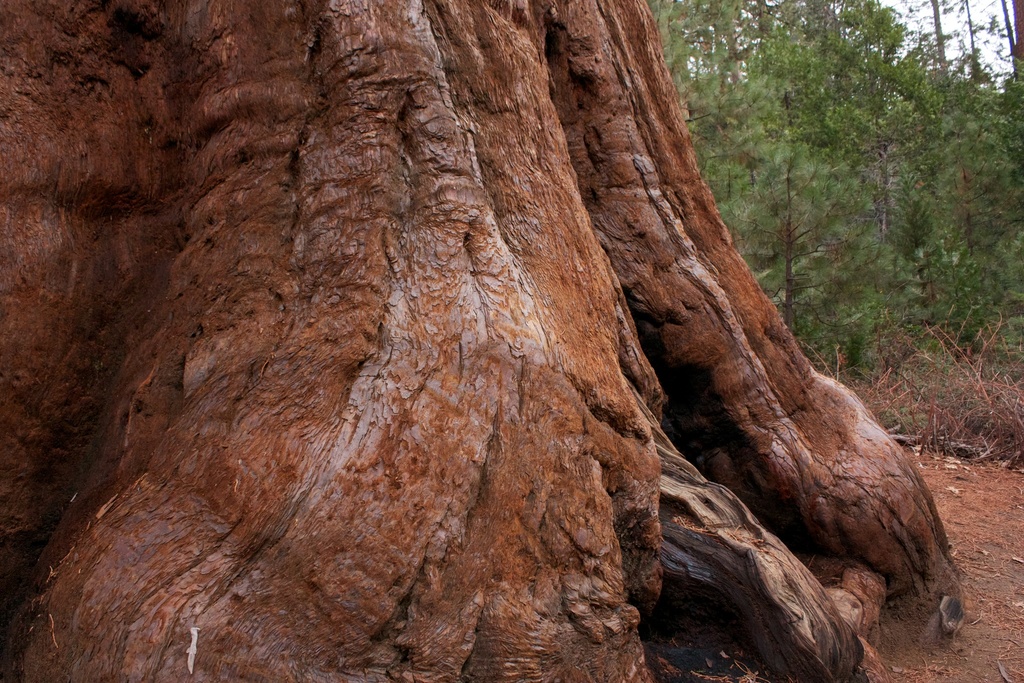
(c) Laura Camp, some rights reserved (CC BY-SA) · licence
Family: Cupressaceae · Type: Tree · Native
Sequoiadendron giganteum (Giant sequoia) is a native California tree in the Cupressaceae family, recognized by Sequoiadendron is monotypic and endemic to the Sierra Nevada, representing a distinct evolutionary lineage from coastal redwoods.
Giant sequoia is a native tree found in the Sierra Nevada Mountains in mixed-conifer forests at elevations of 825 to 2,700 meters. With massive trunks reaching up to 11 meters in diameter and bark up to 60 centimeters thick, this iconic tree produces distinctive red-brown fibrous bark with deep ridges. Growing to heights of 90 meters with spreading branches that end in upturned tips, the tree has persistent green awl-like leaves less than 15 millimeters long arranged in four ranks. Its remarkable leaves remain green for up to 4 years, with persistent branches lasting less than 20 years. The tree produces woody seed cones 40 to 90 millimeters long that mature over two years and remain on the tree, containing 3 to 9 seeds with two unequal wings.
Identification and appearance
Key characters: Sequoiadendron is monotypic and endemic to the Sierra Nevada, representing a distinct evolutionary lineage from coastal redwoods
Habitat and range
Habitat: Uncommon. Mixed-conifer forest, especially with favorable soil moisture
Elevation: 825-2700 m
California counties: Riverside, Calaveras, Mariposa, Fresno, Los Angeles, Tulare, Tuolumne, San Bernardino, Madera, Butte, Placer, Ventura, Kings, San Francisco, San Diego, Alameda
How to tell it apart
vs Calocedrus: Sequoiadendron has awl leaves in four rows creating rope-like twigs; Calocedrus has flattened sprays with longer scale leaves appearing whorled.; vs Sequoia: Sequoiadendron has only awl-shaped leaves in four rows; Sequoia has flat needles in two rows on most branches.; vs Pinus: Sequoiadendron has tiny scale leaves pressed to twigs; Pinus has long needles in bundles.; vs Juniperus: Sequoiadendron has 2-4 inch woody cones; Juniperus has berry-like cones under 1 inch.; vs Abies: Sequoiadendron has scale leaves and huge cones; Abies has flat needles and upright cones that disintegrate on tree.
Frequently asked questions
Is Sequoiadendron giganteum native to California?
Yes. Sequoiadendron giganteum is native to California (recorded as native).
Where in California does Sequoiadendron giganteum grow?
Sequoiadendron giganteum occurs in Riverside, Calaveras, Mariposa, Fresno, Los Angeles, Tulare, Tuolumne, San Bernardino and other counties, at elevations of 825-2700 m.
What plant family does Sequoiadendron giganteum belong to?
Sequoiadendron giganteum is in the Cupressaceae family, genus Sequoiadendron.
What habitat does Sequoiadendron giganteum grow in?
Sequoiadendron giganteum grows in Uncommon. Mixed-conifer forest, especially with favorable soil moisture.
Related species
Other California species in the same genus, family, or bioregion.
Sources: Jepson eFlora · Index of California Plant Names · CalPhotos
Last updated 2026-10-07
Data from The California Species Project — 14,000+ California species with verified data from CNPS, CDFW, USFWS, Cal-IPC, and more.